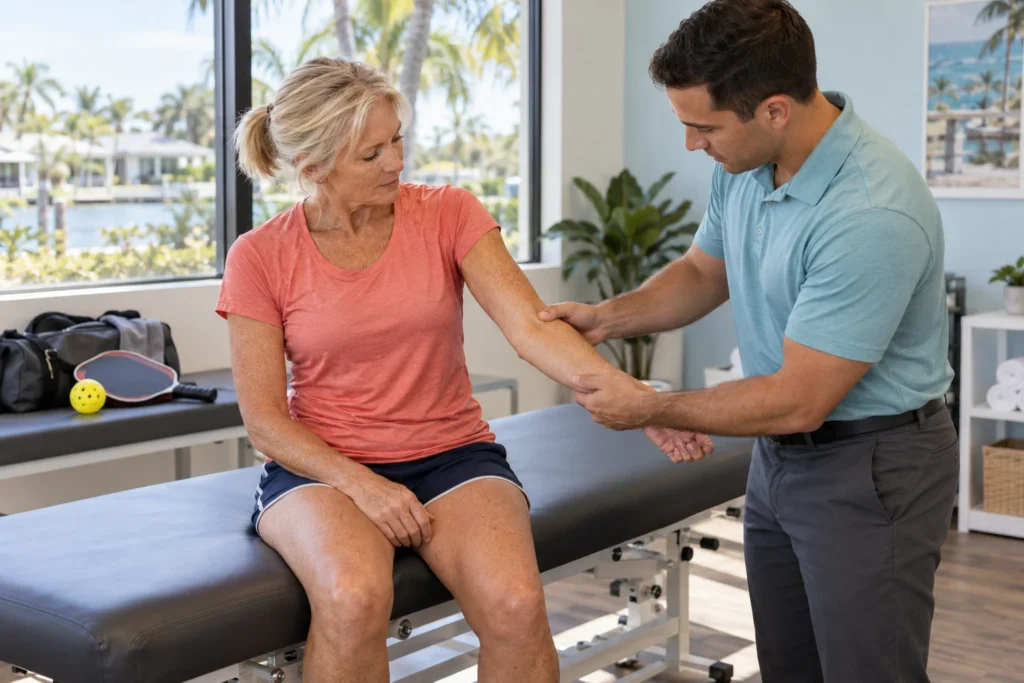
Pickleball Injuries and Chiropractic Care in Dunedin, FL
| The most common pickleball injuries are low back strain, tennis elbow, shoulder and rotator cuff pain, knee pain, ankle sprains and Achilles problems, caused by quick lateral moves, repetitive swings and bending for low balls. A chiropractor in Dunedin, FL can help players recover with adjustments, soft tissue work, corrective exercise and laser therapy. Hayes Family Chiropractic treats sports injuries with chiropractic care and Class 4 MLS laser therapy. |
Why Pickleball Injuries Are on the Rise
Pickleball is the fastest-growing sport in America, and the Tampa Bay area is one of its hotspots. Courts across Pinellas County fill up from morning to evening with players of every age. The game is easy to learn, but its quick starts, sudden stops, twisting swings and constant bending can strain muscles, joints and the spine, especially for players returning to sport after years away or those playing several times a week.
The Most Common Pickleball Injuries
- Low back pain: bending for low dinks and twisting during groundstrokes stresses the lumbar spine and discs.
- Pickleball elbow (tennis elbow): repetitive gripping and paddle strokes irritate the forearm tendons.
- Shoulder and rotator cuff strain: overhead smashes and serves load the shoulder joint.
- Knee pain: lunging and pivoting stress the knees, especially with arthritis.
- Ankle sprains: quick lateral moves can roll the ankle.
- Achilles and calf strains: explosive pushes off the back foot.
- Neck stiffness: constantly tracking the ball and reacting at the net.
- Wrist injuries: falls on an outstretched hand.
How a Chiropractor Helps Pickleball Players Recover
A Doctor of Chiropractic looks at how your whole body moves, not just where it hurts. Treatment may include:
- Chiropractic adjustments to restore spine and joint mobility
- Soft tissue therapy to release tight muscles and tendons
- Laser therapy with our Class 2 cold laser and Class 4 MLS laser to reduce inflammation and speed healing
- Cupping therapy to improve circulation in overworked muscles
- Corrective exercise to strengthen the core, hips and shoulders
- Posture and movement coaching to reduce strain during play
When to See a Chiropractor for a Pickleball Injury
Book a visit if pain lasts longer than a few days, keeps returning after games, limits your swing or range of motion, or causes numbness, tingling or weakness. Seek urgent medical care for severe swelling, a suspected fracture, inability to bear weight or a sudden pop in the back of the ankle.
8 Tips to Prevent Pickleball Injuries
- Warm up for 5 to 10 minutes with light movement and dynamic stretches.
- Wear court shoes with lateral support, not running shoes.
- Bend your knees and hips, not your back, to reach low balls.
- Use a paddle and grip size that fit your hand.
- Stay hydrated in the Florida heat and humidity.
- Build up playing time gradually.
- Strengthen your core, hips and shoulders off the court.
- Do not play through sharp pain.
Why Pickleball Is Hard on the Spine
Pickleball combines short bursts of speed with lots of bending and rotation. Every dink, volley and reach for a low ball asks the lower back and hips to flex and twist at the same time, the exact combination that most often strains muscles and irritates spinal discs. Players who sit for long periods during the rest of the day, or who have stiff hips, tend to compensate through the lower back. A chiropractic exam identifies these weak links, such as limited hip rotation, tight hamstrings or a stiff mid back, so treatment fixes the cause and not just the sore spot.
A Simple Pre-Game Warm-Up
Before you play, take five minutes for brisk walking or light jogging, ten leg swings forward and sideways, ten arm circles in each direction, gentle trunk rotations, a few side lunges and some easy practice dinks. A good warm-up raises muscle temperature and prepares your joints for quick changes in direction.
Getting Back on the Court Safely
Most pickleball injuries respond well to early, conservative care. The sooner you address a strain, the less likely it becomes a chronic problem. Our goal is to relieve your pain, correct the movement patterns that caused it and help you return to the game stronger. Learn more about managing pain without painkillers.
Recovery Tips After a Long Day on the Court
After play, cool down with an easy walk and gentle stretches for your calves, hamstrings, hips, chest and forearms. Ice sore joints for 15 to 20 minutes if they feel swollen, drink plenty of water and get good sleep, which is when much of your tissue repair happens. If the same area hurts after every game, that is your body asking for a professional evaluation rather than more rest days.
Pickleball Injury Care Near Dunedin, Clearwater and Palm Harbor
Hayes Family Chiropractic is at 516 Patricia Ave., Dunedin, FL 34698, serving players in Clearwater, Palm Harbor, Safety Harbor, Tarpon Springs and Oldsmar. Call (727) 736-1000 or request an appointment.