Massage Therapy in Dunedin, FL: Benefits, Types and Your First Appointment
Massage therapy in Dunedin, FL may ease muscle tension, stress, and soreness, and a first appointment usually includes a health history, a talk about goals, and a session at the pressure you choose. Common types include Swedish, deep tissue, and sports massage. Local patients can now book massage therapy in Dunedin alongside chiropractic care in the same office.
What Is Massage Therapy and How Does It Work?
Massage therapy is the hands-on manipulation of muscles, tendons, ligaments, and fascia using pressure, kneading, stroking, and stretching. A trained therapist uses hands, forearms, or elbows to work tight areas, improve how tissue moves, and help the nervous system shift toward a calmer state. Researchers are still studying exactly why massage helps, but likely factors include reduced muscle guarding, better local circulation, and a relaxation response that can lower the sense of stress. Therapeutic massage differs from a purely relaxing spa visit because it starts with your health history and specific goals, such as easing a stiff neck or recovering after a hard workout. In Florida, anyone who practices massage must hold a state license from the Board of Massage Therapy, which requires at least 500 hours of approved training and a passing score on a board-approved exam.
What Are the Benefits of Massage Therapy?
Mayo Clinic reports that massage may reduce stress and ease pain, muscle stiffness, and tension, and it lists low back pain, neck pain, and fibromyalgia among the conditions studied. The National Center for Complementary and Integrative Health notes that massage may provide short-term benefits for neck and shoulder pain. For low back pain, the American College of Physicians 2017 guideline names massage as a non-drug option for acute or subacute pain. It is important to keep expectations realistic. A Cochrane review of 25 trials found that massage improved low back pain and function in the short term compared with no treatment, but the benefits did not last and the quality of evidence was low. Most people get the most out of massage when it is part of a plan that also includes movement and care for the underlying cause.
- Relief from muscle tension and tightness
- Lower day-to-day stress and an easier time relaxing
- Less soreness after exercise or physical work
- Improved comfort and ease of movement
What Types of Massage Should You Know About in Dunedin, FL?
Massage styles differ mainly in pressure, pace, and purpose. Cleveland Clinic describes Swedish massage as a full-body session with gentle, gliding strokes that is often a good choice for first-time clients and relaxation. Deep tissue massage uses slower, firmer pressure to reach deeper layers of muscle and is often chosen for chronic tightness or muscle pain. Sports massage is similar but focuses on muscles that get heavy use from training or repetitive activity, which can help Dunedin runners, golfers, and pickleball players. Trigger point work applies focused pressure to knots that may refer pain elsewhere. Your therapist often blends several styles in one session based on how your body responds. If you are deciding between the two most common options, see our guide to deep tissue vs. Swedish massage.
What Happens at Your First Massage Appointment?
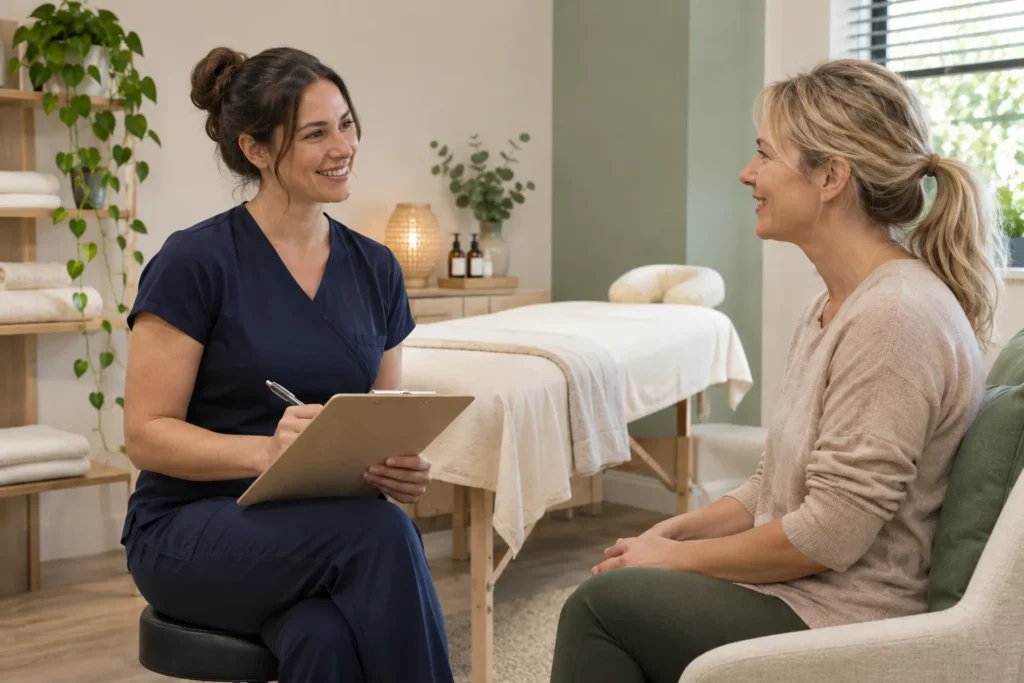
Your first appointment begins with paperwork and a conversation. According to the American Massage Therapy Association, your therapist will ask about your health, medications, painful areas, and goals for the session. The therapist then leaves the room while you undress to your comfort level, and you lie on a padded table under a sheet or towel. Only the area being worked on is uncovered at any time. Mayo Clinic notes that sessions often start face down, oil or lotion may be used to reduce friction, and a visit can last from 15 to 90 minutes. You stay in control the whole time, so you can ask for more or less pressure, skip certain areas, or stop the session. Talking is fine, though many people prefer to rest quietly.
- Arrive early to finish your health history form
- List medications, recent injuries, and surgeries
- Tell your therapist which areas to focus on or avoid
- Speak up right away if pressure feels too strong
How Should You Prepare for a Massage, and What Happens Afterward?
A little preparation helps you relax and get more from your session. Drink water during the day, skip a heavy meal right before your visit, and wear comfortable clothing that is easy to change in and out of. The University of Minnesota’s integrative health program suggests rescheduling if you have a fever, a sunburn or rash in the area to be treated, or you are still adjusting a new medication dose. After the session, sit up slowly, especially if you feel lightheaded, and give yourself a few minutes before driving. Some mild soreness for a day or so is common after deeper work, much like the feeling after a workout. Severe or sharp pain is not expected, and it is a reason to call your provider. Many people notice that benefits build over several sessions rather than all at once.
Who Should Avoid Massage or Talk to a Doctor First?
Massage is generally safe when a trained professional performs it, and serious side effects are rare. Still, some health conditions call for medical clearance or a gentler approach. Mayo Clinic advises checking with your health care team before massage if you have had a recent heart attack or blood clot, have a bleeding disorder, or take blood thinners. Burns, open wounds, fractures, and severe osteoporosis also require caution, and massage is not done directly over tumors. If you are pregnant, ask your provider first and look for a therapist trained in prenatal massage. Seek urgent medical care, not massage, for sudden calf swelling and warmth, chest pain or shortness of breath, or back pain with numbness in the groin or loss of bladder or bowel control. Always share health changes with your therapist before each visit.
- Recent blood clot or heart attack
- Bleeding disorder or blood thinner use
- Fractures, burns, open wounds, or severe osteoporosis
- Pregnancy or recent surgery
How Can Hayes Family Chiropractic Help With Massage Therapy in Dunedin, FL?
Hayes Family Chiropractic now offers massage therapy inside the office one day a week, giving patients in Dunedin, Clearwater, Palm Harbor, and nearby Pinellas County communities a way to combine soft tissue work with chiropractic care. Dr. Chris Hayes and Dr. Diane Hayes bring decades of combined experience and can help you decide whether massage, adjustments, deep tissue laser therapy, or a mix of approaches fits your goals. Because massage availability is limited each week, the easiest way to reserve a time is to call (727) 736-1000. Ask the front desk about current pricing when you book. The office is located on Patricia Ave. in Dunedin, and new patients can complete the new patient form before the first visit. This article is for general education and is not a substitute for medical advice. Talk with a licensed provider about your symptoms.
Frequently Asked Questions About Massage Therapy
How long does a massage therapy session last?
Mayo Clinic notes that a massage session may last anywhere from 15 to 90 minutes. A focused session on the neck and shoulders is usually shorter, while a full-body session takes longer. Ask about available session lengths when you book so you can plan your day and leave a few extra minutes for intake forms.
Is massage therapy supposed to hurt?
Massage should not cause sharp or severe pain. Deep tissue work can feel intense in tight spots, and mild soreness the next day is common, much like after a workout. You should still be able to breathe easily and relax during the session. Tell your therapist right away if the pressure feels too strong.
What should I wear to a massage appointment?
Wear comfortable clothes that are easy to take off and put back on. You undress only to your comfort level, and you stay covered by a sheet or towel during the session, with only the area being worked on uncovered. Mayo Clinic notes some people choose a seated chair massage so they can stay fully clothed.
Can I get a massage while pregnant?
Many people find massage helpful during pregnancy, but you should talk with your obstetric provider first, especially in the first trimester or with a high-risk pregnancy or high blood pressure. Look for a therapist trained in prenatal massage. You can also read about prenatal chiropractic care for pregnancy-related back pain.
Is it okay to talk during a massage?
Talking is completely up to you. Some people like to chat, while others prefer quiet so they can relax more deeply. The most important conversation is about pressure and comfort, so speak up whenever something does not feel right. Your therapist can also adjust the music, room temperature, or blanket coverage if you ask.
How do I know if a massage therapist is licensed in Florida?
Florida requires anyone who practices massage to hold a license from the Board of Massage Therapy, and a license from another state does not count. Licensed therapists must display their license with a photo. You can confirm any therapist’s status through the Florida Department of Health license verification portal before you book.