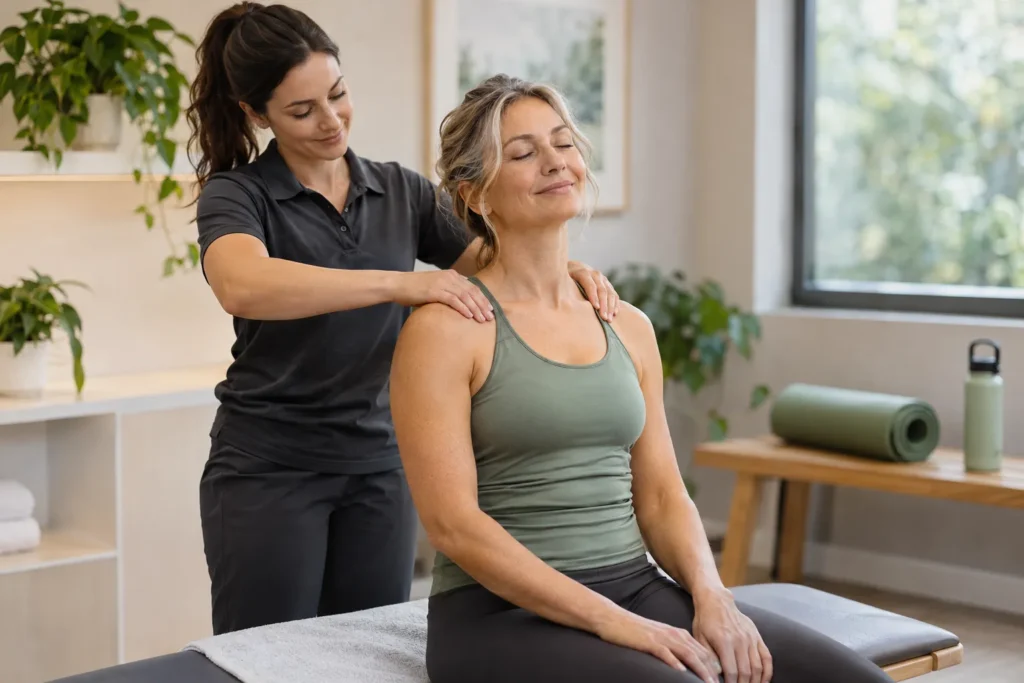
How Often to Get Massage Therapy for Muscle Recovery and Stress Relief in Dunedin, FL
How often you should get a massage depends on your goal, but no standard rule exists. For chronic pain, research suggests regular sessions, weekly or more, for several weeks before tapering. For general stress relief or muscle recovery, many people choose every two to four weeks. See how massage therapy in Dunedin, FL and deep tissue vs Swedish massage fit your needs.
How Often Should You Get a Massage for Muscle Recovery?
For muscle recovery, many active people get a massage after especially hard training weeks or events, and some schedule one every one to two weeks during heavy training. There is no official guideline, so the right frequency depends on how hard you train and how your body responds. Research supports massage for post-exercise soreness. A 2017 meta-analysis in Frontiers in Physiology pooled 11 randomized trials with 504 participants and found that massage reduced delayed onset muscle soreness after strenuous exercise. The largest effect on soreness was seen when it was measured about 48 hours after exercise. The authors rated the evidence as low quality and called for larger trials, so the benefit is real but not precisely defined. For recreational exercisers, a massage every two to four weeks, plus stretching and rest days, is a common approach. Lighter sessions closer to events and deeper work on recovery days are often preferred.
How Often Should You Get a Massage for Stress Relief?
For stress relief, there is no proven ideal frequency, and many people find that a massage every two to four weeks helps them maintain a calmer baseline. Some prefer weekly sessions during particularly stressful periods. Stress is one of the most common reasons people book a massage. In the 2025 American Massage Therapy Association (AMTA) consumer survey of 1,000 adults, 30% said stress was the primary reason for their last massage, and 49% named health or wellness. The same survey found massage consumers averaged 2.7 massages over the past 12 months, which shows that many people go less often than they might like. Research reviews suggest massage may ease anxiety and stress symptoms in the short term, so consistency matters more than any single session. A practical approach is to choose a schedule you can afford and sustain, notice how long the calming effect lasts, and adjust your timing from there.
How Often Should You Get a Massage for Chronic Pain?
For chronic pain, research suggests more frequent sessions at first, often once or more a week for several weeks, followed by less frequent maintenance visits. A 2014 trial in the Annals of Family Medicine studied 228 adults with chronic neck pain over four weeks. Groups receiving 60-minute massages two or three times a week were significantly more likely to have meaningful improvement than a wait-list group, while 30-minute sessions did not show a clear benefit. In a 2011 trial of 401 adults with chronic low back pain, one-hour massages once a week for 10 weeks led to greater improvement in pain and function than usual care. Both studies point to dose mattering, although neither found that massage alone solved chronic pain long term. After an initial series, many people taper to every two to four weeks. Learn more about massage therapy for back pain.
Is It Safe to Get a Massage Every Week?
Getting a massage every week is generally safe for healthy adults, as long as the pressure is appropriate and you are not dealing with a condition that makes massage risky. NCCIH reports that the risk of harmful effects from massage appears to be low. Rare serious events, such as blood clots, nerve injury, or bone fractures, have been reported, often involving vigorous techniques like deep tissue massage or people at higher risk, such as older adults. If you choose weekly sessions, consider alternating deeper work with lighter sessions and letting soreness fade before your next deep session. Stop and talk with a provider if massage causes sharp pain or new symptoms. Check with your doctor before frequent massage if you have any of the following:
- A history of blood clots, or you take blood thinners
- Osteoporosis, a recent fracture, or cancer involving the bones
- A high-risk pregnancy or high blood pressure during pregnancy
- Recent surgery, open wounds, burns, or a skin infection
What Factors Change How Often You Should Get a Massage in Dunedin, FL?
Several personal factors change how often Dunedin, FL residents may benefit from massage, which is why a schedule that works for one person may be too much or too little for another. Your main goal matters most. Someone managing chronic neck or back pain usually needs a more frequent starting series than someone who simply wants to relax. Your activity level counts too, since frequent exercise, long workdays at a desk, or physically demanding jobs can create more muscle tension. The style of massage also plays a role, because deep tissue sessions may need more recovery time between visits than lighter Swedish sessions. Finally, practical limits like time and budget shape any realistic plan. Track how you feel for several days after each session, then use that pattern to set your spacing. Consider these factors when planning:
- Your primary goal, such as pain relief, recovery, or stress relief
- How long relief lasts after each session
- Your training load or daily physical demands
- Massage style and pressure level
- Your budget, schedule, and other care you receive
How Can You Make Massage Benefits Last Longer Between Sessions?
You can help massage benefits last longer by pairing sessions with simple daily habits that keep muscles moving and reduce the strain that builds tension in the first place. Massage loosens tissue for a while, but muscles tend to tighten again if the same habits continue. Healthline notes that if cost is a concern, you can space sessions further apart and learn self-massage techniques for home. Regular movement, gentle stretching, and strength work support the effects of hands-on care. Posture breaks during desk work help prevent neck and shoulder tension from returning. Good sleep and stress management also influence how tense your muscles feel. Ask your therapist which areas tend to tighten most for you and which stretches may help between appointments. Helpful habits include:
- Take a short walk or stretch break every hour at a desk
- Use a foam roller or massage ball on tight areas
- Apply heat to stiff muscles after long days
- Keep a consistent sleep schedule and manage stress
How Can Hayes Family Chiropractic Help With Muscle Recovery and Stress Relief in Dunedin, FL?
Hayes Family Chiropractic can help you plan massage around your recovery, stress, or pain goals and coordinate it with chiropractic care when that makes sense. Our office now offers massage therapy one day a week, and sessions may include relaxation, deep tissue, or sports recovery techniques. Because availability is limited each week, call ahead to book and ask the office about pricing and coverage for massage. Dr. Chris Hayes and Dr. Diane Hayes can also evaluate ongoing neck or back pain and discuss how often to see a chiropractor alongside massage. Our office is at 516 Patricia Ave. in Dunedin, and we serve patients from Dunedin, Clearwater, Palm Harbor, and throughout Pinellas County. Call (727) 736-1000 to check massage availability or schedule a chiropractic visit. This article is for general education and is not a substitute for medical advice. Talk with a licensed provider about your symptoms.
Frequently Asked Questions About Massage for Muscle Recovery and Stress Relief
Is it bad to get a massage every day?
Daily massage is not necessarily harmful, and some studies have used daily sessions for short periods. However, frequent deep pressure can leave muscles sore and may not allow enough recovery. For most people, daily professional massage is not needed. Lighter self-massage at home is a gentler option between professional appointments.
How soon after a workout should I get a massage?
Timing varies by preference, and research does not set one ideal window. A 2017 meta-analysis found massage reduced soreness after strenuous exercise, with the largest effect measured around 48 hours post-exercise. Many people book a session within a day or two after hard training, using lighter pressure if muscles are very sore.
How long should a massage session be?
Session length depends on your goals. For chronic neck pain, a 2014 trial found that 60-minute sessions worked better than 30-minute sessions. For relaxation, 60 minutes is a common choice. Shorter sessions may work for a single area, such as the shoulders, especially if you are fitting massage into a busy week.
How often should seniors get a massage?
Older adults can often benefit from regular massage, but NCCIH notes they may face a higher risk of injury, especially from vigorous techniques. Lighter pressure and longer gaps between deep sessions are often wise. Seniors with osteoporosis, blood clot history, or blood thinner use should talk with a doctor before starting a massage routine.
Can massage help with sleep and stress?
Massage may help some people feel calmer and sleep better, although research quality varies. Reviews suggest massage can reduce anxiety and stress symptoms in the short term. Regular sessions combined with consistent sleep habits and stress management tend to be more helpful than an occasional massage. Persistent insomnia or anxiety should be discussed with a provider.
How often should I get a massage during pregnancy?
There is no set frequency for prenatal massage. Healthline notes that providers may discourage massage in the first trimester or with high blood pressure, a high-risk pregnancy, or recent surgery. Talk with your obstetric provider before booking, and choose a therapist trained in prenatal massage who uses safe positioning and gentle pressure.