Deep Tissue Laser Therapy for Chronic Pain in Dunedin, FL: Benefits, Recovery and Results
Deep tissue laser therapy may help some people with chronic pain, and research shows modest improvements in pain and function for neck pain and other musculoskeletal conditions, though study quality varies. It tends to help most as one part of a broader plan. Hayes Family Chiropractic offers the M6 MLS Class IV robotic laser and an Erchonia FX635 Class II low-level laser.
What Is Deep Tissue Laser Therapy?
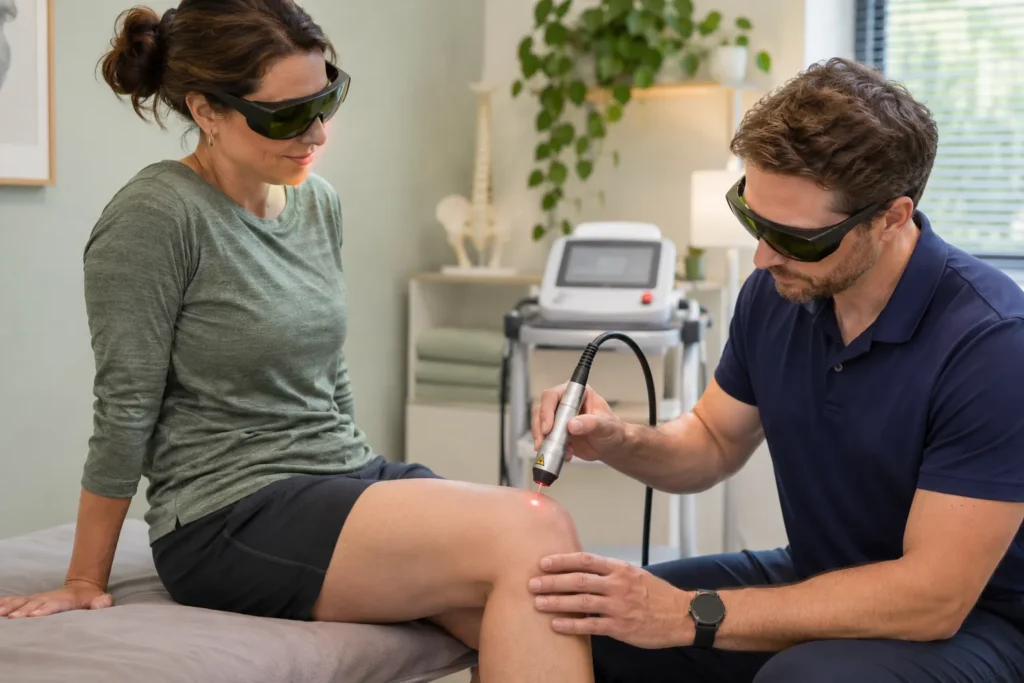
Deep tissue laser therapy is a form of photobiomodulation, which means using specific wavelengths of light to influence how cells in muscles, tendons, joints, and nerves behave. The term deep tissue usually refers to higher-powered Class IV lasers, which emit more than 500 milliwatts and can deliver energy to deeper structures in less time than low-level lasers. Low-level lasers, sometimes called cold lasers, use far less power and do not noticeably heat tissue. Researchers believe the light is absorbed inside cells, where it may support energy production, calm inflammation, and change how pain signals are sent. Treatment is non-invasive, drug-free, and does not involve needles. During a session, the laser is directed over the painful area while you rest comfortably, and many patients describe a gentle warmth. Everyone in the room wears protective eyewear, because a direct laser beam can harm the eyes.
What Is the Difference Between Class IV and Class II Laser Therapy?
Laser classes describe power and safety, not quality. University laser safety programs define Class II lasers as producing under 1 milliwatt of visible light and Class IV lasers as producing more than 500 milliwatts. In practice, a Class IV laser can deliver a treatment dose faster and reach deeper tissue, while a Class II laser offers a gentler, lower-power option. Hayes Family Chiropractic uses both. The M6 MLS, short for Multiwave Locked System, is a robotic Class IV laser that synchronizes a continuous wavelength and a pulsed wavelength and moves over the treatment area on its own arm. The Erchonia FX635 is a Class II low-level laser. In 2019, the FDA cleared the FX635 through the 510(k) process for temporary relief of chronic, nociceptive musculoskeletal pain. Clearance allows a device to be marketed for a stated use, but it does not promise results for every patient.
- Class IV (M6 MLS): higher power, deeper reach, and robotic delivery
- Class II (Erchonia FX635): low power and little or no heat
- Both: non-invasive, drug-free, and used alongside other care
- Both: protective eyewear is required during treatment
Does Laser Therapy Work for Chronic Pain? What Research Shows
The evidence is encouraging but mixed in quality. A 2009 review in The Lancet pooled 16 randomized trials with 820 patients and found that low-level laser therapy reduced pain right after treatment in acute neck pain and for up to 22 weeks after treatment in chronic neck pain. A 2023 meta-analysis of 48 randomized trials on high-intensity laser therapy found lower pain and better function than comparison treatments in musculoskeletal disorders, but it rated the pain evidence as low certainty because many studies had a high risk of bias. The American College of Physicians 2017 guideline lists low-level laser therapy among nondrug options for chronic low back pain, while noting that the evidence is low quality and the pain benefit over sham treatment is small. In short, laser therapy may help some people, results vary from person to person, and it tends to help most as part of a plan.
What Chronic Pain Conditions Is Laser Therapy Used For in Dunedin, FL?
Clinics use laser therapy for many musculoskeletal problems, although the evidence is stronger for some conditions than others. Common uses include chronic neck pain, low back pain, osteoarthritis of the knee and other joints, tendon problems such as tendinitis, plantar fasciitis, shoulder pain, and some nerve-related pain. At Hayes Family Chiropractic, laser therapy is usually paired with chiropractic adjustments and home exercise rather than used alone. For example, patients with leg pain from an irritated nerve may ask about laser as part of chiropractic sciatica treatment, and patients with long-standing back pain may combine laser with care for lower back pain. The doctors review your history and exam findings before suggesting laser, and they may refer you to a medical doctor if your symptoms point to a condition that needs other testing.
- Chronic neck pain and stiffness
- Low back pain and sciatica
- Knee, hip, and hand osteoarthritis
- Tendinitis, plantar fasciitis, and shoulder pain
- Muscle strains and sports injuries
What Does Recovery Look Like After a Laser Therapy Session?
There is usually no downtime. Most people return to their normal activities right after a session. Some notice less pain within the first few visits, while others need a longer series before they can tell a difference. Because the effects tend to build over time, laser therapy is typically given as a series of sessions over several weeks, and your doctor sets the schedule based on your condition and how you respond. Mild, temporary soreness can occur as tissues respond to treatment. Keep up with the stretches or exercises you are given, stay hydrated, and avoid straining a painful area right after treatment. Track your pain level and daily function, such as sleep, walking, or sitting time, so you and your doctor can judge whether the treatment is worth continuing. If you notice no meaningful change after a fair trial, ask your doctor about other options that may suit you better.
Is Deep Tissue Laser Therapy Safe, and Who Should Avoid It?
Therapeutic lasers have few reported side effects when used correctly, and in the Lancet neck pain review, side effects were mild and similar to placebo. Still, there are important precautions. The beam must never be aimed at the eyes, so protective eyewear is worn during treatment. Consensus guidance from laser therapy experts advises against treating over a known cancer site or directly over the abdomen during pregnancy. People with seizure disorders triggered by light should tell their provider, because some pulsed visible light may be a concern. Laser therapy is also not the right first step for every kind of pain. Mayo Clinic advises prompt medical care when back pain comes with certain warning signs, and the same caution applies to other chronic pain. See a medical doctor promptly or seek urgent care if you notice any of the symptoms below, because they may signal a condition that needs other testing.
- Fever, or pain that gets worse when you rest
- A history of cancer or unexplained weight loss with new pain
- New weakness, numbness, or tingling in an arm or leg
- A sudden change in bladder or bowel function
- Pain after a fall, car accident, or other serious injury
How Can Hayes Family Chiropractic Help With Laser Therapy for Chronic Pain in Dunedin, FL?
Hayes Family Chiropractic, located at 516 Patricia Ave. in Dunedin, serves patients from Clearwater, Palm Harbor, and across Pinellas County. Dr. Chris Hayes and Dr. Diane Hayes bring decades of combined experience and offer both the M6 MLS Class IV robotic laser and the Erchonia FX635 Class II low-level laser. Your visit starts with a history and exam, so the doctors can decide whether laser therapy fits your needs or whether adjustments, exercise, or a referral makes more sense. Class 4 laser therapy is not covered by insurance at this time, so ask about cost before you begin. Same-day appointments are available. To ask a question or schedule an evaluation, call (727) 736-1000. This article is for general education and is not a substitute for medical advice. Talk with a licensed provider about your symptoms.
Frequently Asked Questions About Deep Tissue Laser Therapy
Does deep tissue laser therapy hurt?
Most people do not find it painful. Patients commonly describe a gentle, soothing warmth during a Class IV session, and low-level lasers usually produce little or no sensation. Tell your provider if the area feels too warm, because the settings can be adjusted. Mild, temporary soreness afterward is possible, and most people return to their normal activities right away.
How many laser therapy sessions will I need?
It varies by condition, how long you have had pain, and how you respond. Laser therapy is usually given as a series of sessions over several weeks rather than a single visit, and research protocols differ widely. Your doctor should set a schedule, recheck your progress along the way, and adjust or stop the plan if you are not improving.
Is deep tissue laser therapy FDA approved?
Therapeutic lasers are generally FDA cleared, not FDA approved. Clearance through the 510(k) process means a device may be marketed for a stated use, such as the 2019 clearance of the Erchonia FX635 for temporary relief of chronic musculoskeletal pain. Clearance does not mean the FDA has confirmed that a device works for every condition or every patient.
Is laser therapy covered by insurance?
Coverage for therapeutic laser is limited. Hayes Family Chiropractic notes that its Class 4 laser therapy is not covered by insurance at this time, and Medicare covers only spinal manipulation from a chiropractor, not laser therapy. Ask about cost before you start, and visit our insurance and Medicare page for billing details.
What is the difference between cold laser and deep tissue laser?
Cold laser usually refers to low-level lasers, which use low power and do not noticeably heat tissue. Deep tissue laser usually refers to Class IV lasers, which produce more than 500 milliwatts and can deliver energy faster and deeper. Both are forms of photobiomodulation. The right choice depends on your condition, the area being treated, and your provider’s assessment.
Can laser therapy be combined with chiropractic adjustments?
Yes. Many patients receive laser therapy during the same visit as an adjustment, and the two are often used together with home exercises. Laser may help calm pain and inflammation, while adjustments and exercise address joint motion and strength. Your doctor will decide whether combining them makes sense based on your exam, health history, and goals.