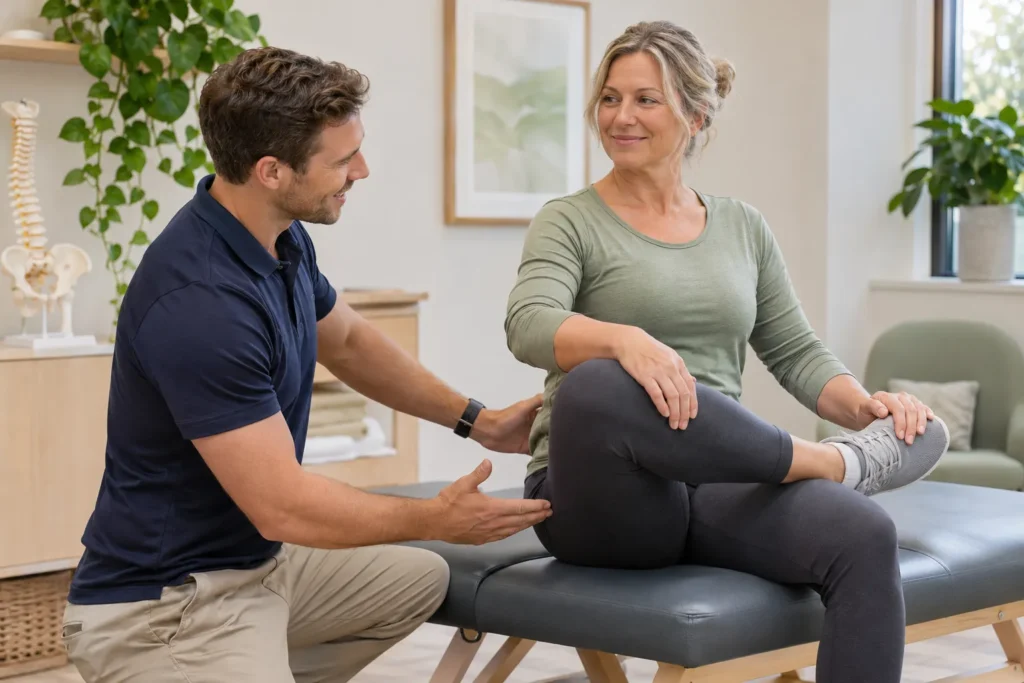
Chiropractic Sciatica Treatment Options in Dunedin, FL: What Helps Most
A chiropractor for sciatica can help many people by combining gentle spinal adjustments, soft tissue work, laser therapy, and a home exercise plan. Most sciatica eases within 4 to 6 weeks with conservative care. In Dunedin, FL, care starts with an exam like a lower back pain evaluation, and may add Class IV laser therapy. Sudden bladder changes or leg weakness need emergency care.
What Is Sciatica and What Causes It?
Sciatica is pain that follows the path of the sciatic nerve, which runs from the lower back through the buttock and down the back of each leg. It usually affects one side and can feel like a sharp, burning, or electric pain, sometimes with numbness, tingling, or weakness in the leg or foot. According to StatPearls, a peer-reviewed reference from the National Library of Medicine, sciatica affects 1% to 5% of people each year and 10% to 40% of people at some point in their lives. The most common cause is a herniated or bulging disc in the lower spine that irritates a nerve root. Other causes include narrowing of the spinal canal, a slipped vertebra, and tight muscles deep in the hip. Long hours of sitting, heavy lifting, and poor posture can make symptoms worse. Because the causes vary, a hands-on exam is the first step before any treatment plan is chosen.
Can a Chiropractor Help With Sciatica in Dunedin, FL?
Yes, for many people a chiropractor can be part of a safe, conservative sciatica plan, though the research is still developing. StatPearls lists spinal manipulation, deep tissue massage, physical therapy, and acupuncture among conservative options for sciatica. The National Center for Complementary and Integrative Health (NCCIH) notes that a 2015 review suggested manipulation may help sciatica, while also pointing out real limits in the studies. In one 2014 trial of 192 people with back-related leg pain, adding spinal manipulation to advice and home exercise reduced pain at 12 weeks and lowered medication use at one year, although leg pain was similar for both groups at one year. In other words, adjustments tend to work well as one piece of a broader plan. For patients in Dunedin, FL, that plan is built after a full exam that checks reflexes, strength, sensation, and how the spine moves.
Which Chiropractic Sciatica Treatments Help Most?
There is no single treatment that works for every case of sciatica. The options that tend to help most are the ones matched to the cause of nerve irritation and combined into a plan the patient can follow. A typical conservative plan may include several of the approaches below. Each one targets a different part of the problem, from joint motion and muscle tension to inflammation and daily habits. The American College of Physicians lists spinal manipulation and low-level laser therapy among nondrug options for chronic low back pain, though its guideline does not address sciatica on its own and notes that benefits are generally modest. Your provider will explain which options fit your exam findings, how often visits are suggested, and what progress should look like over the first few weeks. If symptoms are not improving as expected, the plan should change or a referral should follow.
- Gentle spinal adjustments to improve motion in the lower back and pelvis
- Deep tissue laser therapy with the M6 MLS Class IV robotic laser or the Erchonia FX635 low-level laser
- Soft tissue work and massage for tight hip, glute, and low back muscles
- Guided stretching and core strengthening exercises to do at home
- Posture and workstation advice to reduce strain from long hours of sitting
How Does Massage Support Sciatica Relief in Dunedin, FL?
Tight muscles in the lower back, hips, and buttocks can add to sciatic pain, and soft tissue work can help them relax. StatPearls includes deep tissue massage among conservative options for sciatica, and the American College of Physicians lists massage as an initial nondrug option for acute and subacute low back pain. Massage does not move a disc back into place, but it may ease muscle guarding, improve comfort, and make it easier to stay active and do home exercises. Hayes Family Chiropractic now offers in-office massage therapy with limited weekly availability, so patients can pair soft tissue work with adjustments and laser care under one roof. Because massage times are limited each week, patients are encouraged to call ahead to book. Tell your therapist about any numbness, recent injury, blood thinners, or other health conditions before your session so pressure can be adjusted safely.
What Exercises and Home Care Help Sciatica Heal?
What you do between visits matters as much as what happens in the office. Medical guidance from StatPearls advises against prolonged bed rest and recommends staying lightly active, because movement supports healing and helps prevent stiffness. Gentle activity, good posture, and smart lifting habits can reduce flare-ups and lower the chance that sciatica returns. Start slowly, stop any movement that sends pain farther down the leg, and ask your provider which stretches are right for your exam findings. The home care steps below are commonly recommended for people with sciatica. Progress is often gradual, so track which activities help and which make symptoms worse, and share that with your provider at each visit. If home care and office treatment together do not bring improvement after several weeks, your provider may recommend imaging or a referral to a medical specialist.
- Walk or swim at an easy pace most days
- Use a heat pack or cold pack for up to 20 minutes at a time
- Do gentle stretches and core exercises your provider shows you
- Break up long periods of sitting or standing
- Lift with your legs and keep loads close to your body
When Is Sciatica a Medical Emergency?
Most sciatica is not dangerous, but a few warning signs point to serious nerve compression, such as cauda equina syndrome, or to another condition that needs prompt medical care. Do not wait for a chiropractic visit if you notice any of the symptoms listed below. Go to an emergency room or call 911 instead. Prompt medical attention is also wise if sciatica began after a fall, car accident, or other injury, or if it comes with fever, unexplained weight loss, or severe pain at night or at rest. People with a history of cancer, a weakened immune system, or blood thinner use should also be checked by a medical doctor. StatPearls notes that imaging is reasonable when pain lasts 6 to 8 weeks despite conservative care, and right away when there is a neurologic deficit. Surgery is usually considered only after conservative care has failed.
- Loss of bladder or bowel control, or trouble starting urination
- Numbness in the groin, inner thighs, or buttocks (saddle numbness)
- Weakness or pain in both legs at the same time
- Leg weakness or numbness that is getting worse quickly
- New sexual dysfunction along with back or leg pain
How Can Hayes Family Chiropractic Help With Sciatica in Dunedin, FL?
Dr. Chris Hayes and Dr. Diane Hayes bring decades of combined experience to caring for back and leg pain in Dunedin, Clearwater, Palm Harbor, and the rest of Pinellas County. Your first visit includes a detailed history and exam to look for the likely source of nerve irritation and to screen for red flags that need medical care. From there, your plan may include gentle adjustments, deep tissue laser therapy, in-office massage with limited weekly availability, and a home exercise program. Same-day appointments are available, and the office accepts most major insurance and verifies benefits before your first visit, with details on the insurance and Medicare page. The office is at 516 Patricia Ave. in Dunedin. Call (727) 736-1000 to schedule an evaluation. This article is for general education and is not a substitute for medical advice. Talk with a licensed provider about your symptoms.
Frequently Asked Questions About Chiropractic Care for Sciatica
How many chiropractic visits does sciatica usually take?
It varies with the cause, how long symptoms have lasted, and how closely home exercises are followed. Many people need several visits before they notice steady relief. Most sciatica improves within 4 to 6 weeks with conservative care, and your provider should recheck progress regularly and change the plan or refer you if symptoms are not improving as expected.
Is it safe to see a chiropractor for sciatica from a herniated disc?
For many people it is, when care follows a careful exam. The NCCIH reports that mild soreness or stiffness after manipulation is common and usually fades within 24 hours, while serious complications are very rare. Gentle techniques are often used for disc problems, and anyone with progressive weakness or bladder changes should see a medical doctor first.
Can laser therapy help sciatic nerve pain?
Laser therapy, also called photobiomodulation, uses light energy aimed at sore tissue to support comfort and healing. The American College of Physicians lists low-level laser therapy as a nondrug option for chronic low back pain, though evidence is modest and not specific to sciatica. It is usually combined with adjustments and exercise rather than used alone.
Should I use heat or ice for sciatica?
Both can help, and the better choice often depends on what feels more comfortable. Many people use ice in the first few days of a flare to calm soreness, then switch to heat to relax tight muscles. Use either for up to 20 minutes at a time with a cloth barrier, and stop if numbness or skin irritation develops.
Can spinal decompression help sciatica?
Motorized decompression tables are often marketed for disc-related leg pain, but research on traction for sciatica is limited and mostly does not show clear benefit. A 2013 Cochrane review found little or no effect on pain or function for most people. Learn more in our guide to spinal decompression vs chiropractic adjustments.
When should I see a doctor instead of a chiropractor for sciatica?
See a medical doctor or go to the emergency room right away for loss of bladder or bowel control, saddle numbness, weakness in both legs, or rapidly worsening leg weakness. A medical visit is also wise if sciatica follows a serious injury or comes with fever or unexplained weight loss, or if pain lasts 6 to 8 weeks despite care.