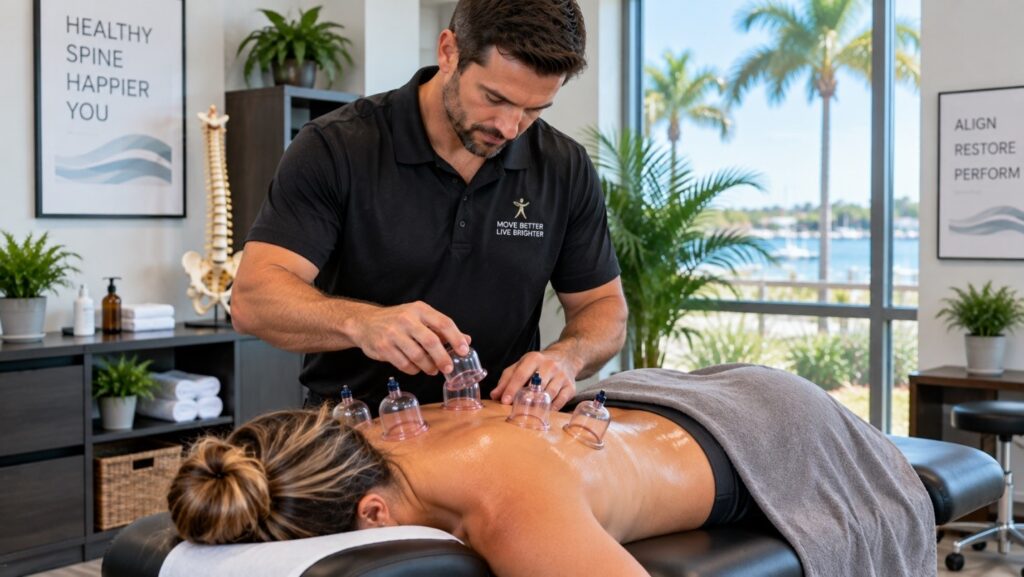
Chiropractic Cupping Therapy in Dunedin: What It Is and How It Complements Your Adjustment
Cupping therapy uses suction cups placed on the skin to help release tight muscle and fascia, often used alongside a chiropractic adjustment rather than in place of one. Hayes Family Chiropractic offers cupping as part of a broader care plan in Dunedin, FL. Contact our office to ask whether cupping fits your treatment.
What Is Cupping Therapy?
Cupping therapy involves placing small cups on the skin and creating suction, either with a manual pump or a heat source, which draws the skin and superficial muscle tissue upward into the cup. The suction is intended to increase local blood flow, decompress tight fascia and muscle, and reduce restriction in the tissue, similar in intent to a deep tissue massage but working through negative pressure rather than direct compression.
How Cupping Fits Alongside a Chiropractic Adjustment
An adjustment addresses joint alignment and mobility, while cupping addresses the soft tissue, muscle, and fascia surrounding those joints. Tight, restricted muscle tissue can pull a joint back out of alignment shortly after an adjustment, so releasing that tissue with cupping beforehand or alongside your adjustment may help the correction hold better between visits. Hayes Family Chiropractic incorporates cupping as a complementary technique within a broader chiropractic visit, not as a standalone replacement for adjustment.
What Does a Cupping Session Actually Feel Like?
Most patients describe cupping as a firm pulling or tight sensation rather than pain, and cups are typically left in place for a short period or moved slowly across the treatment area. It’s common and expected for cupping to leave temporary circular marks on the skin, which result from increased blood flow to the surface and typically fade within several days to about a week, similar to how a deep massage can leave temporary redness.
What Conditions Is Cupping Commonly Used For?
- Chronic muscle tightness in the neck, shoulders, and upper back
- Restricted mobility that persists between adjustments
- Athletes managing muscle recovery and tightness from training
- Patients with tension patterns tied to desk work or repetitive movement
Is Cupping Safe for Everyone?
Cupping is generally well tolerated, but it isn’t automatically appropriate for every patient. Certain skin conditions, blood clotting disorders, active infections at the treatment site, and pregnancy in specific areas of the body are all reasons a chiropractor may modify or avoid cupping for a given patient. A full health history during your visit helps determine whether cupping is a good fit for you specifically, rather than applying it as a default add-on.
How Cupping Differs From a Standard Massage
A massage works through direct pressure and compression on the muscle, while cupping works through suction that lifts and decompresses the tissue instead. Some patients find cupping reaches deep, stubborn tightness that feels different from a standard massage, though the two approaches can also be used together within a broader wellness visit depending on what a patient’s muscles need on a given day.
Does Cupping Replace the Need for Chiropractic Adjustments?
No. Cupping addresses soft tissue restriction, while a chiropractic adjustment addresses joint alignment and motion, and the two work on different structures in the body. Patients looking for cupping alone without any interest in adjustments should still expect a full evaluation first, since a chiropractor needs to understand your overall condition before recommending which combination of techniques fits your goals.
How Often Is Cupping Typically Used?
Frequency depends on the individual case: some patients benefit from cupping at nearly every visit if chronic tightness is a recurring issue, while others use it periodically, such as after an intense workout or a stretch of poor posture at a desk. Your chiropractor will discuss a reasonable frequency based on how your tissue responds, rather than defaulting to the same schedule for every patient.
What to Expect Before Your First Cupping Session
Before adding cupping to your plan, expect a conversation about your health history, current medications, skin condition, and any areas of particular tightness or concern. This is the same consultation and examination process used for any new treatment added to your chiropractic care, ensuring cupping is recommended because it fits your specific case, not offered as a blanket upsell.
Combining Cupping With Other Services at Hayes Family Chiropractic
Cupping is one of several complementary techniques available alongside chiropractic adjustments, which may also include deep tissue laser therapy for inflammation and healing, depending on what your evaluation shows. Your chiropractor builds a combination that fits your specific condition rather than a single fixed package applied to every patient.
Where on the Body Is Cupping Typically Used?
Cupping is most commonly applied to larger, muscular areas such as the upper back, shoulders, and along the sides of the spine, where chronic tension tends to accumulate. It can also be used on the neck and lower back depending on a patient’s specific pattern of tightness, though your chiropractor will select placement based on where your exam shows restriction, rather than a fixed routine applied to every patient regardless of their symptoms.
Understanding the Marks Cupping Can Leave Behind
The circular discoloration cupping sometimes leaves behind surprises new patients, and it’s worth understanding before your first session rather than after. These marks reflect increased blood flow to tight or restricted tissue and are not bruises in the traditional sense of an impact injury, though they can look similar. Marks typically fade within a few days to about a week, and their intensity often decreases as the underlying muscle tension improves with repeated sessions.
Cupping for Athletes and Active Patients
Athletes and physically active patients often carry chronic tightness in specific muscle groups tied to their sport or training routine, and cupping is commonly used to help address that recurring tension as part of a broader recovery and performance plan. Combined with regular chiropractic adjustments, cupping can be one part of how an active patient manages the physical demands of consistent training without letting tightness accumulate unchecked between sessions.
Setting Realistic Expectations for Cupping
Cupping is a supportive technique, not a cure for an underlying structural or postural problem. Patients get the most benefit when cupping is combined with regular adjustments and, where relevant, changes to posture or activity that are contributing to the tightness in the first place. Your chiropractor will be direct about what cupping can reasonably be expected to help with, and what it can’t address on its own.
How Cupping Complements a Broader Wellness Routine
Beyond specific injury recovery, some patients incorporate cupping into a regular wellness routine alongside chiropractic visits, similar to how someone might schedule regular massage as part of overall self-care. Used this way, cupping is less about addressing one acute problem and more about maintaining looser, more mobile tissue over time, which can make each subsequent adjustment more effective and comfortable.
Questions Worth Asking Before Adding Cupping to Your Plan
- Is cupping appropriate for my specific condition, or would a different technique serve me better?
- How many sessions before I should expect to notice a difference in tightness or mobility?
- Are there any areas of my body where cupping should be avoided based on my health history?
- How will cupping be combined with my existing adjustment schedule?
Cupping as Part of a Long-Term Care Plan
Patients managing a chronic tightness pattern, rather than a single acute issue, often see cupping incorporated as a recurring part of their long-term chiropractic care rather than a one-time add-on. Reassessing periodically, alongside your regular adjustments, helps determine whether cupping continues to add value for your specific pattern of tension or whether your needs have shifted over time.
A Simple Way to Decide If Cupping Is Worth Trying
If you’ve noticed that tightness in your neck or upper back tends to return quickly after an adjustment, or you carry visible tension in the same muscle groups week after week, that pattern is a reasonable prompt to ask your chiropractor specifically about cupping at your next visit, rather than waiting for it to be offered.
Talking to Your Chiropractor About Cupping
There’s no need to research cupping extensively before your visit. A short conversation about where you feel chronic tightness, and what has or hasn’t helped in the past, gives your chiropractor enough to decide whether cupping is a reasonable technique to add to your specific plan going forward.
Trying Chiropractic Cupping Therapy in Dunedin, FL
If chronic muscle tightness has been limiting how well your adjustments hold between visits, cupping may be worth discussing at your next appointment. Contact Hayes Family Chiropractic in Dunedin to ask whether cupping fits your care plan, or learn more about our doctors before you book.