Chiropractor vs. Massage Therapy for Back and Neck Pain: Which Does What?
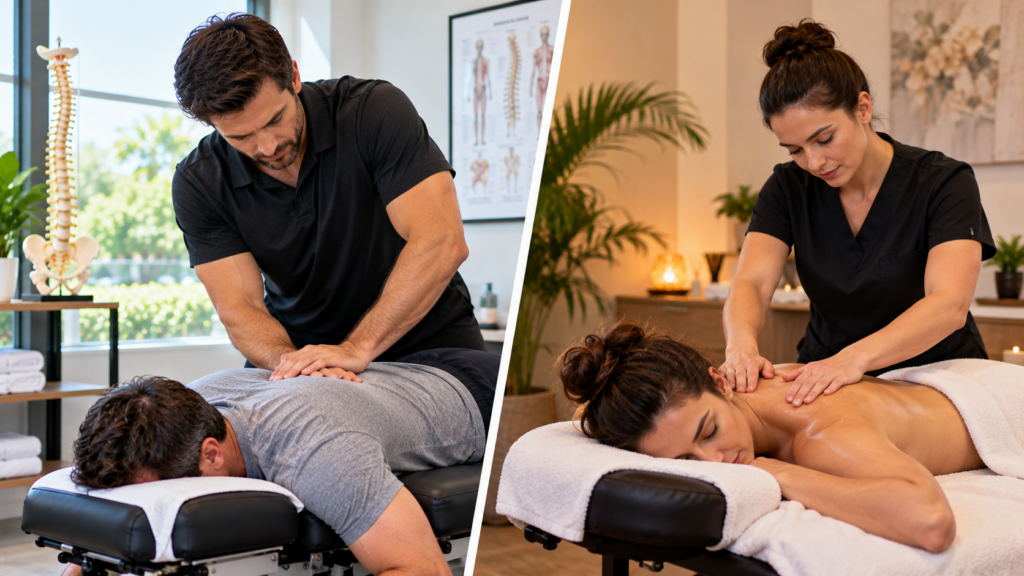
Chiropractic care and massage therapy address different aspects of back and neck pain. Chiropractic targets the underlying structural dysfunction, including restricted joints, disc problems, and nerve irritation, through spinal adjustments and related techniques. Massage therapy focuses on soft tissue tension, muscle tightness, and stress-related pain in the muscles and fascia without directly addressing joint alignment or disc pathology. At Hayes Family Chiropractic in Dunedin, FL, the structural approach of chiropractic adjustments and deep tissue laser therapy addresses conditions that massage alone cannot resolve. For many patients with both joint restriction and muscular tension, the most effective approach combines elements of both. Understanding which type of care your pain needs starts with a chiropractic evaluation to identify the specific structural and soft tissue factors involved.
What Chiropractic Care Treats for Back and Neck Pain
Chiropractic care is specifically designed to diagnose and treat dysfunction in the joints, discs, and nerves of the spine. When a vertebral joint is restricted in its normal range of motion, it creates a cascade of effects: local muscle tension develops to guard the joint, the disc above or below may experience abnormal stress, and the nerve exiting the spine at that level may be irritated. These mechanical problems do not resolve with soft tissue work alone because the underlying joint restriction remains.
Common back and neck conditions that respond best to chiropractic care include lumbar and cervical facet joint dysfunction, herniated or bulging discs, degenerative disc disease, sciatica and radiculopathy, sacroiliac joint dysfunction, cervicogenic headaches, and postural imbalances that have created structural load-bearing problems in the spine. These conditions have a mechanical structural origin and require mechanical structural treatment.
At Hayes Family Chiropractic in Dunedin, chiropractic adjustments are combined with spinal decompression, laser therapy, and corrective exercise to create a comprehensive structural treatment approach. This is particularly important for patients who have tried massage therapy without lasting relief because it means the structural component of their pain has not been addressed.
What Massage Therapy Treats for Back and Neck Pain
Massage therapy works on the muscles, tendons, fascia, and other soft tissues of the body. By applying sustained pressure and specific stroking techniques, a massage therapist releases muscle tension, improves circulation in the soft tissue, and reduces the neurological sensitivity that makes tight muscles painful. These effects can provide significant relief for conditions that are primarily muscular in nature.
Back and neck conditions that respond well to massage therapy include acute and chronic muscle tension from stress, poor posture, or repetitive strain; trigger points (localized areas of muscle hypersensitivity that refer pain to other areas); myofascial pain syndrome; and tension headaches originating from tight neck and shoulder muscles. For these conditions, the therapeutic value of massage is genuine and the relief can last days to weeks.
The limitation of massage for back and neck pain is that it cannot correct joint restriction, reduce disc herniation, or improve nerve compression. If your back or neck pain returns consistently after every massage, or if massage provides only brief relief before the tension returns, this typically indicates that a structural joint or disc problem is driving the muscle tightness as a secondary response. In that case, a chiropractic evaluation is the appropriate next step.
Key Differences Between Chiropractic and Massage
The most fundamental difference between chiropractic and massage is the target tissue. Chiropractic adjustments directly mobilize the joints of the spine and pelvis, which are structures that massage cannot access in the same mechanical way. The high-velocity, low-amplitude thrust of a spinal adjustment or the precise decompressive force of a flexion-distraction technique creates changes in the joint itself, including changes in joint fluid pressure, receptor signaling, and mechanical position, that massage cannot replicate.
A second key difference is licensure and scope of diagnosis. Chiropractors are doctoral-level healthcare providers who are trained to diagnose spinal and musculoskeletal conditions, order diagnostic imaging, and develop treatment plans. Licensed massage therapists are trained to assess and treat soft tissue dysfunction but do not diagnose in the clinical sense and cannot order imaging. This distinction matters when you have a pain condition that has not been properly evaluated and diagnosed.
Duration and frequency of care also typically differ. Massage sessions are commonly scheduled weekly or bi-weekly for maintenance of soft tissue health. Chiropractic care during an active pain episode is typically more frequent initially, often two to three times per week, and tapers as the condition improves. Hayes Family Chiropractic in Dunedin will establish the appropriate frequency for your care based on your specific examination findings.
When to Choose Chiropractic Over Massage for Pain
Choose chiropractic care when your back or neck pain is accompanied by nerve symptoms such as radiating pain, numbness, or tingling. These symptoms indicate nerve involvement that requires structural decompression rather than soft tissue work. Similarly, choose chiropractic when your pain came on after a specific incident such as lifting, a slip and fall, or a motor vehicle accident, as these typically involve joint injury or disc damage that needs direct treatment.
Chiropractic is also the better choice when your pain is severe enough to significantly limit your range of motion or daily function, when the pain has been present for more than a few weeks without improvement, or when you have already had repeated massage sessions without lasting relief. These patterns suggest that the pain driver is structural rather than purely muscular.
At Hayes Family Chiropractic in Dunedin, FL, a thorough examination on your first visit will confirm whether your pain has a chiropractic-amenable structural component. If it does, chiropractic care is the more direct path to lasting relief.
When Combining Chiropractic and Massage Produces the Best Results
For many patients with back and neck pain, the best outcomes come from combining chiropractic care with soft tissue approaches. Chronic muscle tension that develops as a secondary response to long-standing joint restriction can limit the effectiveness of adjustments if the muscles are too tight to allow the joint to move normally. Soft tissue work before an adjustment can relax the surrounding musculature and make the adjustment more effective and more comfortable.
Conversely, relieving the underlying structural dysfunction through chiropractic care removes the primary stimulus for the muscle tension, allowing soft tissue work to produce longer-lasting results. Patients who receive only massage for pain driven by a joint restriction find that the tension returns quickly because the cause has not been addressed. Adding chiropractic to the plan resolves the root issue.
If you are already receiving regular massage and noticing that the relief duration is getting shorter, or that the same areas of tension return consistently, a chiropractic evaluation at Hayes Family Chiropractic in Dunedin may identify the structural component that is limiting your massage results. Many patients find that adding chiropractic care to their routine makes both therapies more effective.
Is a chiropractor better than massage for back pain?
For back pain with a structural or disc-related cause, chiropractic is more effective than massage because it directly addresses the joint restriction, disc involvement, or nerve irritation driving the pain. For back pain that is purely muscular, massage may be equally or more effective. A chiropractic examination at Hayes Family Chiropractic in Dunedin can determine which type of care best matches your specific condition.
Can massage make a spinal problem worse?
Standard massage therapy does not generally worsen a spinal structural problem, but it cannot correct one either. Deep pressure applied directly over a herniated disc or acutely inflamed joint may temporarily increase discomfort. If you have a known disc herniation or are in an acute pain episode, inform your massage therapist so they can modify their approach.
Should I get a massage before or after chiropractic?
When massage and chiropractic are used together, receiving soft tissue work before the adjustment can be beneficial because it relaxes the muscles and allows the adjustment to be performed more easily. However, the sequencing depends on the clinical approach at the specific clinic. At Hayes Family Chiropractic in Dunedin, the doctors will advise on the most effective combination based on your examination findings.
Can chiropractic relieve muscle tension in the neck and upper back?
Yes. While chiropractic targets joints rather than muscles directly, restoring normal joint motion relieves the primary stimulus for the muscle guarding and tension that builds up around a restricted joint. Most patients report that their neck and upper back muscle tension decreases significantly as chiropractic care normalizes the joint mechanics in the cervical and thoracic spine.
How do I know if my back pain is muscular or structural?
Muscular back pain is typically diffuse, worsens with specific movements or positions, and does not radiate into the limbs. Structural or joint-related pain often includes a more localized point of maximum tenderness, limited range of motion in specific directions, and may produce clicking or catching sensations with movement. Nerve-related structural pain radiates into the leg or arm. A chiropractic examination at Hayes Family Chiropractic identifies the specific source of your pain.
Does Hayes Family Chiropractic in Dunedin offer massage therapy?
Hayes Family Chiropractic offers a range of complementary therapies including deep tissue laser therapy and soft tissue work as part of comprehensive chiropractic care. Contact the clinic in Dunedin for specific information about the services currently available and how they may be integrated into your care plan.