Spinal Decompression or Chiropractic Adjustments for Chronic Back Pain in Dunedin, FL?
For most people with chronic back pain, chiropractic adjustments have stronger research support than spinal decompression. Adjustments are listed as a first-line nondrug option by the American College of Physicians, while reviews of motorized traction show little clear benefit. In Dunedin, FL, a lower back pain evaluation can show whether adjustments, laser therapy, or a referral fits your needs.
What Is Spinal Decompression Therapy?
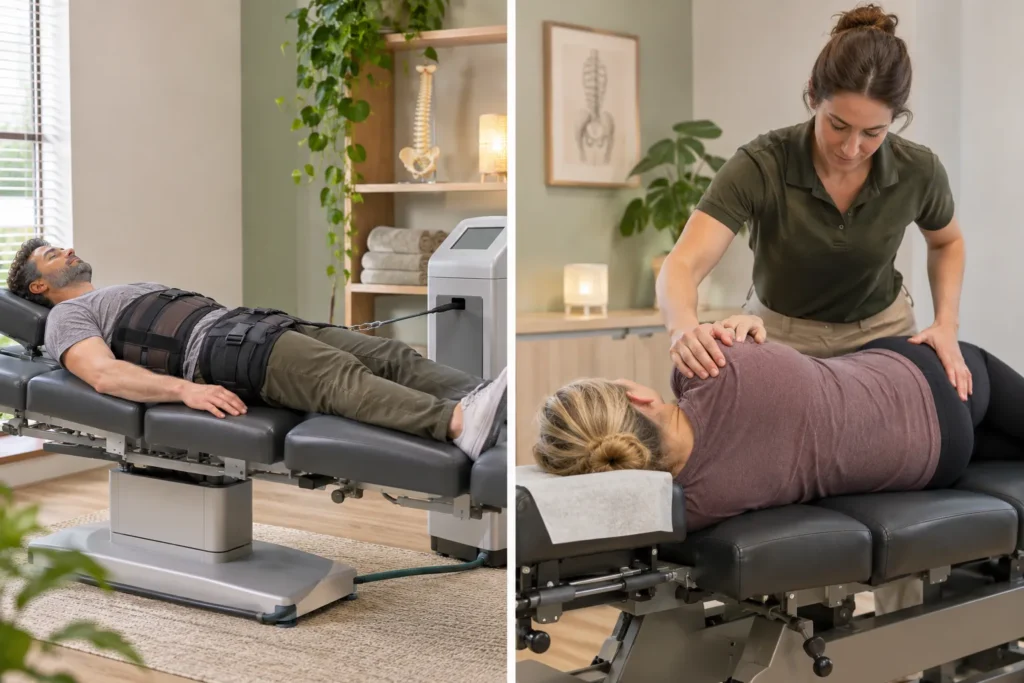
Nonsurgical spinal decompression is a form of motorized traction. You lie on a padded, computer-controlled table while a harness gently pulls on the lower back or neck in cycles of pulling and relaxing. The goal is to lower pressure inside the spinal discs and ease pressure on irritated nerves. Branded systems such as VAX-D and DRX9000 are cleared by the FDA as powered traction devices, which means they were found similar to devices already on the market. FDA clearance is not the same as proof that a device works better than other care. Nonsurgical decompression is also different from surgical decompression, such as a laminectomy, where a surgeon removes bone or disc material that presses on a nerve. When people search for spinal decompression near a chiropractor, they usually mean the table version, and that is the treatment compared with adjustments in this guide.
How Do Chiropractic Adjustments Differ From Spinal Decompression?
Both treatments aim to ease back pain without surgery, but they work in different ways. A chiropractic adjustment, also called spinal manipulation, is a quick, controlled movement a trained provider applies to a joint by hand or with a small instrument. Decompression uses a machine to apply slow, sustained pulling force over a longer session. Adjustments focus on how individual joints move, while decompression focuses on stretching the spine along its length. Coverage also differs. Medicare Part B covers manual manipulation of the spine to correct a subluxation, while Medicare does not cover VAX-D decompression. The main differences are summarized in the list below. Many chiropractic plans add soft tissue work, laser therapy, and exercise, so a plan usually involves more than one approach. Ask any provider which parts of a plan have the strongest evidence before you commit to a series of visits.
- Method: hands-on manipulation versus motorized traction on a table
- Focus: joint motion and muscle tension versus lengthwise spinal stretch
- Evidence: listed in national guidelines versus limited, mostly negative reviews
- Medicare: covers manual spinal manipulation for subluxation, not VAX-D
- Combined care: adjustments often pair with laser, massage, and exercise
What Does the Research Say About Spinal Decompression?
The evidence for motorized traction is limited and mixed. A 2013 Cochrane review of 32 randomized trials with 2,762 participants found that traction, alone or with other treatments, had little or no effect on pain, function, or return to work for people with low back pain, with or without sciatica. Manual and mechanical traction performed about the same. Some trials reported side effects such as increased pain or worsening nerve signs. A 2007 technology assessment prepared for the Agency for Healthcare Research and Quality found the available evidence on decompression devices too limited in quality and quantity to draw conclusions, and none of the studies it reviewed included adults over 65. Medicare does not cover VAX-D, citing insufficient scientific data. Some patients report feeling better after decompression, but stronger trials are needed before it can be called a proven treatment.
What Does the Research Say About Chiropractic Adjustments for Chronic Back Pain?
Spinal manipulation has a larger body of research, although its benefits are often modest. The American College of Physicians 2017 guideline lists spinal manipulation among first-line nondrug options for chronic low back pain, alongside exercise, acupuncture, yoga, tai chi, and low-level laser therapy. According to the NCCIH, a 2019 review found that manipulation gave short-term pain relief similar to other recommended treatments, such as exercise or medication, and slightly better function. A 2020 review from the Agency for Healthcare Research and Quality found small improvements in function and pain. Safety is generally good. Mild soreness, stiffness, or headache is common and usually fades within 24 hours, while serious complications are very rare. Results tend to be strongest when adjustments are combined with active care, such as stretching, strengthening, and staying active, rather than used as a stand-alone fix.
Which Option Is Right for Chronic Back Pain in Dunedin, FL?
The right choice depends on what is causing your pain, how long it has lasted, your age and bone health, and what you have already tried. For many people with chronic back pain, research supports starting with conservative care such as adjustments, exercise, and soft tissue work before considering devices with weaker evidence. At Hayes Family Chiropractic, the doctors can evaluate whether adjustments, deep tissue laser therapy, in-office massage, or a referral to another provider for decompression or medical care fits your situation. Decompression is often not recommended for people with osteoporosis, recent fractures, spinal implants, or pregnancy, so a careful history matters. The questions below can help you compare any treatment you are offered in Dunedin, FL, or anywhere else, and make a decision that fits your goals and budget.
- What is the likely cause of my back pain?
- What does research say about this treatment for my condition?
- How many visits are suggested, and how will progress be measured?
- Does my insurance or Medicare cover this treatment?
- What should I do at home between visits?
When Should Chronic Back Pain Be Checked by a Medical Doctor?
Back pain that lasts more than 12 weeks is considered chronic, and most of it is not caused by a serious problem. Some warning signs, however, need prompt medical care rather than any type of chiropractic or decompression treatment. Seek emergency care right away for loss of bladder or bowel control, numbness in the groin or inner thighs, or weakness in both legs, which can signal cauda equina syndrome. See a medical doctor soon for the other red flags listed below. Imaging is usually reserved for pain that lasts 6 to 8 weeks despite conservative care or for signs of nerve damage. Surgery, including surgical decompression, is generally considered only after conservative treatment has failed. A good chiropractic exam includes screening for these signs, and your provider should refer you when symptoms point to a condition outside chiropractic care.
- Back pain after a fall, car accident, or other injury
- Fever, chills, or night sweats with back pain
- Unexplained weight loss or a history of cancer
- Severe pain at night or at rest
- Leg weakness or numbness that keeps getting worse
How Can Hayes Family Chiropractic Help With Chronic Back Pain in Dunedin, FL?
Dr. Chris Hayes and Dr. Diane Hayes bring decades of combined experience to treating back pain for patients in Dunedin, Clearwater, Palm Harbor, and across Pinellas County. Your visit starts with a detailed history and exam to identify the likely source of pain and screen for red flags. Your plan may include gentle adjustments, M6 MLS Class IV robotic laser or Erchonia low-level laser therapy, in-office massage with limited weekly availability, and a home exercise plan. If decompression or medical care seems like a better fit, the doctors can discuss a referral. The office accepts most major insurance, accepts Medicare assignment, and verifies benefits before your first visit. Learn more about your first chiropractic visit, or visit the office at 516 Patricia Ave. in Dunedin. Call (727) 736-1000 for a same-day appointment. This article is for general education and is not a substitute for medical advice. Talk with a licensed provider about your symptoms.
Frequently Asked Questions About Spinal Decompression vs Chiropractic
Does Hayes Family Chiropractic offer spinal decompression?
Call the office to ask about current decompression options. The doctors focus on chiropractic adjustments, deep tissue laser therapy, in-office massage, and exercise guidance. If an exam suggests that decompression or another treatment may be a better fit, they can talk with you about a referral to another provider.
Is spinal decompression better than chiropractic for a herniated disc?
Current research does not show that decompression is better. A 2013 Cochrane review found traction had little or no effect for low back pain with or without sciatica, while spinal manipulation is listed in national guidelines as an option for back pain. Many disc herniations improve with conservative care over several weeks, so an exam is a sensible first step.
Does Medicare cover spinal decompression?
Medicare does not cover VAX-D decompression, citing insufficient scientific data. Medicare Part B does cover manual manipulation of the spine to correct a subluxation, and you pay 20% of the Medicare-approved amount after the Part B deductible. Medicare does not cover chiropractic X-rays, massage, or acupuncture. Check private plan coverage with your insurer.
Can you do spinal decompression and chiropractic adjustments together?
Some clinics combine them, and there is little research on whether the combination works better than either one alone. If you are considering both, ask each provider how the treatments fit together, how progress will be measured, and when the plan will be reviewed. Avoid committing to a long prepaid package before you know whether care is helping.
Who should avoid spinal decompression therapy?
Device makers and insurers commonly list osteoporosis, recent spinal fractures, spinal implants or fusion hardware, tumors, infection, and pregnancy as reasons to avoid decompression. Because these conditions can be hidden, a full history and exam should come before any traction treatment. Ask your provider to review your health history and current medications first.
How long does it take for chiropractic care to help chronic back pain?
Many people notice some change within a few weeks, though chronic pain often improves gradually. Research shows short-term relief from manipulation similar to exercise or medication for many adults. See how often to see a chiropractor for back pain for typical visit schedules and how plans change as you improve.