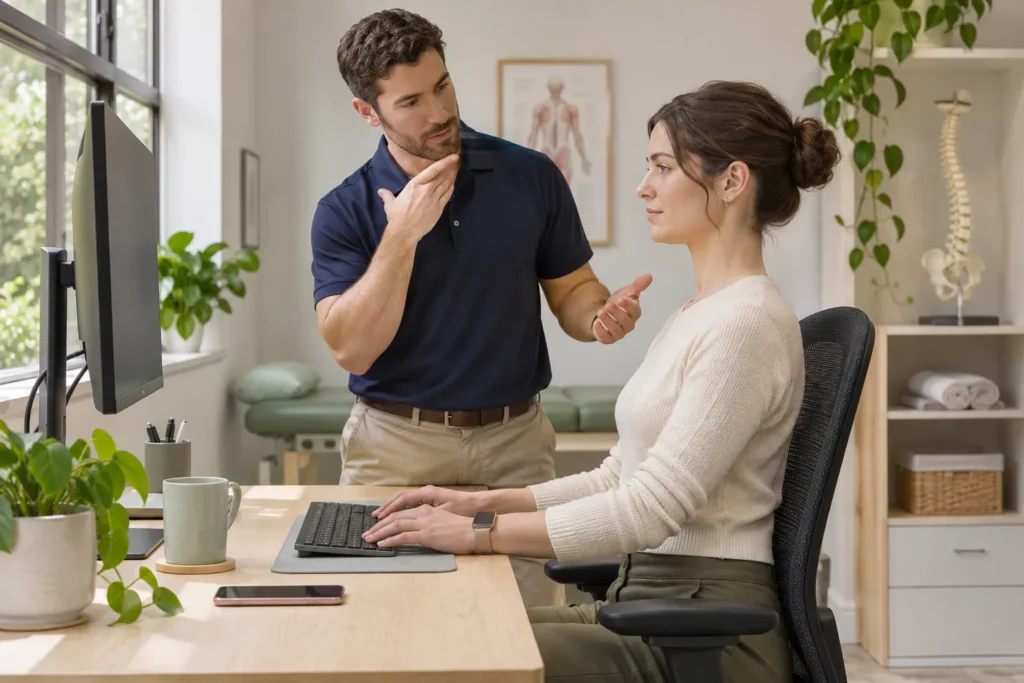
Chiropractic Care for Neck Pain and Tech Neck in Dunedin, FL: Causes, Treatments and Prevention
A chiropractor can help many people with neck pain and tech neck by restoring joint motion, easing muscle tension, and teaching better posture habits, and research suggests spinal manipulation may reduce acute neck pain. Care may combine adjustments, laser therapy, exercises, and in-office massage therapy. Severe pain with weakness or fever needs medical care first.
What Causes Neck Pain and Tech Neck?
Most neck pain comes from the muscles, joints, and discs of the cervical spine rather than a serious disease. Mayo Clinic lists common causes as muscle strain, worn joints, nerve compression from herniated discs or bone spurs, injuries such as whiplash, and, less often, diseases such as rheumatoid arthritis or meningitis. Tech neck is a nickname for neck and upper back strain linked to looking down at phones, tablets, and laptops for long periods. A 2014 study in Surgical Technology International estimated that tilting the head forward 15 degrees raises the load on the neck to about 27 pounds, and a 60-degree tilt raises it to about 60 pounds. Holding that position for hours can tire the muscles at the back of the neck and between the shoulder blades. Poor sleep positions, stress, and long drives can add to the strain.
- Looking down at a phone or tablet for long stretches
- A laptop or monitor set below eye level
- A pillow that leaves the neck bent or twisted
- Car accidents, falls, and sports injuries
- Age-related wear in the neck joints and discs
Can a Chiropractor Help Neck Pain in Dunedin, FL?
For many common types of neck pain, yes. NCCIH summarizes a 2021 analysis of 6 studies with 446 participants showing that spinal manipulation, alone or with other treatments, reduced acute neck pain, and a 2019 review of 47 trials suggesting that manipulation or mobilization may reduce chronic neck pain and improve function. Researchers caution that many of these studies were small, so the evidence is rated low to moderate quality. A chiropractor starts with a history and exam to check how your neck moves, where it hurts, and whether nerves are involved. If your symptoms point to something that needs imaging or medical care, the right step is a referral. Neck pain after an accident deserves prompt attention, and our page on whiplash care explains what to watch for. Treatment tends to help most when paired with movement and posture changes at home.
What Chiropractic Treatments Help Neck Pain and Tech Neck?
Treatment depends on what the exam shows, and most plans combine several approaches. Chiropractic adjustments use controlled, hand-delivered force to improve motion in stiff joints, and you can always ask for a gentler, lower-force option. Laser therapy may help calm pain and inflammation in irritated tissues, and a 2009 Lancet review found that low-level laser therapy reduced chronic neck pain for up to 22 weeks after treatment. Soft tissue work and massage can loosen tight muscles in the neck and shoulders, and Hayes Family Chiropractic now offers massage therapy in the office, with limited availability each week. Exercise ties it all together by building strength in the muscles that hold your head up. Your doctor should explain what each part of the plan is for, how often to come in, and when your progress will be reassessed, so you know what to expect.
- Chiropractic adjustments to restore joint motion
- M6 MLS Class IV laser and Class II low-level laser therapy
- In-office massage therapy for tight neck and shoulder muscles
- Posture coaching and home exercise plans
- Acupuncture and cupping when appropriate
What Exercises Help Relieve Tech Neck?
Simple, regular movement can ease tech neck and help keep it from coming back. Mayo Clinic suggests gentle stretches such as slowly turning the head from side to side and tilting it up and down. Chin tucks are a common exercise: sit tall, draw your chin straight back as if making a double chin, hold for a few seconds, and relax. Shoulder blade squeezes help counter rounded shoulders. Doorway chest stretches open the tight muscles in the front of the chest that pull the shoulders forward. Do these exercises slowly, and stop if they cause sharp pain, numbness, or tingling. Aim for short sessions spread through the day instead of one long session. Your chiropractor can check your form, adjust the exercises to fit your condition, and add strength work as you improve. With neck exercises, consistency matters more than intensity, so build them into your daily routine.
How Can You Prevent Tech Neck at Home and Work in Dunedin, FL?
Prevention comes down to how you position your screens and how often you move. Mayo Clinic advises keeping your computer screen at eye level and holding small devices up rather than bending your neck down to look at them. Support your lower back when you sit, keep your feet flat on the floor, and let your shoulders relax. Take regular short breaks to stand, roll your shoulders, and look up and around the room. Use a headset or speakerphone for long calls instead of cradling the phone between your ear and shoulder. At night, choose a pillow that keeps your neck in line with your spine. For many people in Dunedin, long commutes across Pinellas County and hours on a laptop add up, so building these habits into your day can make a real difference over time. Small changes, repeated daily, tend to matter most.
When Is Neck Pain a Medical Emergency?
Most neck pain improves with time and conservative care, but some symptoms need urgent medical attention. Mayo Clinic advises emergency care for severe neck pain after a serious injury such as a car crash, diving accident, or fall, for neck pain with weakness in an arm or leg, and for severe neck pain with a high fever, which can signal meningitis. You should also see a healthcare professional if pain spreads down your arms, keeps getting worse, or comes with numbness, tingling, or headache. Rarely, a tear in a neck artery, called cervical artery dissection, can cause neck pain and lead to stroke. The American Heart Association has noted an association between neck manipulation and these tears, though cause and effect has not been established. Call 911 for the warning signs below, whether or not you have had recent neck treatment.
- Sudden weakness or numbness in an arm or leg, or trouble walking
- Dizziness, vertigo, double vision, or unsteadiness
- Slurred speech, nausea, or vomiting with neck or head pain
- Severe neck pain with a high fever
- Severe neck pain after a fall, crash, or diving accident
How Can Hayes Family Chiropractic Help With Neck Pain and Tech Neck in Dunedin, FL?
Hayes Family Chiropractic is located at 516 Patricia Ave. in Dunedin and serves patients from Clearwater, Palm Harbor, and throughout Pinellas County. Dr. Chris Hayes and Dr. Diane Hayes bring decades of combined experience and can combine adjustments, laser therapy, posture guidance, and home exercises in one plan. Massage therapy is now offered in the office with limited weekly availability, so call ahead to book a session. If your neck pain comes with headaches, you can also read about our approach to migraine and headache care. The office accepts most major insurance and verifies your benefits before your first visit, and same-day appointments are available. To schedule a neck pain evaluation, call (727) 736-1000. This article is for general education and is not a substitute for medical advice. Talk with a licensed provider about your symptoms.
Frequently Asked Questions About Neck Pain and Tech Neck
What is tech neck?
Tech neck is a common name for neck, shoulder, and upper back strain linked to looking down at phones, tablets, and computers for long periods. Bending the head forward increases the load on the neck, and one 2014 study estimated that a 60-degree tilt puts about 60 pounds of force on the cervical spine. Symptoms often include stiffness, aching, and tension headaches.
How long does neck pain take to improve with chiropractic care?
It depends on the cause, how long you have had pain, and your daily habits. Recent strain often improves faster than long-standing pain. Mayo Clinic advises seeing a healthcare professional if neck pain lasts several weeks despite self-care. Your chiropractor should recheck your progress regularly and change the plan or refer you elsewhere if you are not improving as expected.
Is it safe to have my neck adjusted?
For most people, the risk of a serious problem from a neck adjustment is low. NCCIH reports that mild soreness, stiffness, or headache are common afterward and usually fade within 24 hours. Very rare cases of neck artery tears have been reported. Share your full health history with your chiropractor, and ask for gentler, low-force techniques if you prefer them.
Should I see a chiropractor or a medical doctor for neck pain?
If you have severe pain after an injury, weakness, numbness, a high fever, or trouble walking, see a medical doctor or go to the emergency room first. For common neck stiffness and strain without warning signs, a chiropractor is a reasonable place to start. You can learn more about our doctors and how they evaluate new patients.
Can massage therapy help neck pain?
Massage may help ease tight neck and shoulder muscles. Mayo Clinic notes that a trained therapist can knead tense neck muscles, which may help chronic neck pain. Massage often works well alongside adjustments and exercise. Hayes Family Chiropractic offers in-office massage therapy with limited availability each week, so call the office ahead of time to book a session.
How should I sleep if I have neck pain?
Many people find sleeping on the back or side more comfortable than sleeping on the stomach, which keeps the neck turned for hours. Use a pillow that keeps your head level with your spine rather than propped up or dropped down. If neck pain wakes you up at night or comes with fever, numbness, or weakness, see a healthcare provider.