Posts by Dr. Hayes
Certified Nutrition Coaching for Energy and Healing: Beyond Weight Loss at Hayes Family Chiropractic

Certified nutrition coaching at a chiropractic clinic looks at how food, energy levels, and inflammation affect healing and pain, not just the number on a scale. Hayes Family Chiropractic in Dunedin, FL builds nutrition guidance into a patient’s broader care plan. Contact our office to ask how coaching could support your goals.
Nutrition Coaching Is About More Than the Scale
When people hear “nutrition coaching” at a chiropractic clinic, many assume it’s only about weight loss. While weight management is one reasonable goal, certified nutrition coaching also looks at how food choices affect energy levels, inflammation, sleep quality, and the body’s ability to heal from the very conditions bringing a patient in for chiropractic care in the first place. A patient recovering from a soft tissue injury or managing chronic inflammation may benefit from nutrition guidance regardless of whether weight loss is a goal at all.
How Nutrition Connects to Chiropractic Care
Chronic inflammation can make it harder for the body to respond to chiropractic adjustments, laser therapy, or any other treatment aimed at reducing pain and restoring function. Nutrition choices, particularly around foods that promote or reduce inflammation, blood sugar stability, and hydration, play a real role in how well the body supports its own healing process between visits. Hayes Family Chiropractic incorporates nutrition guidance as part of a broader functional wellness approach, not as a separate, unrelated service.
What Does a Certified Nutrition Coaching Session Involve?
- A review of current eating patterns, energy levels, and any specific health goals
- Practical, individualized guidance rather than a generic diet handout
- Coordination with your existing chiropractic care plan, not a standalone program
- Realistic, sustainable adjustments rather than restrictive, short-term rules
Who Benefits From Nutrition Coaching Beyond Weight Loss?
Patients dealing with low energy, sleep difficulty, chronic muscle or joint inflammation, or a general sense of not feeling their best, even without a specific weight-loss goal, are often good candidates for nutrition coaching. So are patients recovering from an injury who want their body in the best possible position to heal, and patients managing a chronic condition where diet plays a documented supporting role.
How Is This Different From a Generic Diet Plan?
A generic diet plan applies the same rules to every person regardless of their health history, activity level, or specific goals. Certified nutrition coaching at Hayes Family Chiropractic starts with your actual history and current condition, the same way a chiropractic evaluation does, and builds guidance around what’s realistic and sustainable for your specific life, not a one-size template borrowed from a general wellness program.
Does Nutrition Coaching Replace Medical Nutrition Therapy?
No. Nutrition coaching is intended to support general wellness and complement chiropractic care, not replace medical nutrition therapy for a diagnosed condition like diabetes or a significant metabolic disorder. Patients managing a diagnosed medical condition should continue working with their medical provider on that specific issue, with nutrition coaching serving as an additional, coordinated layer of support rather than a substitute.
How Weight Loss Fits Into the Bigger Picture
For patients who do want doctor-supervised weight loss support, that goal is addressed as part of the same coordinated approach, factoring in how extra weight may be contributing to joint stress, back pain, or reduced mobility. Rather than treating weight loss as disconnected from chiropractic goals, it’s considered alongside pain relief and function as part of one plan.
What to Expect at Your First Nutrition Coaching Conversation
Your first conversation about nutrition coaching typically happens as part of your broader consultation and examination, where your goals, current habits, and health history are discussed alongside your chiropractic concerns. From there, you’ll receive practical next steps rather than an overwhelming list of restrictions to follow all at once.
How Long Before Patients Notice a Difference?
Energy and inflammation-related changes from nutrition adjustments often show up gradually over several weeks rather than immediately, since the body needs time to respond to consistent changes in diet. Patients who stay consistent with practical, sustainable changes tend to report noticeable improvements in energy and how they feel day to day, though individual results vary based on starting point and consistency.
Why More Chiropractic Clinics Are Adding Nutrition Coaching
Chiropractic care and nutrition are both part of a broader, functional approach to how the body heals and stays healthy, which is why more clinics are folding nutrition guidance into their overall care rather than treating it as a separate specialty entirely disconnected from spinal health. A patient’s diet affects inflammation, energy, and recovery capacity, all of which influence how well the body responds to any hands-on treatment.
Common Myths About Nutrition Coaching
- Myth: nutrition coaching is only for people trying to lose weight. In reality, it also supports energy, inflammation, and recovery goals.
- Myth: it means following a strict, one-size diet. Real coaching is individualized to your habits and goals.
- Myth: results happen immediately. Most patients see gradual, cumulative improvement over several weeks of consistency.
- Myth: it replaces medical nutrition therapy for a diagnosed condition. It supports, rather than replaces, care from your medical provider.
Setting Goals That Aren’t Just About the Scale
A useful first step in nutrition coaching is identifying goals beyond a target weight: better energy by mid-afternoon, fewer flare-ups of joint or muscle inflammation, more consistent sleep, or simply feeling less depleted at the end of a normal day. Goals like these give both the patient and the coach something concrete to track, and they often matter more to daily quality of life than a number on a scale.
How Progress Is Tracked Over Time
Rather than relying only on how a patient feels in the moment, nutrition coaching typically involves periodic check-ins to review energy levels, sleep quality, and any symptoms connected to inflammation, alongside whatever chiropractic care is already underway. Adjustments to the nutrition plan are made based on what’s actually working for that specific patient, not a fixed timeline that ignores individual response.
How Nutrition Coaching Coordinates With Your Chiropractic Visits
Rather than scheduling nutrition coaching as a completely separate service, it’s typically discussed during your regular chiropractic visits, so your coach and your chiropractor are working from the same understanding of your health history and current goals. This coordination means a change in your nutrition plan can be considered alongside a change in your adjustment frequency or technique, rather than the two moving forward independently without either provider aware of what the other is doing.
What Kind of Changes Should You Actually Expect to Make?
Practical nutrition coaching typically starts with small, sustainable changes, such as adjusting meal timing, improving hydration, or reducing specific inflammatory foods that seem to correlate with your symptoms, rather than an overwhelming overhaul of your entire diet on day one. Patients who stick with a few realistic changes over months tend to see more lasting improvement than those who attempt a strict, all-or-nothing plan they can’t maintain.
Why Consistency Matters More Than Perfection
Patients who see the best results from nutrition coaching are rarely the ones who follow every recommendation perfectly. They’re the ones who stay reasonably consistent over months, adjust course when life gets busy rather than abandoning the plan entirely, and keep the conversation going with their coach when something isn’t working. That kind of steady consistency tends to produce more durable improvements in energy and healing than short bursts of strict discipline followed by a full return to old habits.
Bringing Nutrition Into Your Next Visit
You don’t need a separate appointment to start the conversation about nutrition coaching. Mentioning your energy levels, sleep quality, or general sense of how you’re feeling day to day at your next regular chiropractic visit is a natural, low-pressure way to find out whether coaching could add value to your existing care.
A Coordinated Team Approach
Because nutrition coaching is offered alongside chiropractic care rather than through a separate, unrelated business, your coach and your chiropractor can stay on the same page about your overall goals, which helps avoid the disconnect that sometimes happens when nutrition guidance and hands-on treatment come from two providers who never actually compare notes.
Getting Started With Nutrition Coaching in Dunedin, FL
If low energy, inflammation, or a general sense of not feeling your best has been part of your daily life, certified nutrition coaching may be worth discussing at your next visit. Contact Hayes Family Chiropractic in Dunedin to ask how nutrition coaching could fit alongside your chiropractic care.
Acupuncture at a Chiropractic Clinic? How Hayes Family Chiropractic Combines Both in Dunedin

Acupuncture and chiropractic care address the body differently, which is why having both under one roof lets a single provider coordinate care instead of managing two separate appointments. Dr. Diane Hayes is a Fellow of the International Academy of Medical Acupuncture practicing in Dunedin, FL. Contact our office to ask whether combined care fits your needs.
Why Would a Chiropractic Clinic Also Offer Acupuncture?
Chiropractic adjustments and acupuncture approach the body from different angles: adjustments focus on joint alignment and spinal function, while acupuncture uses thin needles placed at specific points to influence nerve signaling, muscle tension, and the body’s own pain-regulating systems. Offering both under one roof means a single provider can consider your full presentation and decide which approach, or which combination, fits your specific condition, rather than you coordinating between two unrelated practices.
Meet the Doctor Behind Acupuncture at Hayes Family Chiropractic
Dr. Diane Hayes, DC, FIAMA, graduated magna cum laude from Palmer College of Chiropractic and is a Fellow of the International Academy of Medical Acupuncture, in addition to being a licensed acupuncturist. That combination of chiropractic and acupuncture training means Dr. Diane evaluates a patient’s condition through both lenses at once, rather than treating them as two disconnected specialties.
What Conditions Are Acupuncture Commonly Used For?
- Chronic muscle tension and pain that hasn’t fully resolved with adjustment alone
- Certain types of headache and migraine patterns
- Stress-related tension carried in the neck and shoulders
- Recovery support alongside an existing chiropractic care plan
How Does a Combined Visit Actually Work?
Rather than scheduling acupuncture and chiropractic care as two entirely separate appointments at two different practices, a patient at Hayes Family Chiropractic can have both considered as part of one evaluation. Dr. Diane will discuss which technique, or combination, is most appropriate for your specific condition during your consultation, rather than defaulting to acupuncture for every patient regardless of what your exam shows.
Is Acupuncture Safe?
Acupuncture performed by a licensed, trained provider using sterile, single-use needles is generally considered safe for most patients, with mild soreness or minor bruising at needle sites being the most commonly reported side effect. As with any treatment, a full health history is reviewed first to identify any reason acupuncture might not be appropriate for a specific patient, such as certain bleeding disorders or pregnancy considerations for particular points.
What Does an Acupuncture Session Feel Like?
Most patients describe acupuncture needle insertion as a brief, minor sensation rather than significant pain, since the needles used are extremely thin compared to those used for injections. Many patients report a sense of relaxation during a session, and needles are typically left in place for a set period before being removed.
Does Acupuncture Replace Chiropractic Adjustments?
No. Acupuncture and chiropractic adjustment address different aspects of a patient’s condition, and most patients at Hayes Family Chiropractic use the two as complementary parts of one plan rather than choosing one over the other entirely. Your specific combination depends on what your evaluation shows and how you respond over time.
How Many Acupuncture Sessions Are Typically Needed?
The right number of sessions depends on the condition being addressed and how a patient responds. Some patients notice a difference after their first few sessions, while chronic patterns may call for a longer course spaced over several weeks. Dr. Diane will discuss realistic expectations and a proposed schedule during your evaluation rather than committing you to a fixed number of visits up front.
What to Expect at Your First Combined-Care Visit
Your first visit follows the same consultation and examination process used for any new patient: a detailed health history, physical examination, and a clear report of findings before any treatment begins. From there, Dr. Diane will explain whether acupuncture, chiropractic adjustment, or a combination of both makes sense for your specific condition.
Why Combined Care Can Be More Convenient
Beyond the clinical benefits of one provider considering your full picture, combined care also means fewer separate appointments, fewer new-patient intake processes, and one team that already knows your history when a new symptom comes up. For busy families across Dunedin, Clearwater, Palm Harbor, Safety Harbor, Tarpon Springs, and Oldsmar, that convenience is part of why combined care appeals to so many patients.
How Is Acupuncture Thought to Work?
Acupuncture is understood to influence the nervous system, including how the body processes pain signals and regulates muscle tension and blood flow around the needle sites. Research into the mechanisms behind acupuncture is ongoing, and reputable practitioners are careful not to overstate what it can guarantee for any individual patient. What’s better established is that many patients report meaningful relief from muscle tension, certain headache patterns, and general stress when acupuncture is used consistently as part of a broader care plan.
What Training Does an Acupuncturist Actually Need?
Proper acupuncture training involves formal coursework in needle technique, point location, and safety protocols, along with supervised clinical practice before a provider is certified or licensed to treat patients independently. A Fellowship in the International Academy of Medical Acupuncture, which Dr. Diane Hayes holds, reflects additional training specifically in integrating acupuncture with a medical or chiropractic practice, rather than a brief weekend certification.
Combining Acupuncture With Other Techniques at the Clinic
Acupuncture can be combined with other techniques offered at Hayes Family Chiropractic, including chiropractic adjustment and, depending on the patient, cupping or laser therapy, when an evaluation suggests that combination fits the condition being treated. Rather than treating acupuncture as an isolated add-on service, Dr. Diane considers how it fits alongside whatever else is already part of your care plan.
Acupuncture for Stress and Whole-Body Wellness
Beyond specific pain conditions, some patients seek acupuncture as part of a broader approach to managing stress and supporting overall wellness, since muscle tension and stress are closely linked in many patients. While results vary from person to person, acupuncture used consistently alongside other healthy habits is a reasonable option to discuss if ongoing stress is part of what’s affecting your health.
What Should You Tell Your Provider Before an Acupuncture Session?
Before your first acupuncture session, share your complete health history, including any bleeding disorders, current medications or blood thinners, pregnancy, pacemakers or other implanted devices, and any areas of the body you’d prefer to avoid. This information helps Dr. Diane adjust placement and technique appropriately, or determine that a different approach makes more sense for your specific situation.
How Often Do Patients Typically Return for Acupuncture?
Frequency varies by condition and by how a patient responds. Some patients start with weekly sessions during an initial course of care and then space visits out as symptoms improve, while others use acupuncture periodically as part of ongoing maintenance alongside regular chiropractic adjustments. Your schedule is built around your actual response, not a fixed package sold to every new patient regardless of their condition.
Combined Care as a Long-Term Wellness Strategy
For many patients, the value of combined chiropractic and acupuncture care isn’t limited to resolving one specific complaint. Having one clinic and one provider who understands your full history, tracks how you respond to different techniques over time, and can adjust your care as new issues come up gives you a long-term wellness resource rather than a series of disconnected, one-off treatments.
What If You’ve Never Tried Acupuncture Before?
It’s common to feel hesitant about acupuncture if you’ve never experienced it, particularly around the idea of needles. Dr. Diane walks new patients through exactly what to expect before the first needle is placed, and most patients find the actual sensation far less concerning than they anticipated. Starting with a conversation, rather than jumping straight into a full session, is a reasonable way to ease into combined care if you’re uncertain.
A Practical Next Step
If you’re already a chiropractic patient curious about acupuncture, or you’re a new patient interested in combined care from the start, mentioning that interest during scheduling helps ensure your first visit is set up with enough time to discuss both options thoroughly.
Why Continuity of Care Matters Here
Because Dr. Diane oversees both your chiropractic and acupuncture care, any new symptom or change in how you’re feeling gets factored into one continuous picture of your health, rather than requiring you to separately update two unrelated providers who never actually communicate with each other about your case.
Scheduling Combined Chiropractic and Acupuncture Care in Dunedin, FL
If you’re curious whether acupuncture could complement your chiropractic care, contact Hayes Family Chiropractic to ask Dr. Diane directly, or learn more about our doctors before scheduling your first visit.
Chiropractic Cupping Therapy in Dunedin: What It Is and How It Complements Your Adjustment
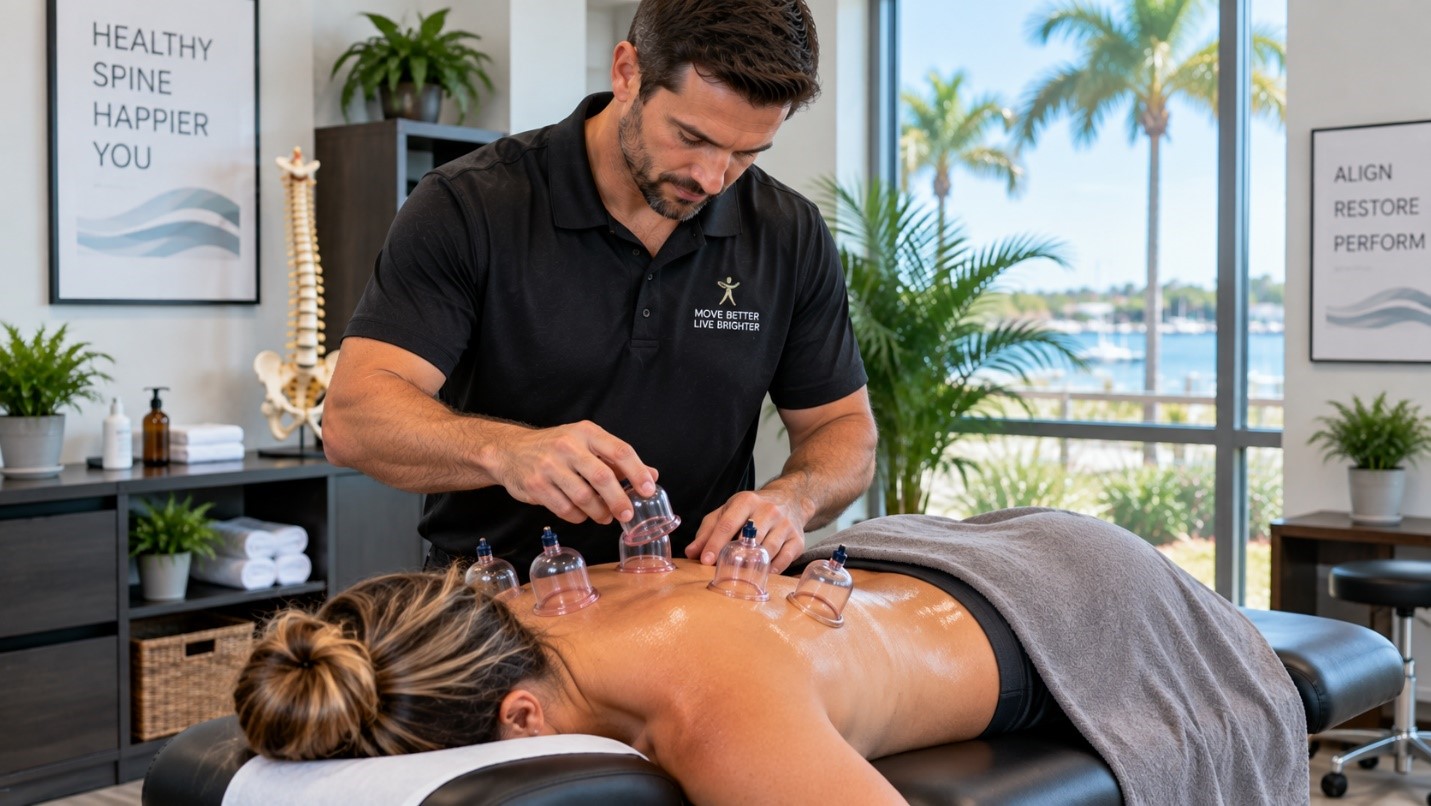
Cupping therapy uses suction cups placed on the skin to help release tight muscle and fascia, often used alongside a chiropractic adjustment rather than in place of one. Hayes Family Chiropractic offers cupping as part of a broader care plan in Dunedin, FL. Contact our office to ask whether cupping fits your treatment.
What Is Cupping Therapy?
Cupping therapy involves placing small cups on the skin and creating suction, either with a manual pump or a heat source, which draws the skin and superficial muscle tissue upward into the cup. The suction is intended to increase local blood flow, decompress tight fascia and muscle, and reduce restriction in the tissue, similar in intent to a deep tissue massage but working through negative pressure rather than direct compression.
How Cupping Fits Alongside a Chiropractic Adjustment
An adjustment addresses joint alignment and mobility, while cupping addresses the soft tissue, muscle, and fascia surrounding those joints. Tight, restricted muscle tissue can pull a joint back out of alignment shortly after an adjustment, so releasing that tissue with cupping beforehand or alongside your adjustment may help the correction hold better between visits. Hayes Family Chiropractic incorporates cupping as a complementary technique within a broader chiropractic visit, not as a standalone replacement for adjustment.
What Does a Cupping Session Actually Feel Like?
Most patients describe cupping as a firm pulling or tight sensation rather than pain, and cups are typically left in place for a short period or moved slowly across the treatment area. It’s common and expected for cupping to leave temporary circular marks on the skin, which result from increased blood flow to the surface and typically fade within several days to about a week, similar to how a deep massage can leave temporary redness.
What Conditions Is Cupping Commonly Used For?
- Chronic muscle tightness in the neck, shoulders, and upper back
- Restricted mobility that persists between adjustments
- Athletes managing muscle recovery and tightness from training
- Patients with tension patterns tied to desk work or repetitive movement
Is Cupping Safe for Everyone?
Cupping is generally well tolerated, but it isn’t automatically appropriate for every patient. Certain skin conditions, blood clotting disorders, active infections at the treatment site, and pregnancy in specific areas of the body are all reasons a chiropractor may modify or avoid cupping for a given patient. A full health history during your visit helps determine whether cupping is a good fit for you specifically, rather than applying it as a default add-on.
How Cupping Differs From a Standard Massage
A massage works through direct pressure and compression on the muscle, while cupping works through suction that lifts and decompresses the tissue instead. Some patients find cupping reaches deep, stubborn tightness that feels different from a standard massage, though the two approaches can also be used together within a broader wellness visit depending on what a patient’s muscles need on a given day.
Does Cupping Replace the Need for Chiropractic Adjustments?
No. Cupping addresses soft tissue restriction, while a chiropractic adjustment addresses joint alignment and motion, and the two work on different structures in the body. Patients looking for cupping alone without any interest in adjustments should still expect a full evaluation first, since a chiropractor needs to understand your overall condition before recommending which combination of techniques fits your goals.
How Often Is Cupping Typically Used?
Frequency depends on the individual case: some patients benefit from cupping at nearly every visit if chronic tightness is a recurring issue, while others use it periodically, such as after an intense workout or a stretch of poor posture at a desk. Your chiropractor will discuss a reasonable frequency based on how your tissue responds, rather than defaulting to the same schedule for every patient.
What to Expect Before Your First Cupping Session
Before adding cupping to your plan, expect a conversation about your health history, current medications, skin condition, and any areas of particular tightness or concern. This is the same consultation and examination process used for any new treatment added to your chiropractic care, ensuring cupping is recommended because it fits your specific case, not offered as a blanket upsell.
Combining Cupping With Other Services at Hayes Family Chiropractic
Cupping is one of several complementary techniques available alongside chiropractic adjustments, which may also include deep tissue laser therapy for inflammation and healing, depending on what your evaluation shows. Your chiropractor builds a combination that fits your specific condition rather than a single fixed package applied to every patient.
Where on the Body Is Cupping Typically Used?
Cupping is most commonly applied to larger, muscular areas such as the upper back, shoulders, and along the sides of the spine, where chronic tension tends to accumulate. It can also be used on the neck and lower back depending on a patient’s specific pattern of tightness, though your chiropractor will select placement based on where your exam shows restriction, rather than a fixed routine applied to every patient regardless of their symptoms.
Understanding the Marks Cupping Can Leave Behind
The circular discoloration cupping sometimes leaves behind surprises new patients, and it’s worth understanding before your first session rather than after. These marks reflect increased blood flow to tight or restricted tissue and are not bruises in the traditional sense of an impact injury, though they can look similar. Marks typically fade within a few days to about a week, and their intensity often decreases as the underlying muscle tension improves with repeated sessions.
Cupping for Athletes and Active Patients
Athletes and physically active patients often carry chronic tightness in specific muscle groups tied to their sport or training routine, and cupping is commonly used to help address that recurring tension as part of a broader recovery and performance plan. Combined with regular chiropractic adjustments, cupping can be one part of how an active patient manages the physical demands of consistent training without letting tightness accumulate unchecked between sessions.
Setting Realistic Expectations for Cupping
Cupping is a supportive technique, not a cure for an underlying structural or postural problem. Patients get the most benefit when cupping is combined with regular adjustments and, where relevant, changes to posture or activity that are contributing to the tightness in the first place. Your chiropractor will be direct about what cupping can reasonably be expected to help with, and what it can’t address on its own.
How Cupping Complements a Broader Wellness Routine
Beyond specific injury recovery, some patients incorporate cupping into a regular wellness routine alongside chiropractic visits, similar to how someone might schedule regular massage as part of overall self-care. Used this way, cupping is less about addressing one acute problem and more about maintaining looser, more mobile tissue over time, which can make each subsequent adjustment more effective and comfortable.
Questions Worth Asking Before Adding Cupping to Your Plan
- Is cupping appropriate for my specific condition, or would a different technique serve me better?
- How many sessions before I should expect to notice a difference in tightness or mobility?
- Are there any areas of my body where cupping should be avoided based on my health history?
- How will cupping be combined with my existing adjustment schedule?
Cupping as Part of a Long-Term Care Plan
Patients managing a chronic tightness pattern, rather than a single acute issue, often see cupping incorporated as a recurring part of their long-term chiropractic care rather than a one-time add-on. Reassessing periodically, alongside your regular adjustments, helps determine whether cupping continues to add value for your specific pattern of tension or whether your needs have shifted over time.
A Simple Way to Decide If Cupping Is Worth Trying
If you’ve noticed that tightness in your neck or upper back tends to return quickly after an adjustment, or you carry visible tension in the same muscle groups week after week, that pattern is a reasonable prompt to ask your chiropractor specifically about cupping at your next visit, rather than waiting for it to be offered.
Talking to Your Chiropractor About Cupping
There’s no need to research cupping extensively before your visit. A short conversation about where you feel chronic tightness, and what has or hasn’t helped in the past, gives your chiropractor enough to decide whether cupping is a reasonable technique to add to your specific plan going forward.
Trying Chiropractic Cupping Therapy in Dunedin, FL
If chronic muscle tightness has been limiting how well your adjustments hold between visits, cupping may be worth discussing at your next appointment. Contact Hayes Family Chiropractic in Dunedin to ask whether cupping fits your care plan, or learn more about our doctors before you book.
Chiropractic Care for Migraines in Dunedin, FL: How It’s Different From Treating a Regular Headache
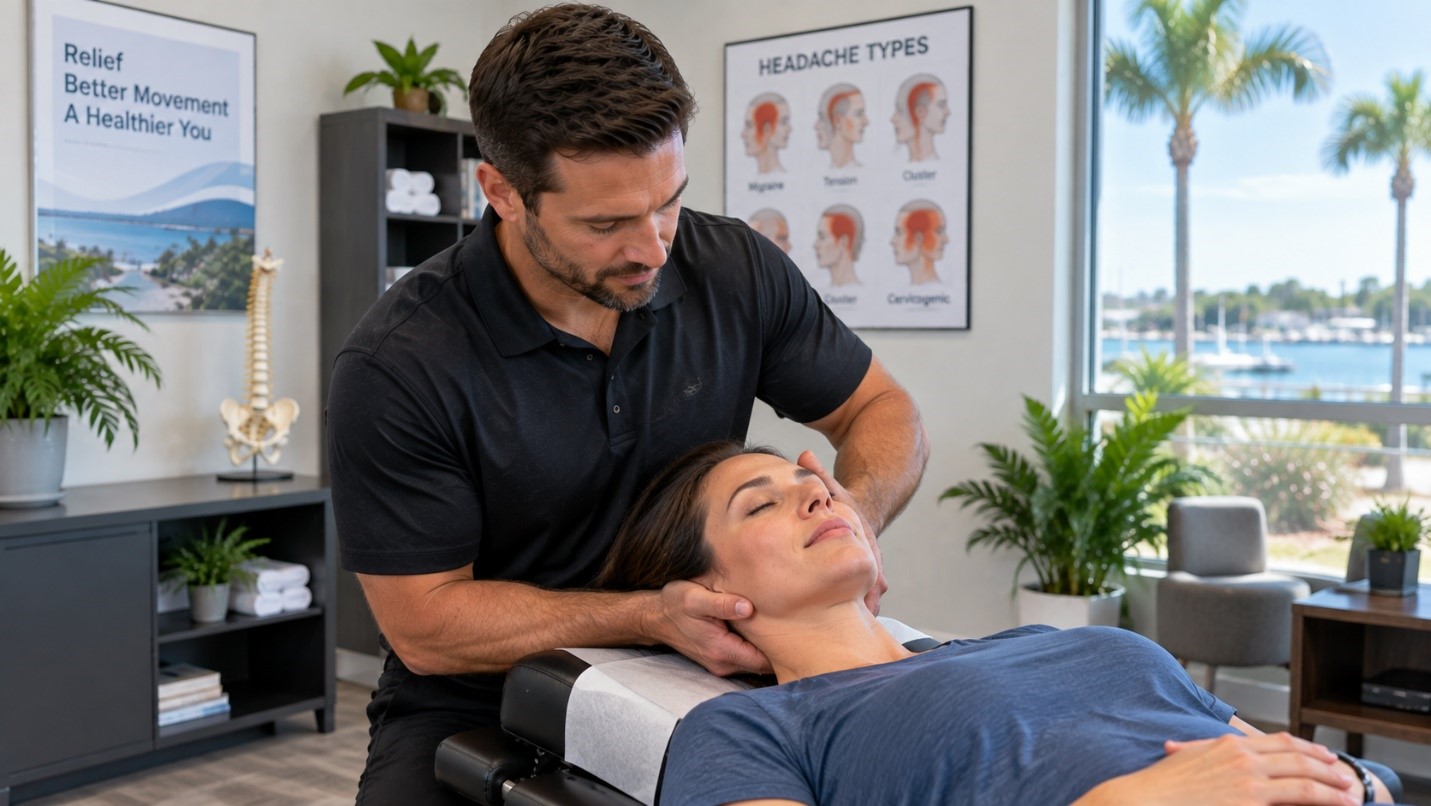
Migraines involve a distinct neurological process, not just muscle tension, which is why chiropractic care for migraines in Dunedin, FL looks different from treating a tension headache. Dr. Christopher Hayes, recognized as a headache specialist, evaluates each patient’s specific pattern before recommending care. Contact our office to discuss your symptoms.
Migraine or Regular Headache? Why the Distinction Matters
A tension headache typically feels like a dull, band-like pressure around the head and is often directly tied to muscle tension in the neck and upper back. A migraine is a distinct neurological event that can involve throbbing, one-sided pain, sensitivity to light and sound, nausea, and sometimes visual disturbances called aura. Because the underlying mechanisms differ, an approach that helps a tension headache may only partially address a migraine, which is why an accurate evaluation matters before any treatment plan is built.
How a Chiropractic Evaluation for Migraines Works
At Hayes Family Chiropractic, evaluating a patient with migraines starts with a detailed history: how often migraines occur, how long they last, what symptoms accompany them, and what has and hasn’t helped in the past. Dr. Christopher Hayes was recognized in 2006 as a headache specialist by a major insurance provider, and brings that focused experience to distinguishing migraine patterns from tension-type and cervicogenic headaches during a patient’s initial exam.
What Is a Cervicogenic Headache, and How Is It Different From a Migraine?
A cervicogenic headache originates from a problem in the neck itself, such as joint dysfunction or muscle tension in the cervical spine, and the pain is referred up into the head. Unlike a migraine, a cervicogenic headache tends to respond directly and predictably to correcting the neck dysfunction causing it. Distinguishing a cervicogenic headache from a true migraine is one of the more important steps in building an effective care plan, since the two can feel similar to the patient but call for different emphasis in treatment.
How Chiropractic Adjustments May Help With Migraine Frequency
Spinal adjustments, particularly to the cervical spine, are intended to reduce nerve irritation and muscle tension that can contribute to headache activity, including certain types of migraines. Chiropractic care is not a guaranteed fix for every migraine patient, since migraines have multiple potential triggers beyond spinal alignment, but many patients who receive regular adjustments report a reduction in how often migraines occur or how intense they feel. Your chiropractor will track your response over several visits to see whether adjustments are meaningfully helping your specific pattern.
How Laser Therapy Fits Into Migraine and Headache Care
For patients whose headaches are connected to neck tension or inflammation, deep tissue laser therapy is sometimes used alongside adjustments to help calm inflamed tissue around the cervical spine. This combination approach is more commonly discussed for cervicogenic and tension-type headaches, though your chiropractor will explain which techniques make sense for your specific migraine pattern rather than applying the same protocol to every patient.
Common Migraine Triggers Worth Tracking
- Poor posture or prolonged forward head position from desk work or phone use
- Sleep disruption or irregular sleep schedules
- Dehydration and skipped meals
- Bright light, strong odors, or certain foods for patients who are sensitive to them
- Stress and muscle tension carried in the neck and shoulders
When Migraine Symptoms Need Medical Attention First
Chiropractic care is intended to complement, not replace, medical evaluation. A sudden, severe headache unlike any you’ve had before, a headache with fever, stiff neck, confusion, slurred speech, weakness, or vision loss, or a headache following a head injury all warrant prompt medical evaluation before any chiropractic visit. For patients with a confirmed migraine diagnosis and no red-flag symptoms, chiropractic care can reasonably be considered as one part of a broader management plan alongside your medical provider’s guidance.
What a First Migraine-Focused Visit Looks Like
Your first visit includes a detailed consultation and examination, covering your migraine history, frequency, and any patterns you’ve noticed, along with a physical and postural assessment of your neck and upper back. From there, you’ll receive a clear explanation of what was found and a proposed plan, rather than an immediate adjustment before your specific pattern has been discussed.
Tracking Progress Over Time
Because migraines vary in frequency, tracking a simple headache diary, noting date, severity, duration, and possible triggers, gives your chiropractor concrete data to evaluate whether your care plan is making a measurable difference over several weeks, rather than relying on a general sense of “better” or “worse.”
Is Chiropractic Care Right for Every Migraine Patient?
Not every migraine patient responds the same way, and chiropractic care works best as part of a broader approach that may include medical management, lifestyle changes, and trigger tracking. Your chiropractor will be direct with you about whether your specific case is showing improvement after a reasonable trial period, rather than continuing an approach that isn’t helping.
The Role of Posture in Chronic Headache and Migraine Patterns
Forward head posture, common among patients who spend long hours at a desk or looking down at a phone, places sustained strain on the muscles and joints of the neck and upper back. Over time, that strain can contribute to both cervicogenic headaches and, for some patients, an increase in how often migraines occur. Addressing posture directly, alongside adjustments, is one of the more practical, patient-controlled pieces of a broader headache management plan.
How Many Visits Before You Know If Chiropractic Care Is Helping?
Most chiropractors recommend a trial period of several weeks, often four to six visits, before drawing conclusions about whether adjustments are meaningfully reducing migraine frequency or intensity. A single visit rarely tells you much either way, since headache and migraine patterns naturally fluctuate. Tracking your symptoms consistently during that trial period gives both you and your chiropractor real data to evaluate, rather than a subjective impression based on a good or bad week.
Migraine and Headache Care for Different Age Groups
Headache and migraine patterns look different across a lifespan. Children and teenagers with recurring headaches often benefit from an evaluation of posture, screen habits, and neck tension rather than assuming an adult migraine pattern applies. Older adults may have overlapping factors like arthritis in the cervical spine to consider alongside headache symptoms. Hayes Family Chiropractic adjusts its evaluation approach based on the patient’s age and overall health picture, not a single fixed protocol.
Working Alongside Your Medical Provider, Not Around Them
Chiropractic care for migraines works best as one coordinated part of your overall care, not a replacement for your primary care provider or neurologist if you have one. Sharing your migraine history and any current medications with your chiropractor, and keeping your medical provider informed about chiropractic care you’re receiving, helps everyone involved make better decisions about your treatment as a whole.
Lifestyle Changes That Often Accompany Chiropractic Migraine Care
Chiropractors treating migraine patients often discuss more than adjustments alone, including hydration habits, consistent sleep timing, regular movement throughout the workday to counteract prolonged sitting, and stress management strategies. These lifestyle factors don’t replace clinical care, but they frequently make the difference between a treatment plan that produces modest improvement and one that produces a meaningful, lasting reduction in migraine frequency.
What Makes Hayes Family Chiropractic’s Approach to Headaches Different
A general practice that treats headaches as one of many symptoms is different from a practice built around a doctor specifically recognized for headache expertise. Dr. Christopher Hayes’s 2006 recognition as a headache specialist reflects a level of focused experience distinguishing migraine, tension, and cervicogenic patterns that a newly practicing chiropractor may not yet have developed, which matters when your case doesn’t fit a textbook description perfectly.
When to Revisit Your Care Plan
If several weeks of consistent care haven’t produced any noticeable change in your migraine frequency or intensity, that’s worth a direct conversation rather than continuing the same plan indefinitely. Your chiropractor should be willing to reassess, adjust technique, or refer you back to your medical provider if chiropractic care isn’t proving to be the right fit for your specific migraine pattern.
A Reasonable Starting Point
If migraines or recurring headaches have been part of your life for a while, a focused evaluation is a low-risk way to find out whether chiropractic care could realistically help your specific pattern, alongside whatever else you’re already doing to manage symptoms.
Migraine and Headache Care Across Dunedin and Pinellas County
Hayes Family Chiropractic sees migraine and headache patients from Dunedin, Clearwater, Palm Harbor, Safety Harbor, Tarpon Springs, and Oldsmar. Contact our Dunedin office to schedule an evaluation, or read patient testimonials to hear how other patients describe their experience.
How to Find the Best Chiropractor in Dunedin, FL: What to Actually Look For Before You Book
Finding the best chiropractor in Dunedin, FL comes down to credentials, technique variety, and whole-family experience, not just star ratings. Hayes Family Chiropractic is led by two licensed Doctors of Chiropractic with decades of combined experience. Contact our Dunedin office to ask questions before your first visit.
Why “Best Chiropractor Near Me” Searches Rarely Tell the Full Story
A quick search for the best chiropractor in Dunedin, FL will surface a list of clinics with star ratings, but a star rating alone doesn’t tell you whether a specific chiropractor treats your specific condition, works with children or expecting mothers, or offers more than one style of adjustment. Ratings are a reasonable starting filter, not a substitute for actually checking credentials, technique, and fit before you book your first visit.
Start With Credentials: What “Doctor of Chiropractic” Actually Means
A licensed Doctor of Chiropractic has completed a multi-year professional degree program and passed board licensing exams, and it’s worth confirming where and when a chiropractor graduated, and whether they hold any additional certifications relevant to your condition. Dr. Diane Hayes and Dr. Christopher Hayes both graduated from Palmer College of Chiropractic, the founding school of the profession, and both are licensed in Florida. Dr. Diane holds a Fellowship in the International Academy of Medical Acupuncture, and Dr. Christopher has additional certification working with patients who have special needs. Credentials like these tell you a chiropractor has invested in specialized training beyond a general license.
Does the Clinic Offer More Than One Adjusting Technique?
Not every patient wants, or is a good candidate for, a traditional manual adjustment with the familiar “pop.” A clinic worth choosing should offer options such as low-force, tool-assisted techniques like the Activator Method, which use a controlled instrument rather than manual force and are often better suited to babies, older adults, and patients with conditions like osteoporosis. Ask directly whether a clinic offers alternatives to manual adjusting, and how a chiropractor decides which approach fits your specific situation.
Is the Clinic Actually Set Up for Your Whole Family?
Many chiropractic clinics focus primarily on adults with back pain, which is a reasonable specialty, but it’s not the same as a clinic genuinely equipped for infants, children, expecting mothers, and grandparents under one roof. Hayes Family Chiropractic treats patients from newborns to patients over 100 years old, with prenatal and postnatal care built into the practice rather than treated as an afterthought. If your household includes kids or you’re expecting, ask specifically about pediatric and prenatal experience before booking.
What Technology Does the Clinic Actually Use?
- Deep tissue laser therapy for inflammation and soft tissue healing, not just manual adjustment alone
- X-ray capability on site when a specific condition calls for imaging before treatment begins
- Low-force, tool-assisted adjusting equipment for patients who prefer or need a gentler approach
- A documented consultation and examination process before any treatment is recommended
How Transparent Is the Clinic About Your Treatment Plan?
A trustworthy chiropractic clinic gives you a clear report of findings after your initial exam, explaining what was found, what treatment is recommended, how many visits are typically involved, and what it will cost, before you commit to a plan. Be cautious of any clinic that pressures you into a long-term package on your first visit without first explaining your specific exam results in plain language.
What Happens When You Actually Call the Office?
Pay attention to what happens the moment you call. At a clinic that genuinely prioritizes patient care, you’ll speak directly with a real member of the team who can answer scheduling and insurance questions on the spot, rather than being routed through an automated menu or bounced between different people before anyone can help you. That first phone call is often a fair preview of what the rest of your experience will be like.
Does the Clinic Accept Your Insurance?
Before booking, confirm which insurance plans a clinic accepts, since coverage for chiropractic care varies significantly between plans. Hayes Family Chiropractic works with Blue Cross, United Healthcare, Ambetter, Medicare, Medicaid, auto insurance claims, Anthem, Cigna, UMR, VA benefits, Sunshine Health, and Simply Healthcare, among others, and can help verify your specific benefits before your first visit.
What Do Existing Patients Actually Say?
Patient reviews and testimonials are worth reading in detail, not just skimming the star average. Look for recurring themes: do patients mention feeling rushed, or do they describe a chiropractor who explains what’s happening and answers questions? Do multiple reviews mention long-term relief, or mostly short-term comfort? Patterns across many reviews tell you more than any single five-star post.
Chiropractic Care for Conditions Beyond Back Pain
The best chiropractor for your situation should be comfortable treating more than general back pain. Ask specifically about experience with headaches and migraines, sciatica, rotator cuff and shoulder issues, poor circulation, sports injuries, and auto accident injuries, since a clinic’s breadth of experience across these conditions is a reasonable proxy for how well they’ll handle your specific concern.
Questions Worth Asking Before Your First Visit
- How many years of combined experience do the doctors have, and where did they train?
- What adjusting techniques are available besides a standard manual adjustment?
- Is the practice comfortable treating children, pregnant patients, and older adults?
- What does a first visit typically include, and when will I get a clear treatment plan?
How Long Should a First Visit Actually Take?
Be cautious of any clinic that rushes new patients through in a few minutes. A thorough first visit typically includes time for paperwork, a real conversation about your health history and goals, a physical examination, and a clear explanation of findings, which reasonably takes longer than a routine follow-up. If a clinic seems to compress all of that into a brief window, it’s worth asking directly how much time is set aside for new patients before you book.
Should You Choose a Clinic Close to Home?
Proximity matters more than people initially expect, especially if your treatment plan involves multiple visits per week for a period of time. A highly rated clinic that’s a long drive away can become inconvenient enough that patients start skipping visits, which undermines the treatment plan itself. For most Dunedin-area patients, a clinic within a reasonable drive of Dunedin, Clearwater, Palm Harbor, Safety Harbor, Tarpon Springs, or Oldsmar strikes a better balance between quality of care and realistic follow-through.
Red Flags Worth Watching For
- Pressure to sign a long-term contract or prepaid package before your first exam is even complete
- Vague answers when you ask about a doctor’s specific training, licensing, or experience with your condition
- No clear explanation of what your exam found before treatment begins
- A “one-size-fits-all” adjustment style regardless of age, condition, or comfort level
Does Same-Week Availability Matter?
When you’re in pain, waiting weeks for a first appointment can matter as much as the quality of care itself. Ask whether a clinic can typically offer a same-week visit for new patients, and whether online intake forms are available so your first appointment moves faster once you arrive. A clinic that makes it easy to get seen quickly, without cutting corners on the actual exam, is usually a good sign of how the rest of your care will be handled.
What If You’ve Already Tried Chiropractic Care Without Results?
Some patients arrive after a previous chiropractic experience that didn’t help much, which is understandably discouraging. Before writing off chiropractic care entirely, it’s worth asking whether that previous clinic offered a full range of techniques, took the time to explain your specific findings, and adjusted the plan when the first approach wasn’t working. A different clinic, a different technique, or simply a more thorough initial evaluation can sometimes produce a very different result for the same underlying condition.
Trust Your Own Comfort Level, Too
Beyond credentials and technology, pay attention to how comfortable you feel asking questions and voicing concerns during your visit. A good chiropractor welcomes that conversation rather than treating it as an interruption, and that comfort level often matters as much as any specific technique when it comes to actually following through on a treatment plan over several weeks.
Finding the Best Chiropractor Near Dunedin, FL
Hayes Family Chiropractic has served Dunedin and the greater Tampa Bay area, including Clearwater, Palm Harbor, Safety Harbor, Tarpon Springs, and Oldsmar, with a patient-first approach built around real credentials and a range of treatment options. Contact our Dunedin office with any questions, or find directions to our clinic to schedule your visit.
Is it the right choice?

Did you ever hear that you should immediately go to the chiropractor after an auto accident? Not many do. They are told to go to the ER, Urgent Care, or their primary doctor. I know what you are thinking. Oh boy, the chiropractor is going to start saying we don’t need medical care!? Not at all. There is a place for the medical field, of course. They take care of fractures, internal illnesses, and even heart or other vital organ system diseases and disorders. We need them too. I would like to make people think about the choices they make.
I believe that we are consistently fed through the television, magazines, ads, and newspapers what we should do. The responsible thing to do, the right thing to do, what they would like you to do. Sounds odd, like programming. Ask yourself some questions. Make it make sense if you can. There are many things done that should not be done in medical facilities but are done to cover the butts of the doctor or hospital system. Let’s go through and review a few of these.
Why are CT scans being ordered after a crash? The only reason I would think is if you had a head injury and they wanted to make certain you are not having a brain bleed. Anything else is pretty far-reaching. The reports usually come back saying unremarkable. Does the amount of exposure to radiation help the person getting the scan help either?
Why do they take x-rays lying down? Our spines are resisting gravity when we were in the accident. We are on our feet resisting gravity when moving around and performing activities of daily living. Why would they want to see a film without the effects of gravity on the spine? It would seem as though they are trying to help the insurance companies or something. If their films or imaging studies support the side of the insurance, they don’t have to pay as much for care. This is just one of my theories of foxes in the hen house with insurance companies and the medical world coming together for the common cause of profit.
If the hospital or group refers to surgery, it is usually in-house physicians, benefitting the same system and administration. This is good to keep records all together and control of the clinical case. It is bad, for the patient, because things get forced on the patient that they may not need. This would be like a spine surgery. Some surgeries are necessary and I get that. I just remember the last time I perused a copy of the JAMA (Journal of American Medical Association) on the statistics on spine surgeries were very grim. They noted that 85-87% of all spine surgeries failed on the national average. YOU READ THAT CORRECTLY.
Why would the insurance keep paying for these surgeries then if they overwhelmingly fail. Could it be because the patient of the failed surgery would from then on be a patient of pain management for the rest of their lives? They would be going to disability eventually and then getting Medicare SSI to pay for all these costs. This would be a huge payoff for the pharmaceutical companies for life time customers. I hope that I stirred your thoughts a little to the larger picture and reality of the way the world works. Dirty hands, washing the dirty hands of others to fulfill their greedy quotas. This rant over. Please be open-minded and think about the truth. Don’t let your health suffer.
Let Me Explain

Every day people call or come to our office with such high hopes for their health coverage, whether it be private insurance, Medicare, Medicaid, or many others. We were told that we are covered for everything as a blanket statement, with exception of deductible or co-pay. I love my senior patients, as well as all the others, and it boggles my mind how people can be lied to over and over again. Is it because the agent is a personal friend, a trusted celebrity, or a neighbor? Is it that we have been so brainwashed over the decades leading up to this purchase and it just stuck as a truth? Sounds familiar.
I want to clear up the fallacy once and for all. Insurance is a business to make money, not take little premium and pay out regularly if at all possible. Think of the national debt. Does it make sense to take in $2 Trillion and pay out $8 Trillion annually? This would create a problem that should eventually grind everything to a halt when nobody will give any more money, and the business would close. I will say that personally, I believe that Medicare should pay for everything for our seniors, but it has been an uphill battle for over 50 years and counting. They expect that a patient is given an exam and x-rays before treating them, but refuse to pay for them. This creates costs for the patient and the clinic. They also require a re-examination to be performed every 30 days or 10 visits, whichever comes first. Again, they do not pay for this and leave it up to the patient and the clinics. The clinics cannot do these services for free or else they are enticing people to come to them for the free services over another clinic. This is both a state and federal crime. There is also a question of how to best help the patient get better faster. Would it benefit the patient to get other extra services to help make the problem get better faster and more efficiently? Many times, the answer is yes, but the insurance does not cover anything other than 80% of the adjustment cost. The other PT-type modalities really can assist the doctor and patient, but again not reimbursed by the insurance. Cannot be done for free due to the state and federal laws mentioned above. So, it is very hard to make people understand where we are coming from.
Then comes the question of insurance limits. Many people have a plan that includes a set number of visits or services that they can be given under the policy. There is a new thing that has happened here in Florida especially called managed health care (MHC). This is where your company or group has decided in an effort to save some money, they will pay this company to watch the bottom line. They essentially protect the limits to the extreme. As an example, John Doe has insurance that gives him 35 patient visits, but the MHC will only allow the doctor to see them for 5 visits. Everyone is different in their speed of healing and repair, but this is ridiculous! If you know anything about the human body and exercise, you know that it needs time and repetition to actually work. Another example, nobody gets a six pack abs or tone legs in one to five visits to the gym. It is usually going 3 times per week for a few months before we truly see the difference. People ask why are we using this company. We are not. Your company or group is.
Lastly, we have third-party companies for the insurance companies. These companies are a gateway for doctors to be in network with a larger insurance or group of insurance companies. The average person in Florida does not realize that the insurance companies only allow so many doctors or clinics to be representatives in each market. As an example, when I began practicing here, Blue Cross allowed 8 chiropractors in their network for my area. The only problem was that 3 of the 8 were dead, 2 others had closed their offices or moved, and they haven’t opened up the books to add any more doctors in 30 years. So, this gateway is the only way a doctor can get into that network at all or they would have to be a cash-only practice which over 80% of doctors in the area are.
In conclusion, I hope that people wake up to what is going on around them and take charge of their own health. The insurance company is not about health or wellness, they are locked in on sick care. Don’t become another statistic, because the insurance wouldn’t let you do something to better your health!
Q & A on M6 MLS robotic laser at our office 
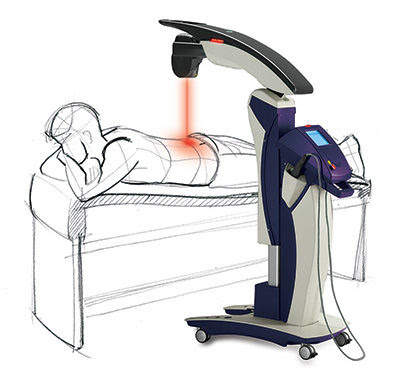
Why is a chiropractor using a laser? What does the laser do? Do I need to consider laser treatments for my aches and pains? These are a sampling of the many questions that we get regularly regarding our added M6 MLS class 4 laser. I will attempt to delve into the abyss with answering some of these questions to the best of my ability.
My first question is not a real hard one to answer. As a doctor of chiropractic, I have a task to locate and remove misalignments from a person’s body, thus returning them to improved function. I do not ever express to my patients that I am a pain doctor, or healing master of pains and aches. I do, however, let it be known that as a side effect of chiropractic specific adjustments, one can have their pain diminish. The M6 MLS class 4 laser actually has two specific wavelengths of energy that reduce inflammation and pain. This usually happens within 1-3 visits that we see and can know there is positive change. Hope this helps you understand why.
The next stop on this line of questioning is about what can the laser specifically do. Let’s get the nerdy stuff out of the way for my engineers and other healthcare professionals. The M6 MLS laser device utilizes a proprietary and patented delivery system that synchronizes two wavelengths, 808 nm and 905 nm. The 808 nm wavelength provides anti-inflammatory and anti-edema effects via a continuous wave delivery. The 905 nm wavelength provides analgesic effects, with some of the same effects of the 808 nm wavelength and is delivered using pulsed mode laser energy. With these wavelengths and synchronized delivery system, the laser penetrates up to 3-4 cm depending on the tissue type. Depending on which hand piece you are using, power ranges from 1.1W to 3.3W on your laser. Time and frequency can be determined by the user, or the predetermined settings for different protocols. Therefore, the total energy delivered is variable, depending on the condition. The rest of us need to know that this device works to get rid of swelling, inflammation, and pain in a gentle, non-surgical, non-invasive, and drug free method.
The last question is a very complex question with several different answers. I have been explaining to patients that there are great reasons to use this technology, such as chronic arthritis pain in the neck or lower back, chronic knee arthritis and pain, chronic hip arthritis and pain, and several other chronic issues. Multiple practitioners have tried everything else with no success at all. The laser doesn’t completely remove everything, but has helped in cases where others have failed completely. I look to give a person hope with our new laser therapy equipment. The overall efficacy of this is 80-90% difference in a short time comparatively. Our doctors are working diligently to advance their education to expand to areas of expertise for the treatment of our people.
Imagine that you have been an 8/10 on a pain scale for 10+ years with no relief whatsoever and you have begun referring to this as your normal aches and pains. There is nothing normal about pain. It is an alarm for your body to get checked out and do something. Now imagine that you got a treatment and the pain has been cut by 40-75% on a daily basis. What would that do for your life? How would the world look to you at that time? Would you finally have some hope? We strive to do our very best for all of our community. We let it be known in advance that the laser is FDA approved, but it is not yet covered by any of the insurance companies.
Seize the Season: Springtime and your Spine

A change in season brings a change in habits
The season of renewal offers a lot of time to focus on what is important and one thing that we truly believe in is maintaining the youth of our bodies. At Hayes Family Chiropractic, we use the springtime to get outside and feel young again and one way to do this is by alleviating excess pressure on your spine- a great way to do this is by focusing on body weight. Every extra pound over your target weight is adding an unnecessary burden to the lower back, creating a host of problems that begin with muscle strain and pain and can end with debilitating spinal conditions.
What Chiropractic Means to Your Livelihood

How do you make a living?
No matter whether you drive a truck, push a pencil, bench press or tweet for a living, your body and brain are the most important resources in your toolbox. So why is it that so many of us seem to freely sacrifice our bodies in pursuit of the paycheck? We don’t really think it’s that cut and dried. Let’s take a closer look at how and why we let our bodies degrade at work, and how to prevent it from happening to you!