Health and Wellness Blog
Spinal Decompression or Chiropractic Adjustments for Chronic Back Pain in Dunedin, FL?
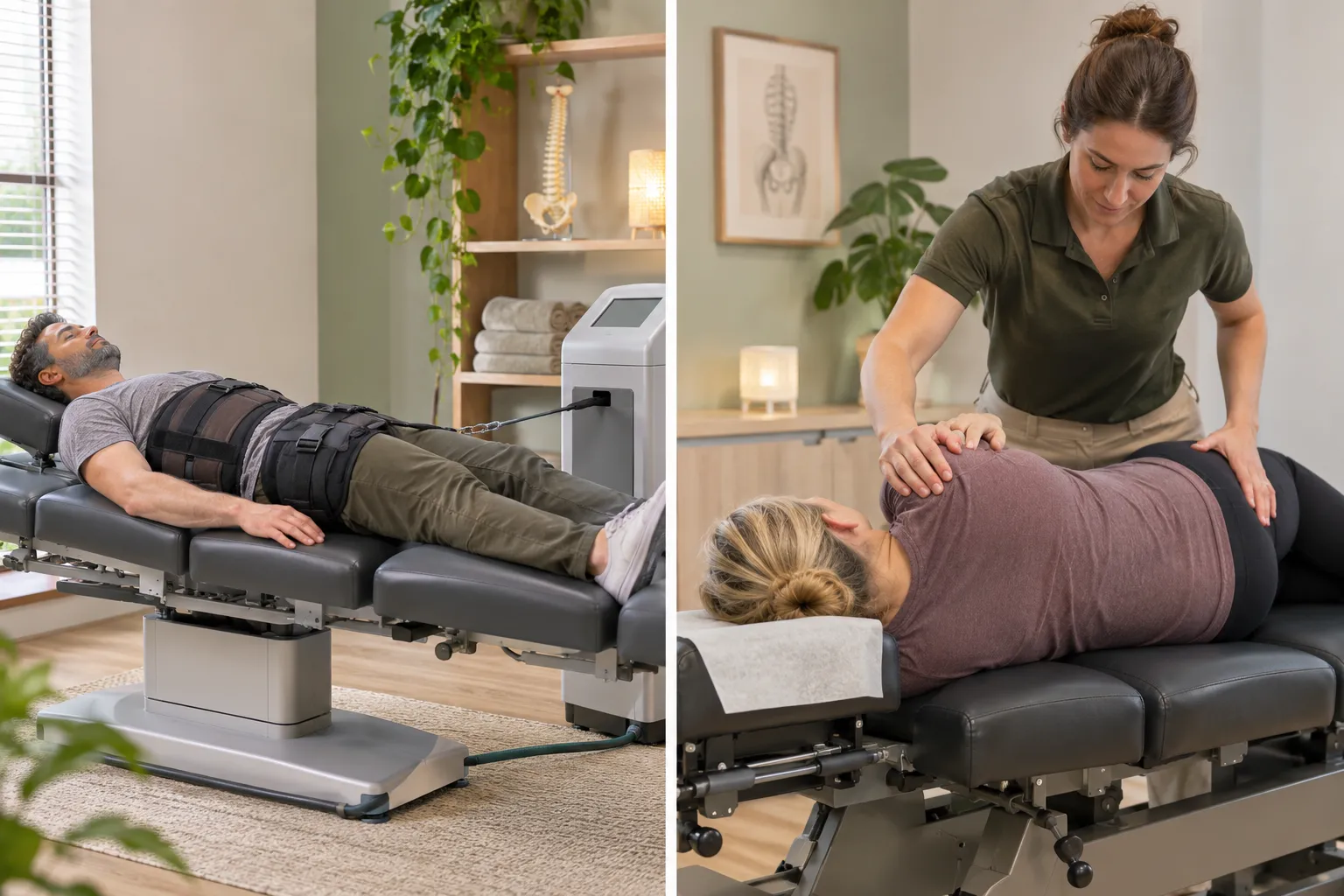
For most people with chronic back pain, chiropractic adjustments have stronger research support than spinal decompression. Adjustments are listed as a first-line nondrug option by the American College of Physicians, while reviews of motorized traction show little clear benefit. In Dunedin, FL, a lower back pain evaluation can show whether adjustments, laser therapy, or a referral fits your needs.
What Is Spinal Decompression Therapy?
Nonsurgical spinal decompression is a form of motorized traction. You lie on a padded, computer-controlled table while a harness gently pulls on the lower back or neck in cycles of pulling and relaxing. The goal is to lower pressure inside the spinal discs and ease pressure on irritated nerves. Branded systems such as VAX-D and DRX9000 are cleared by the FDA as powered traction devices, which means they were found similar to devices already on the market. FDA clearance is not the same as proof that a device works better than other care. Nonsurgical decompression is also different from surgical decompression, such as a laminectomy, where a surgeon removes bone or disc material that presses on a nerve. When people search for spinal decompression near a chiropractor, they usually mean the table version, and that is the treatment compared with adjustments in this guide.
How Do Chiropractic Adjustments Differ From Spinal Decompression?
Both treatments aim to ease back pain without surgery, but they work in different ways. A chiropractic adjustment, also called spinal manipulation, is a quick, controlled movement a trained provider applies to a joint by hand or with a small instrument. Decompression uses a machine to apply slow, sustained pulling force over a longer session. Adjustments focus on how individual joints move, while decompression focuses on stretching the spine along its length. Coverage also differs. Medicare Part B covers manual manipulation of the spine to correct a subluxation, while Medicare does not cover VAX-D decompression. The main differences are summarized in the list below. Many chiropractic plans add soft tissue work, laser therapy, and exercise, so a plan usually involves more than one approach. Ask any provider which parts of a plan have the strongest evidence before you commit to a series of visits.
- Method: hands-on manipulation versus motorized traction on a table
- Focus: joint motion and muscle tension versus lengthwise spinal stretch
- Evidence: listed in national guidelines versus limited, mostly negative reviews
- Medicare: covers manual spinal manipulation for subluxation, not VAX-D
- Combined care: adjustments often pair with laser, massage, and exercise
What Does the Research Say About Spinal Decompression?
The evidence for motorized traction is limited and mixed. A 2013 Cochrane review of 32 randomized trials with 2,762 participants found that traction, alone or with other treatments, had little or no effect on pain, function, or return to work for people with low back pain, with or without sciatica. Manual and mechanical traction performed about the same. Some trials reported side effects such as increased pain or worsening nerve signs. A 2007 technology assessment prepared for the Agency for Healthcare Research and Quality found the available evidence on decompression devices too limited in quality and quantity to draw conclusions, and none of the studies it reviewed included adults over 65. Medicare does not cover VAX-D, citing insufficient scientific data. Some patients report feeling better after decompression, but stronger trials are needed before it can be called a proven treatment.
What Does the Research Say About Chiropractic Adjustments for Chronic Back Pain?
Spinal manipulation has a larger body of research, although its benefits are often modest. The American College of Physicians 2017 guideline lists spinal manipulation among first-line nondrug options for chronic low back pain, alongside exercise, acupuncture, yoga, tai chi, and low-level laser therapy. According to the NCCIH, a 2019 review found that manipulation gave short-term pain relief similar to other recommended treatments, such as exercise or medication, and slightly better function. A 2020 review from the Agency for Healthcare Research and Quality found small improvements in function and pain. Safety is generally good. Mild soreness, stiffness, or headache is common and usually fades within 24 hours, while serious complications are very rare. Results tend to be strongest when adjustments are combined with active care, such as stretching, strengthening, and staying active, rather than used as a stand-alone fix.
Which Option Is Right for Chronic Back Pain in Dunedin, FL?
The right choice depends on what is causing your pain, how long it has lasted, your age and bone health, and what you have already tried. For many people with chronic back pain, research supports starting with conservative care such as adjustments, exercise, and soft tissue work before considering devices with weaker evidence. At Hayes Family Chiropractic, the doctors can evaluate whether adjustments, deep tissue laser therapy, in-office massage, or a referral to another provider for decompression or medical care fits your situation. Decompression is often not recommended for people with osteoporosis, recent fractures, spinal implants, or pregnancy, so a careful history matters. The questions below can help you compare any treatment you are offered in Dunedin, FL, or anywhere else, and make a decision that fits your goals and budget.
- What is the likely cause of my back pain?
- What does research say about this treatment for my condition?
- How many visits are suggested, and how will progress be measured?
- Does my insurance or Medicare cover this treatment?
- What should I do at home between visits?
When Should Chronic Back Pain Be Checked by a Medical Doctor?
Back pain that lasts more than 12 weeks is considered chronic, and most of it is not caused by a serious problem. Some warning signs, however, need prompt medical care rather than any type of chiropractic or decompression treatment. Seek emergency care right away for loss of bladder or bowel control, numbness in the groin or inner thighs, or weakness in both legs, which can signal cauda equina syndrome. See a medical doctor soon for the other red flags listed below. Imaging is usually reserved for pain that lasts 6 to 8 weeks despite conservative care or for signs of nerve damage. Surgery, including surgical decompression, is generally considered only after conservative treatment has failed. A good chiropractic exam includes screening for these signs, and your provider should refer you when symptoms point to a condition outside chiropractic care.
- Back pain after a fall, car accident, or other injury
- Fever, chills, or night sweats with back pain
- Unexplained weight loss or a history of cancer
- Severe pain at night or at rest
- Leg weakness or numbness that keeps getting worse
How Can Hayes Family Chiropractic Help With Chronic Back Pain in Dunedin, FL?
Dr. Chris Hayes and Dr. Diane Hayes bring decades of combined experience to treating back pain for patients in Dunedin, Clearwater, Palm Harbor, and across Pinellas County. Your visit starts with a detailed history and exam to identify the likely source of pain and screen for red flags. Your plan may include gentle adjustments, M6 MLS Class IV robotic laser or Erchonia low-level laser therapy, in-office massage with limited weekly availability, and a home exercise plan. If decompression or medical care seems like a better fit, the doctors can discuss a referral. The office accepts most major insurance, accepts Medicare assignment, and verifies benefits before your first visit. Learn more about your first chiropractic visit, or visit the office at 516 Patricia Ave. in Dunedin. Call (727) 736-1000 for a same-day appointment. This article is for general education and is not a substitute for medical advice. Talk with a licensed provider about your symptoms.
Frequently Asked Questions About Spinal Decompression vs Chiropractic
Does Hayes Family Chiropractic offer spinal decompression?
Call the office to ask about current decompression options. The doctors focus on chiropractic adjustments, deep tissue laser therapy, in-office massage, and exercise guidance. If an exam suggests that decompression or another treatment may be a better fit, they can talk with you about a referral to another provider.
Is spinal decompression better than chiropractic for a herniated disc?
Current research does not show that decompression is better. A 2013 Cochrane review found traction had little or no effect for low back pain with or without sciatica, while spinal manipulation is listed in national guidelines as an option for back pain. Many disc herniations improve with conservative care over several weeks, so an exam is a sensible first step.
Does Medicare cover spinal decompression?
Medicare does not cover VAX-D decompression, citing insufficient scientific data. Medicare Part B does cover manual manipulation of the spine to correct a subluxation, and you pay 20% of the Medicare-approved amount after the Part B deductible. Medicare does not cover chiropractic X-rays, massage, or acupuncture. Check private plan coverage with your insurer.
Can you do spinal decompression and chiropractic adjustments together?
Some clinics combine them, and there is little research on whether the combination works better than either one alone. If you are considering both, ask each provider how the treatments fit together, how progress will be measured, and when the plan will be reviewed. Avoid committing to a long prepaid package before you know whether care is helping.
Who should avoid spinal decompression therapy?
Device makers and insurers commonly list osteoporosis, recent spinal fractures, spinal implants or fusion hardware, tumors, infection, and pregnancy as reasons to avoid decompression. Because these conditions can be hidden, a full history and exam should come before any traction treatment. Ask your provider to review your health history and current medications first.
How long does it take for chiropractic care to help chronic back pain?
Many people notice some change within a few weeks, though chronic pain often improves gradually. Research shows short-term relief from manipulation similar to exercise or medication for many adults. See how often to see a chiropractor for back pain for typical visit schedules and how plans change as you improve.
Deep Tissue Laser Therapy for Chronic Pain in Dunedin, FL: Benefits, Recovery and Results
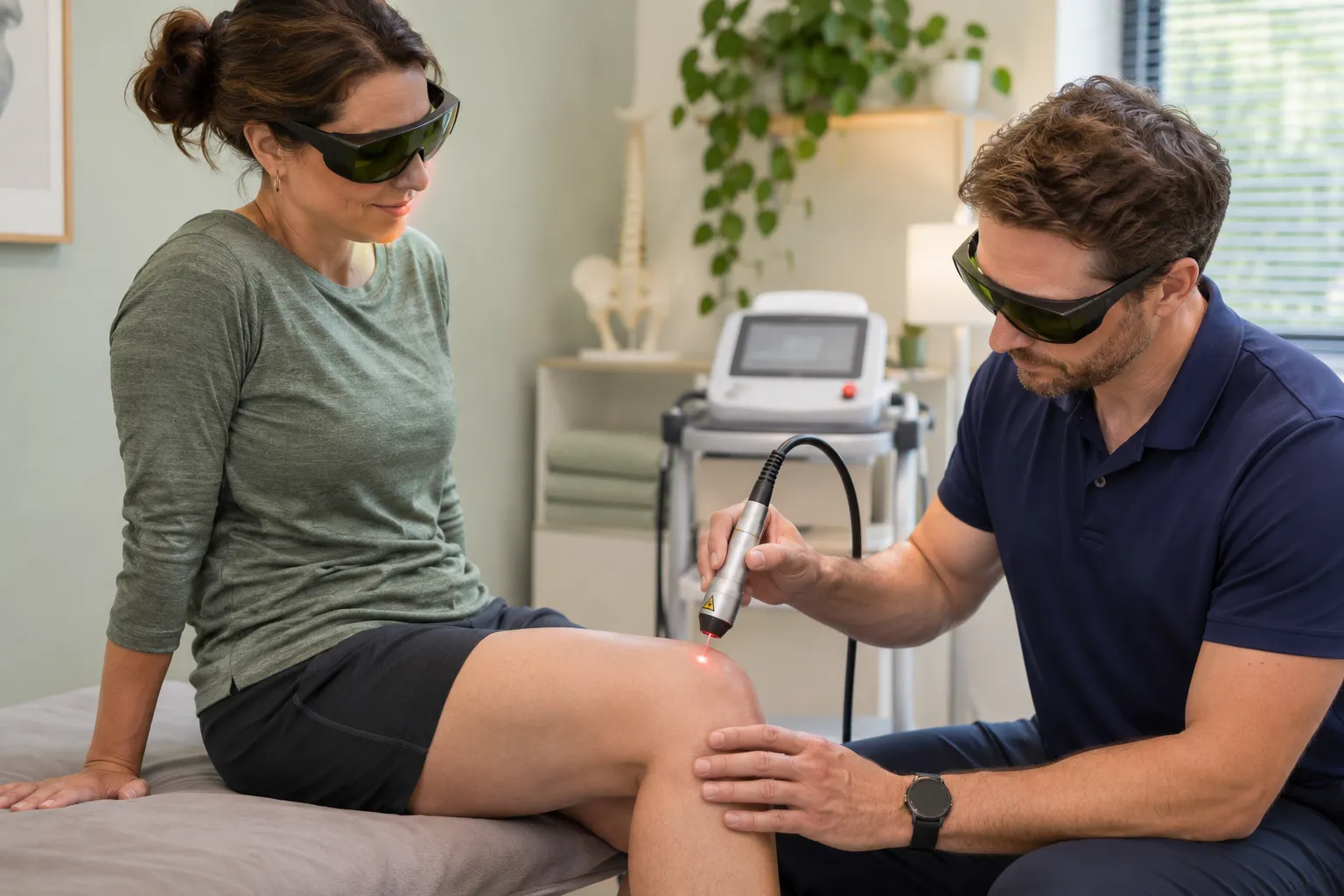
Deep tissue laser therapy may help some people with chronic pain, and research shows modest improvements in pain and function for neck pain and other musculoskeletal conditions, though study quality varies. It tends to help most as one part of a broader plan. Hayes Family Chiropractic offers the M6 MLS Class IV robotic laser and an Erchonia FX635 Class II low-level laser.
What Is Deep Tissue Laser Therapy?
Deep tissue laser therapy is a form of photobiomodulation, which means using specific wavelengths of light to influence how cells in muscles, tendons, joints, and nerves behave. The term deep tissue usually refers to higher-powered Class IV lasers, which emit more than 500 milliwatts and can deliver energy to deeper structures in less time than low-level lasers. Low-level lasers, sometimes called cold lasers, use far less power and do not noticeably heat tissue. Researchers believe the light is absorbed inside cells, where it may support energy production, calm inflammation, and change how pain signals are sent. Treatment is non-invasive, drug-free, and does not involve needles. During a session, the laser is directed over the painful area while you rest comfortably, and many patients describe a gentle warmth. Everyone in the room wears protective eyewear, because a direct laser beam can harm the eyes.
What Is the Difference Between Class IV and Class II Laser Therapy?
Laser classes describe power and safety, not quality. University laser safety programs define Class II lasers as producing under 1 milliwatt of visible light and Class IV lasers as producing more than 500 milliwatts. In practice, a Class IV laser can deliver a treatment dose faster and reach deeper tissue, while a Class II laser offers a gentler, lower-power option. Hayes Family Chiropractic uses both. The M6 MLS, short for Multiwave Locked System, is a robotic Class IV laser that synchronizes a continuous wavelength and a pulsed wavelength and moves over the treatment area on its own arm. The Erchonia FX635 is a Class II low-level laser. In 2019, the FDA cleared the FX635 through the 510(k) process for temporary relief of chronic, nociceptive musculoskeletal pain. Clearance allows a device to be marketed for a stated use, but it does not promise results for every patient.
- Class IV (M6 MLS): higher power, deeper reach, and robotic delivery
- Class II (Erchonia FX635): low power and little or no heat
- Both: non-invasive, drug-free, and used alongside other care
- Both: protective eyewear is required during treatment
Does Laser Therapy Work for Chronic Pain? What Research Shows
The evidence is encouraging but mixed in quality. A 2009 review in The Lancet pooled 16 randomized trials with 820 patients and found that low-level laser therapy reduced pain right after treatment in acute neck pain and for up to 22 weeks after treatment in chronic neck pain. A 2023 meta-analysis of 48 randomized trials on high-intensity laser therapy found lower pain and better function than comparison treatments in musculoskeletal disorders, but it rated the pain evidence as low certainty because many studies had a high risk of bias. The American College of Physicians 2017 guideline lists low-level laser therapy among nondrug options for chronic low back pain, while noting that the evidence is low quality and the pain benefit over sham treatment is small. In short, laser therapy may help some people, results vary from person to person, and it tends to help most as part of a plan.
What Chronic Pain Conditions Is Laser Therapy Used For in Dunedin, FL?
Clinics use laser therapy for many musculoskeletal problems, although the evidence is stronger for some conditions than others. Common uses include chronic neck pain, low back pain, osteoarthritis of the knee and other joints, tendon problems such as tendinitis, plantar fasciitis, shoulder pain, and some nerve-related pain. At Hayes Family Chiropractic, laser therapy is usually paired with chiropractic adjustments and home exercise rather than used alone. For example, patients with leg pain from an irritated nerve may ask about laser as part of chiropractic sciatica treatment, and patients with long-standing back pain may combine laser with care for lower back pain. The doctors review your history and exam findings before suggesting laser, and they may refer you to a medical doctor if your symptoms point to a condition that needs other testing.
- Chronic neck pain and stiffness
- Low back pain and sciatica
- Knee, hip, and hand osteoarthritis
- Tendinitis, plantar fasciitis, and shoulder pain
- Muscle strains and sports injuries
What Does Recovery Look Like After a Laser Therapy Session?
There is usually no downtime. Most people return to their normal activities right after a session. Some notice less pain within the first few visits, while others need a longer series before they can tell a difference. Because the effects tend to build over time, laser therapy is typically given as a series of sessions over several weeks, and your doctor sets the schedule based on your condition and how you respond. Mild, temporary soreness can occur as tissues respond to treatment. Keep up with the stretches or exercises you are given, stay hydrated, and avoid straining a painful area right after treatment. Track your pain level and daily function, such as sleep, walking, or sitting time, so you and your doctor can judge whether the treatment is worth continuing. If you notice no meaningful change after a fair trial, ask your doctor about other options that may suit you better.
Is Deep Tissue Laser Therapy Safe, and Who Should Avoid It?
Therapeutic lasers have few reported side effects when used correctly, and in the Lancet neck pain review, side effects were mild and similar to placebo. Still, there are important precautions. The beam must never be aimed at the eyes, so protective eyewear is worn during treatment. Consensus guidance from laser therapy experts advises against treating over a known cancer site or directly over the abdomen during pregnancy. People with seizure disorders triggered by light should tell their provider, because some pulsed visible light may be a concern. Laser therapy is also not the right first step for every kind of pain. Mayo Clinic advises prompt medical care when back pain comes with certain warning signs, and the same caution applies to other chronic pain. See a medical doctor promptly or seek urgent care if you notice any of the symptoms below, because they may signal a condition that needs other testing.
- Fever, or pain that gets worse when you rest
- A history of cancer or unexplained weight loss with new pain
- New weakness, numbness, or tingling in an arm or leg
- A sudden change in bladder or bowel function
- Pain after a fall, car accident, or other serious injury
How Can Hayes Family Chiropractic Help With Laser Therapy for Chronic Pain in Dunedin, FL?
Hayes Family Chiropractic, located at 516 Patricia Ave. in Dunedin, serves patients from Clearwater, Palm Harbor, and across Pinellas County. Dr. Chris Hayes and Dr. Diane Hayes bring decades of combined experience and offer both the M6 MLS Class IV robotic laser and the Erchonia FX635 Class II low-level laser. Your visit starts with a history and exam, so the doctors can decide whether laser therapy fits your needs or whether adjustments, exercise, or a referral makes more sense. Class 4 laser therapy is not covered by insurance at this time, so ask about cost before you begin. Same-day appointments are available. To ask a question or schedule an evaluation, call (727) 736-1000. This article is for general education and is not a substitute for medical advice. Talk with a licensed provider about your symptoms.
Frequently Asked Questions About Deep Tissue Laser Therapy
Does deep tissue laser therapy hurt?
Most people do not find it painful. Patients commonly describe a gentle, soothing warmth during a Class IV session, and low-level lasers usually produce little or no sensation. Tell your provider if the area feels too warm, because the settings can be adjusted. Mild, temporary soreness afterward is possible, and most people return to their normal activities right away.
How many laser therapy sessions will I need?
It varies by condition, how long you have had pain, and how you respond. Laser therapy is usually given as a series of sessions over several weeks rather than a single visit, and research protocols differ widely. Your doctor should set a schedule, recheck your progress along the way, and adjust or stop the plan if you are not improving.
Is deep tissue laser therapy FDA approved?
Therapeutic lasers are generally FDA cleared, not FDA approved. Clearance through the 510(k) process means a device may be marketed for a stated use, such as the 2019 clearance of the Erchonia FX635 for temporary relief of chronic musculoskeletal pain. Clearance does not mean the FDA has confirmed that a device works for every condition or every patient.
Is laser therapy covered by insurance?
Coverage for therapeutic laser is limited. Hayes Family Chiropractic notes that its Class 4 laser therapy is not covered by insurance at this time, and Medicare covers only spinal manipulation from a chiropractor, not laser therapy. Ask about cost before you start, and visit our insurance and Medicare page for billing details.
What is the difference between cold laser and deep tissue laser?
Cold laser usually refers to low-level lasers, which use low power and do not noticeably heat tissue. Deep tissue laser usually refers to Class IV lasers, which produce more than 500 milliwatts and can deliver energy faster and deeper. Both are forms of photobiomodulation. The right choice depends on your condition, the area being treated, and your provider’s assessment.
Can laser therapy be combined with chiropractic adjustments?
Yes. Many patients receive laser therapy during the same visit as an adjustment, and the two are often used together with home exercises. Laser may help calm pain and inflammation, while adjustments and exercise address joint motion and strength. Your doctor will decide whether combining them makes sense based on your exam, health history, and goals.
How Often to Get Massage Therapy for Muscle Recovery and Stress Relief in Dunedin, FL

How often you should get a massage depends on your goal, but no standard rule exists. For chronic pain, research suggests regular sessions, weekly or more, for several weeks before tapering. For general stress relief or muscle recovery, many people choose every two to four weeks. See how massage therapy in Dunedin, FL and deep tissue vs Swedish massage fit your needs.
How Often Should You Get a Massage for Muscle Recovery?
For muscle recovery, many active people get a massage after especially hard training weeks or events, and some schedule one every one to two weeks during heavy training. There is no official guideline, so the right frequency depends on how hard you train and how your body responds. Research supports massage for post-exercise soreness. A 2017 meta-analysis in Frontiers in Physiology pooled 11 randomized trials with 504 participants and found that massage reduced delayed onset muscle soreness after strenuous exercise. The largest effect on soreness was seen when it was measured about 48 hours after exercise. The authors rated the evidence as low quality and called for larger trials, so the benefit is real but not precisely defined. For recreational exercisers, a massage every two to four weeks, plus stretching and rest days, is a common approach. Lighter sessions closer to events and deeper work on recovery days are often preferred.
How Often Should You Get a Massage for Stress Relief?
For stress relief, there is no proven ideal frequency, and many people find that a massage every two to four weeks helps them maintain a calmer baseline. Some prefer weekly sessions during particularly stressful periods. Stress is one of the most common reasons people book a massage. In the 2025 American Massage Therapy Association (AMTA) consumer survey of 1,000 adults, 30% said stress was the primary reason for their last massage, and 49% named health or wellness. The same survey found massage consumers averaged 2.7 massages over the past 12 months, which shows that many people go less often than they might like. Research reviews suggest massage may ease anxiety and stress symptoms in the short term, so consistency matters more than any single session. A practical approach is to choose a schedule you can afford and sustain, notice how long the calming effect lasts, and adjust your timing from there.
How Often Should You Get a Massage for Chronic Pain?
For chronic pain, research suggests more frequent sessions at first, often once or more a week for several weeks, followed by less frequent maintenance visits. A 2014 trial in the Annals of Family Medicine studied 228 adults with chronic neck pain over four weeks. Groups receiving 60-minute massages two or three times a week were significantly more likely to have meaningful improvement than a wait-list group, while 30-minute sessions did not show a clear benefit. In a 2011 trial of 401 adults with chronic low back pain, one-hour massages once a week for 10 weeks led to greater improvement in pain and function than usual care. Both studies point to dose mattering, although neither found that massage alone solved chronic pain long term. After an initial series, many people taper to every two to four weeks. Learn more about massage therapy for back pain.
Is It Safe to Get a Massage Every Week?
Getting a massage every week is generally safe for healthy adults, as long as the pressure is appropriate and you are not dealing with a condition that makes massage risky. NCCIH reports that the risk of harmful effects from massage appears to be low. Rare serious events, such as blood clots, nerve injury, or bone fractures, have been reported, often involving vigorous techniques like deep tissue massage or people at higher risk, such as older adults. If you choose weekly sessions, consider alternating deeper work with lighter sessions and letting soreness fade before your next deep session. Stop and talk with a provider if massage causes sharp pain or new symptoms. Check with your doctor before frequent massage if you have any of the following:
- A history of blood clots, or you take blood thinners
- Osteoporosis, a recent fracture, or cancer involving the bones
- A high-risk pregnancy or high blood pressure during pregnancy
- Recent surgery, open wounds, burns, or a skin infection
What Factors Change How Often You Should Get a Massage in Dunedin, FL?
Several personal factors change how often Dunedin, FL residents may benefit from massage, which is why a schedule that works for one person may be too much or too little for another. Your main goal matters most. Someone managing chronic neck or back pain usually needs a more frequent starting series than someone who simply wants to relax. Your activity level counts too, since frequent exercise, long workdays at a desk, or physically demanding jobs can create more muscle tension. The style of massage also plays a role, because deep tissue sessions may need more recovery time between visits than lighter Swedish sessions. Finally, practical limits like time and budget shape any realistic plan. Track how you feel for several days after each session, then use that pattern to set your spacing. Consider these factors when planning:
- Your primary goal, such as pain relief, recovery, or stress relief
- How long relief lasts after each session
- Your training load or daily physical demands
- Massage style and pressure level
- Your budget, schedule, and other care you receive
How Can You Make Massage Benefits Last Longer Between Sessions?
You can help massage benefits last longer by pairing sessions with simple daily habits that keep muscles moving and reduce the strain that builds tension in the first place. Massage loosens tissue for a while, but muscles tend to tighten again if the same habits continue. Healthline notes that if cost is a concern, you can space sessions further apart and learn self-massage techniques for home. Regular movement, gentle stretching, and strength work support the effects of hands-on care. Posture breaks during desk work help prevent neck and shoulder tension from returning. Good sleep and stress management also influence how tense your muscles feel. Ask your therapist which areas tend to tighten most for you and which stretches may help between appointments. Helpful habits include:
- Take a short walk or stretch break every hour at a desk
- Use a foam roller or massage ball on tight areas
- Apply heat to stiff muscles after long days
- Keep a consistent sleep schedule and manage stress
How Can Hayes Family Chiropractic Help With Muscle Recovery and Stress Relief in Dunedin, FL?
Hayes Family Chiropractic can help you plan massage around your recovery, stress, or pain goals and coordinate it with chiropractic care when that makes sense. Our office now offers massage therapy one day a week, and sessions may include relaxation, deep tissue, or sports recovery techniques. Because availability is limited each week, call ahead to book and ask the office about pricing and coverage for massage. Dr. Chris Hayes and Dr. Diane Hayes can also evaluate ongoing neck or back pain and discuss how often to see a chiropractor alongside massage. Our office is at 516 Patricia Ave. in Dunedin, and we serve patients from Dunedin, Clearwater, Palm Harbor, and throughout Pinellas County. Call (727) 736-1000 to check massage availability or schedule a chiropractic visit. This article is for general education and is not a substitute for medical advice. Talk with a licensed provider about your symptoms.
Frequently Asked Questions About Massage for Muscle Recovery and Stress Relief
Is it bad to get a massage every day?
Daily massage is not necessarily harmful, and some studies have used daily sessions for short periods. However, frequent deep pressure can leave muscles sore and may not allow enough recovery. For most people, daily professional massage is not needed. Lighter self-massage at home is a gentler option between professional appointments.
How soon after a workout should I get a massage?
Timing varies by preference, and research does not set one ideal window. A 2017 meta-analysis found massage reduced soreness after strenuous exercise, with the largest effect measured around 48 hours post-exercise. Many people book a session within a day or two after hard training, using lighter pressure if muscles are very sore.
How long should a massage session be?
Session length depends on your goals. For chronic neck pain, a 2014 trial found that 60-minute sessions worked better than 30-minute sessions. For relaxation, 60 minutes is a common choice. Shorter sessions may work for a single area, such as the shoulders, especially if you are fitting massage into a busy week.
How often should seniors get a massage?
Older adults can often benefit from regular massage, but NCCIH notes they may face a higher risk of injury, especially from vigorous techniques. Lighter pressure and longer gaps between deep sessions are often wise. Seniors with osteoporosis, blood clot history, or blood thinner use should talk with a doctor before starting a massage routine.
Can massage help with sleep and stress?
Massage may help some people feel calmer and sleep better, although research quality varies. Reviews suggest massage can reduce anxiety and stress symptoms in the short term. Regular sessions combined with consistent sleep habits and stress management tend to be more helpful than an occasional massage. Persistent insomnia or anxiety should be discussed with a provider.
How often should I get a massage during pregnancy?
There is no set frequency for prenatal massage. Healthline notes that providers may discourage massage in the first trimester or with high blood pressure, a high-risk pregnancy, or recent surgery. Talk with your obstetric provider before booking, and choose a therapist trained in prenatal massage who uses safe positioning and gentle pressure.
Can Massage Therapy Relieve Chronic Back Pain and Muscle Tension in Dunedin, FL?
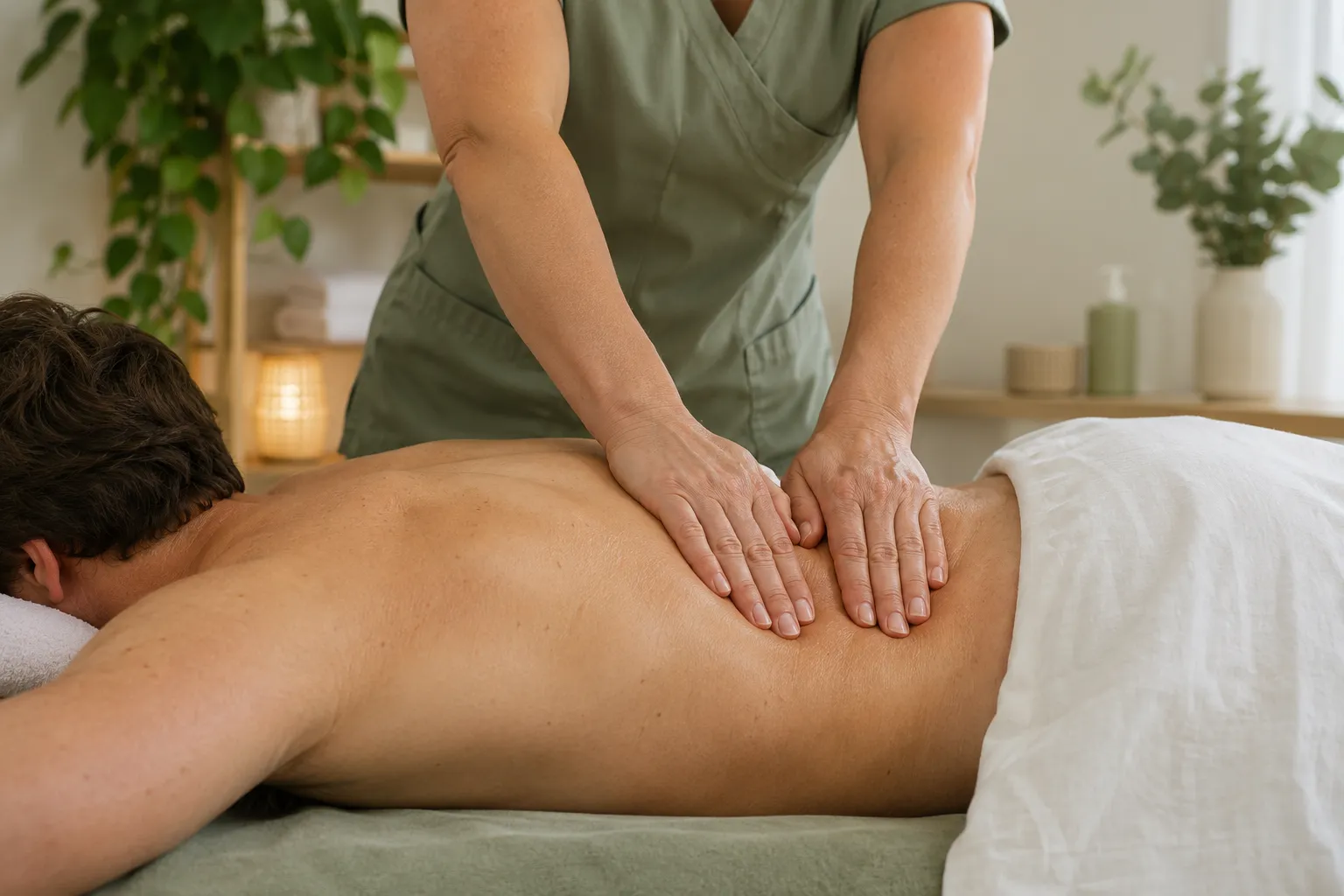
Yes, massage therapy can relieve chronic back pain and muscle tension for many people, but research shows the benefit is mostly short term. It tends to work best as one part of a plan that also includes movement and, when appropriate, chiropractic care for lower back pain. Hayes Family Chiropractic now offers in-office massage therapy in Dunedin, FL with limited weekly availability.
Does Massage Therapy Actually Help Chronic Back Pain?
Massage therapy can help chronic back pain, but mainly in the short term. A 2015 Cochrane review pooled 25 randomized trials with 3,096 participants, most of whom had subacute or chronic low back pain. Compared with sham treatment, a waiting list, or no treatment, massage improved pain and function in the short term. Those gains did not last at long-term follow-up when compared with inactive controls. The reviewers rated the certainty of the evidence as low to very low because many of the studies were small and had design flaws. The National Center for Complementary and Integrative Health (NCCIH) describes the evidence similarly, calling it weak but suggesting that massage may be helpful for low back pain. In plain terms, many people feel looser and less sore after a session, yet massage alone is unlikely to resolve a long-standing back problem. It usually works best alongside exercise and other care.
What Do Medical Guidelines Say About Massage for Low Back Pain?
The American College of Physicians (ACP) published a low back pain guideline in the Annals of Internal Medicine in February 2017. For acute or subacute low back pain, it recommends starting with non-drug therapies such as superficial heat, massage, acupuncture, or spinal manipulation. For chronic low back pain, the ACP also recommends starting with non-drug therapy, but its list centers on options such as exercise, multidisciplinary rehabilitation, acupuncture, yoga, tai chi, and spinal manipulation. Massage is not named among the chronic pain options. NCCIH points out this same distinction. That does not mean massage is harmful or useless for chronic pain. It means the evidence was strong enough to recommend it for newer back pain but not strong enough for long-term pain on its own. For chronic cases, many providers treat massage as a supportive therapy that can make exercise and daily activity more comfortable rather than as the main treatment.
How Does Massage Relieve Muscle Tension in the Back?
Massage relieves muscle tension by applying pressure and movement to soft tissue, which may help tight muscles relax and reduce protective guarding. When your back hurts, nearby muscles often tighten to limit movement. Over weeks or months, that guarding can become its own source of stiffness and soreness. A licensed massage therapist uses strokes, kneading, and sustained pressure to work through those areas. Researchers are still studying exactly why massage helps, and proposed explanations include calming the nervous system, easing muscle tone, and changing how the body processes pain signals. Many people also find that massage lowers stress, which can make pain feel more manageable. Florida law requires anyone who practices massage therapy for compensation to hold a state license under Chapter 480 of the Florida Statutes. A therapist working on back pain commonly focuses on several regions, including the following:
- Muscles along the spine in the low and mid back
- The quadratus lumborum, a deep muscle near the low back and pelvis
- The glutes and hips, which often pull on the low back
- The upper back and shoulders when posture adds strain
Which Type of Massage Is Best for Lower Back Pain?
Research has not found one massage style that clearly works best for lower back pain. A large trial published in the Annals of Internal Medicine in 2011 followed 401 adults with chronic low back pain. Participants received either relaxation massage, structural massage focused on specific soft tissue problems, or usual care. The massage groups had one-hour sessions once a week for 10 weeks. At 10 weeks, both massage groups did better than usual care, and people who received massage were about twice as likely to report meaningful improvements in pain and function. The two massage styles produced similar results. This suggests the best choice is often the one you tolerate well and will return for. Some people prefer firm, targeted pressure, while others relax more with gentle strokes. Our guide to deep tissue vs Swedish massage explains how the two common styles compare.
How Often Should You Get a Massage for Chronic Back Pain in Dunedin, FL?
There is no single standard schedule, but research and common practice point to regular sessions over several weeks rather than one visit. In the 2011 back pain trial, participants who improved had one hour of massage each week for 10 weeks. A 2014 study on chronic neck pain found that 60-minute sessions two or three times a week for four weeks outperformed shorter or less frequent sessions, which suggests that dose matters. For Dunedin, FL residents with chronic back pain, a reasonable starting point to discuss with your provider is weekly sessions for a few weeks, followed by spacing visits out as symptoms improve. Your plan should reflect how long relief lasts after each session, your activity level, your budget, and the other care you receive. If your pain is not improving after several sessions, it is a good time to be reevaluated. Read more about how often you should get a massage.
When Is Back Pain a Sign You Need Medical Care Instead of Massage?
Back pain needs prompt medical care, not massage, when it comes with warning signs of a more serious problem. Mayo Clinic advises seeking emergency care when back pain follows trauma such as a car crash or bad fall, causes new bowel or bladder control problems, or comes with a fever. It also recommends seeing a doctor if pain has not improved after a week of home care, spreads down one or both legs, or comes with leg weakness, numbness, or tingling. NCCIH notes that the risk of harm from massage appears to be low, but rare serious events such as blood clots, nerve injury, or bone fractures have been reported, often with vigorous massage or in people at higher risk, such as older adults. Talk with a provider before massage if you have any of the following:
- Osteoporosis or a recent fracture
- A history of blood clots, or you take blood thinners
- Cancer, especially if it involves the bones
- Recent surgery, an open wound, or a skin infection
- Unexplained weight loss or severe pain at night
How Can Hayes Family Chiropractic Help With Chronic Back Pain in Dunedin, FL?
Hayes Family Chiropractic helps people with chronic back pain by starting with an exam to look for the likely source of symptoms and checking for warning signs that need medical referral. Dr. Chris Hayes and Dr. Diane Hayes bring decades of combined experience to building plans that may include chiropractic adjustments, deep tissue laser therapy, posture guidance, and home exercises. The office now offers in-office massage therapy one day a week, so availability is limited each week and booking ahead is the best way to secure a time. Ask the front desk about pricing and coverage for massage. Our office is at 516 Patricia Ave. in Dunedin, and we see patients from Dunedin, Clearwater, Palm Harbor, and across Pinellas County. Same-day chiropractic appointments are available. Call (727) 736-1000 to schedule a visit or ask about massage availability. This article is for general education and is not a substitute for medical advice. Talk with a licensed provider about your symptoms.
Frequently Asked Questions About Massage Therapy for Back Pain
Can massage make back pain worse?
Massage can cause temporary soreness, and a 2015 Cochrane review found that increased pain was the most common side effect, reported by 1.5% to 25% of participants. These effects were described as minor. Tell your therapist if pressure feels too strong, and contact a provider if pain becomes sharp, spreads, or does not settle within a day or two.
Is massage or chiropractic care better for back pain?
Neither is better for everyone. The 2017 ACP guideline lists both spinal manipulation and massage as non-drug options for acute or subacute low back pain. Chiropractic care focuses on joint motion and function, while massage focuses on soft tissue. Many people with chronic back pain benefit from a plan that combines both with exercise.
How long does pain relief from a massage last?
Relief from a single massage often lasts hours to a few days, and research suggests most benefits are short term. In a 2011 trial, adults with chronic low back pain received weekly one-hour sessions for 10 weeks to reach meaningful improvement. Regular sessions plus stretching and strengthening tend to help relief last longer than occasional visits.
Should I get massage for sciatica?
Massage may ease tight muscles in the hips and low back that can contribute to sciatic symptoms, but it does not treat a disc or nerve problem directly. If pain travels below the knee or comes with numbness or weakness, see a provider first. Options such as adjustments and laser therapy may be considered after an exam.
Is massage for back pain covered by insurance?
Coverage for massage varies widely by plan, and many plans do not cover it unless it is part of a prescribed treatment. Some people use a health savings account or flexible spending account, depending on plan rules. Call your insurer and ask the office directly about massage pricing and coverage before you book.
What should I tell my massage therapist about my back pain?
Share where the pain is, how long you have had it, what makes it better or worse, and any diagnoses, surgeries, or medications such as blood thinners. Mention numbness, tingling, or weakness. During the session, speak up about pressure. Clear communication helps the therapist choose safe techniques and focus on the right areas.
Massage Therapy in Dunedin, FL: Benefits, Types and Your First Appointment

Massage therapy in Dunedin, FL may ease muscle tension, stress, and soreness, and a first appointment usually includes a health history, a talk about goals, and a session at the pressure you choose. Common types include Swedish, deep tissue, and sports massage. Local patients can now book massage therapy in Dunedin alongside chiropractic care in the same office.
What Is Massage Therapy and How Does It Work?
Massage therapy is the hands-on manipulation of muscles, tendons, ligaments, and fascia using pressure, kneading, stroking, and stretching. A trained therapist uses hands, forearms, or elbows to work tight areas, improve how tissue moves, and help the nervous system shift toward a calmer state. Researchers are still studying exactly why massage helps, but likely factors include reduced muscle guarding, better local circulation, and a relaxation response that can lower the sense of stress. Therapeutic massage differs from a purely relaxing spa visit because it starts with your health history and specific goals, such as easing a stiff neck or recovering after a hard workout. In Florida, anyone who practices massage must hold a state license from the Board of Massage Therapy, which requires at least 500 hours of approved training and a passing score on a board-approved exam.
What Are the Benefits of Massage Therapy?
Mayo Clinic reports that massage may reduce stress and ease pain, muscle stiffness, and tension, and it lists low back pain, neck pain, and fibromyalgia among the conditions studied. The National Center for Complementary and Integrative Health notes that massage may provide short-term benefits for neck and shoulder pain. For low back pain, the American College of Physicians 2017 guideline names massage as a non-drug option for acute or subacute pain. It is important to keep expectations realistic. A Cochrane review of 25 trials found that massage improved low back pain and function in the short term compared with no treatment, but the benefits did not last and the quality of evidence was low. Most people get the most out of massage when it is part of a plan that also includes movement and care for the underlying cause.
- Relief from muscle tension and tightness
- Lower day-to-day stress and an easier time relaxing
- Less soreness after exercise or physical work
- Improved comfort and ease of movement
What Types of Massage Should You Know About in Dunedin, FL?
Massage styles differ mainly in pressure, pace, and purpose. Cleveland Clinic describes Swedish massage as a full-body session with gentle, gliding strokes that is often a good choice for first-time clients and relaxation. Deep tissue massage uses slower, firmer pressure to reach deeper layers of muscle and is often chosen for chronic tightness or muscle pain. Sports massage is similar but focuses on muscles that get heavy use from training or repetitive activity, which can help Dunedin runners, golfers, and pickleball players. Trigger point work applies focused pressure to knots that may refer pain elsewhere. Your therapist often blends several styles in one session based on how your body responds. If you are deciding between the two most common options, see our guide to deep tissue vs. Swedish massage.
What Happens at Your First Massage Appointment?
Your first appointment begins with paperwork and a conversation. According to the American Massage Therapy Association, your therapist will ask about your health, medications, painful areas, and goals for the session. The therapist then leaves the room while you undress to your comfort level, and you lie on a padded table under a sheet or towel. Only the area being worked on is uncovered at any time. Mayo Clinic notes that sessions often start face down, oil or lotion may be used to reduce friction, and a visit can last from 15 to 90 minutes. You stay in control the whole time, so you can ask for more or less pressure, skip certain areas, or stop the session. Talking is fine, though many people prefer to rest quietly.
- Arrive early to finish your health history form
- List medications, recent injuries, and surgeries
- Tell your therapist which areas to focus on or avoid
- Speak up right away if pressure feels too strong
How Should You Prepare for a Massage, and What Happens Afterward?
A little preparation helps you relax and get more from your session. Drink water during the day, skip a heavy meal right before your visit, and wear comfortable clothing that is easy to change in and out of. The University of Minnesota’s integrative health program suggests rescheduling if you have a fever, a sunburn or rash in the area to be treated, or you are still adjusting a new medication dose. After the session, sit up slowly, especially if you feel lightheaded, and give yourself a few minutes before driving. Some mild soreness for a day or so is common after deeper work, much like the feeling after a workout. Severe or sharp pain is not expected, and it is a reason to call your provider. Many people notice that benefits build over several sessions rather than all at once.
Who Should Avoid Massage or Talk to a Doctor First?
Massage is generally safe when a trained professional performs it, and serious side effects are rare. Still, some health conditions call for medical clearance or a gentler approach. Mayo Clinic advises checking with your health care team before massage if you have had a recent heart attack or blood clot, have a bleeding disorder, or take blood thinners. Burns, open wounds, fractures, and severe osteoporosis also require caution, and massage is not done directly over tumors. If you are pregnant, ask your provider first and look for a therapist trained in prenatal massage. Seek urgent medical care, not massage, for sudden calf swelling and warmth, chest pain or shortness of breath, or back pain with numbness in the groin or loss of bladder or bowel control. Always share health changes with your therapist before each visit.
- Recent blood clot or heart attack
- Bleeding disorder or blood thinner use
- Fractures, burns, open wounds, or severe osteoporosis
- Pregnancy or recent surgery
How Can Hayes Family Chiropractic Help With Massage Therapy in Dunedin, FL?
Hayes Family Chiropractic now offers massage therapy inside the office one day a week, giving patients in Dunedin, Clearwater, Palm Harbor, and nearby Pinellas County communities a way to combine soft tissue work with chiropractic care. Dr. Chris Hayes and Dr. Diane Hayes bring decades of combined experience and can help you decide whether massage, adjustments, deep tissue laser therapy, or a mix of approaches fits your goals. Because massage availability is limited each week, the easiest way to reserve a time is to call (727) 736-1000. Ask the front desk about current pricing when you book. The office is located on Patricia Ave. in Dunedin, and new patients can complete the new patient form before the first visit. This article is for general education and is not a substitute for medical advice. Talk with a licensed provider about your symptoms.
Frequently Asked Questions About Massage Therapy
How long does a massage therapy session last?
Mayo Clinic notes that a massage session may last anywhere from 15 to 90 minutes. A focused session on the neck and shoulders is usually shorter, while a full-body session takes longer. Ask about available session lengths when you book so you can plan your day and leave a few extra minutes for intake forms.
Is massage therapy supposed to hurt?
Massage should not cause sharp or severe pain. Deep tissue work can feel intense in tight spots, and mild soreness the next day is common, much like after a workout. You should still be able to breathe easily and relax during the session. Tell your therapist right away if the pressure feels too strong.
What should I wear to a massage appointment?
Wear comfortable clothes that are easy to take off and put back on. You undress only to your comfort level, and you stay covered by a sheet or towel during the session, with only the area being worked on uncovered. Mayo Clinic notes some people choose a seated chair massage so they can stay fully clothed.
Can I get a massage while pregnant?
Many people find massage helpful during pregnancy, but you should talk with your obstetric provider first, especially in the first trimester or with a high-risk pregnancy or high blood pressure. Look for a therapist trained in prenatal massage. You can also read about prenatal chiropractic care for pregnancy-related back pain.
Is it okay to talk during a massage?
Talking is completely up to you. Some people like to chat, while others prefer quiet so they can relax more deeply. The most important conversation is about pressure and comfort, so speak up whenever something does not feel right. Your therapist can also adjust the music, room temperature, or blanket coverage if you ask.
How do I know if a massage therapist is licensed in Florida?
Florida requires anyone who practices massage to hold a license from the Board of Massage Therapy, and a license from another state does not count. Licensed therapists must display their license with a photo. You can confirm any therapist’s status through the Florida Department of Health license verification portal before you book.
Deep Tissue or Swedish Massage in Dunedin, FL: Which Is Right for Your Needs?
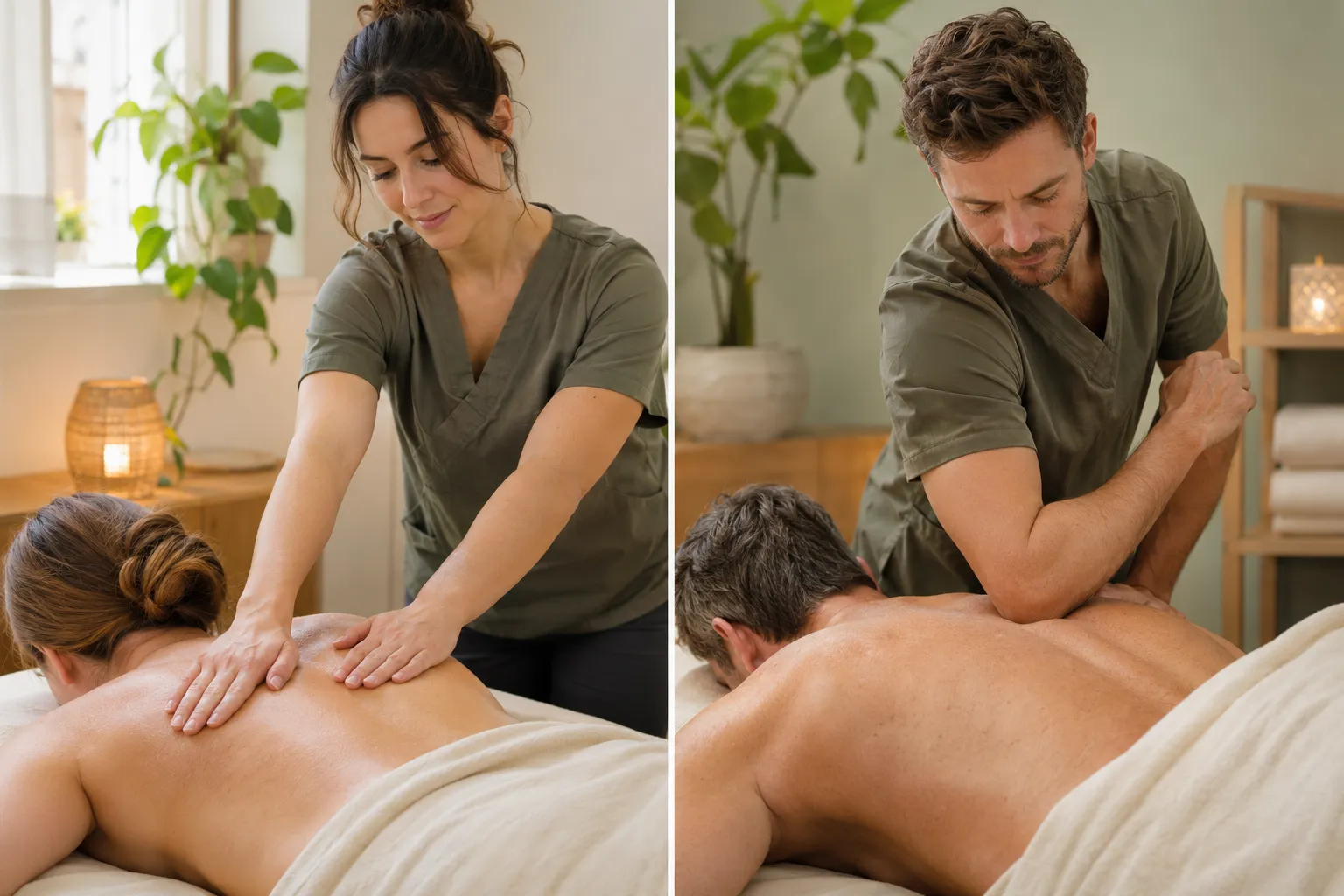
Swedish massage is usually the better fit for relaxation and stress relief, while deep tissue massage is often chosen for chronic muscle tension, stiffness, or recovery from strain. Swedish uses lighter, flowing strokes, and deep tissue uses slower, firmer pressure. Learn about massage therapy in Dunedin, FL and how often to get a massage for your goals.
What Is the Difference Between Deep Tissue and Swedish Massage?
The main difference between deep tissue and Swedish massage is pressure and purpose. Swedish massage uses long, gliding strokes, kneading, and gentle rhythmic movements with light to moderate pressure. It works mostly on the outer layers of muscle and is designed to help the body relax. Deep tissue massage uses slower strokes and firm, sustained pressure to reach deeper layers of muscle and connective tissue. It is typically used to address specific areas of chronic tension, knots, or stiffness. Both styles share some of the same basic strokes, and many licensed massage therapists blend them during one session based on what you need and how much pressure you prefer. Neither style is better in every case. The right choice depends on your goals, comfort, health history, and how your body responds. Here is a quick side-by-side comparison:
- Pressure: Swedish is light to moderate, and deep tissue is firm and sustained
- Depth: Swedish targets surface muscle, and deep tissue targets deeper muscle and fascia
- Pace: Swedish is flowing and steady, and deep tissue is slow and focused
- Main goal: Swedish aims for relaxation, and deep tissue aims at chronic tension
- Afterward: Swedish rarely causes soreness, and deep tissue may leave you sore for a day or two
What Is Swedish Massage Good For?
Swedish massage is good for relaxation, stress relief, and easing general muscle tightness. It is often recommended for first-time massage clients because the pressure is comfortable and the pace is calming. A typical session may include long gliding strokes, kneading, friction, light tapping, and gentle stretching of the limbs. Many people seek massage specifically for this kind of benefit. In a 2025 American Massage Therapy Association (AMTA) consumer survey of 1,000 adults, 30% said stress was the primary reason for their last massage. Research reviews suggest massage may ease anxiety and stress symptoms in the short term, although study quality varies. Swedish massage may also suit people with a lower pain tolerance, those who feel sore easily, and people who want a full-body session rather than focused work on one problem area. It can be a helpful way to unwind while still loosening tight muscles in the neck, shoulders, and back.
What Is Deep Tissue Massage Good For?
Deep tissue massage is good for chronic muscle tension, stiffness, and areas that feel tight or knotted despite stretching. It is commonly used for overused muscles, postural strain from desk work, and recovery from strenuous activity. A session often starts with lighter strokes to warm the tissue, then gradually increases pressure on target areas such as the low back, hips, neck, or shoulders. Some evidence supports its use for pain. A 2014 study of 59 adults with chronic low back pain found that deep tissue massage reduced pain, and the authors compared the effect to that of nonsteroidal anti-inflammatory drugs. That was a small study, so the results should be viewed as promising rather than proven. Deep tissue work is not about enduring as much pressure as possible. Pressure should stay strong but tolerable, and good therapists adjust in real time based on your feedback and how your muscles respond.
Is Deep Tissue Massage Better Than Swedish Massage for Back Pain?
Deep tissue massage is not clearly better than Swedish massage for back pain, according to the research available. A 2011 trial published in the Annals of Internal Medicine compared relaxation massage, which is similar to Swedish massage, with structural massage that targeted specific soft tissue problems in 401 adults with chronic low back pain. After weekly one-hour sessions for 10 weeks, both massage groups improved more than people receiving usual care, and the two styles performed about the same. A 2015 Cochrane review also found that massage in general offers mainly short-term relief for low back pain, with low certainty evidence. This means a gentler massage you can relax into may help as much as a firm one you brace against. If you have persistent back pain, read our guide on massage therapy for back pain and consider an exam to identify contributing factors.
Does Deep Tissue Massage Hurt, and Is Soreness Normal?
Deep tissue massage can feel intense, and mild soreness for a day or two afterward is common, but it should not be sharply painful. Many people describe the sensation as a good discomfort, similar to stretching a tight muscle. If you find yourself holding your breath, tensing up, or pulling away, the pressure is too strong and you should tell your therapist. In a 2015 Cochrane review of massage for low back pain, the most common side effect was a temporary increase in pain, reported by 1.5% to 25% of participants, and these effects were considered minor. NCCIH notes that serious complications are rare, but reports of blood clots, nerve injury, or fractures have involved vigorous techniques such as deep tissue massage or people at higher risk, such as older adults. Gentle movement, a warm shower, and a heating pad or wrapped cold pack may help ease post-massage soreness.
Who Should Avoid Deep Tissue Massage in Dunedin, FL?
Some people in Dunedin, FL should avoid deep tissue massage or check with a provider first, because firm pressure is not safe for every body. Swedish or other gentle styles may be a better fit in these cases. Pregnancy is one example where a lighter, modified approach is generally preferred, and you should talk with your provider before booking. You can learn about prenatal chiropractic care as another supportive option during pregnancy. NCCIH notes that rare serious complications, such as blood clots, nerve injury, or fractures, have often involved vigorous techniques like deep tissue massage or people at higher risk, such as older adults. Sharing your full health history, including medications and recent procedures, helps your therapist choose safe pressure. Talk with your doctor before deep tissue massage if any of the following apply:
- You have osteoporosis or cancer that has spread to the bones
- You have a history of blood clots or a clotting disorder
- You take blood thinners or have a bleeding disorder
- You have an open wound, rash, or skin infection in the area
- You recently had surgery or an injury that has not been evaluated
How Can Hayes Family Chiropractic Help With Deep Tissue and Swedish Massage in Dunedin, FL?
Hayes Family Chiropractic now offers massage therapy inside our chiropractic office one day a week, so you can coordinate soft tissue care with your chiropractic plan in one place. Sessions may include relaxation, deep tissue, or therapeutic techniques depending on your needs, and your therapist can adjust pressure as you go. Because massage availability is limited each week, booking ahead is the best way to get a time that works for you. Please ask the office about massage pricing and coverage. Dr. Chris Hayes and Dr. Diane Hayes can also evaluate back, neck, or joint pain and recommend whether adjustments, laser therapy, or massage may help. Our office is at 516 Patricia Ave. in Dunedin and serves Dunedin, Clearwater, Palm Harbor, and Pinellas County. Call (727) 736-1000 to ask about massage availability. This article is for general education and is not a substitute for medical advice. Talk with a licensed provider about your symptoms.
Frequently Asked Questions About Deep Tissue vs Swedish Massage
Which is more relaxing, deep tissue or Swedish massage?
Swedish massage is usually more relaxing because it uses lighter, flowing strokes and a steady rhythm. Deep tissue massage can also leave you feeling relaxed afterward, but the session itself involves firmer, focused pressure that requires more communication. If your main goal is stress relief, Swedish massage is a common first choice.
Can I ask for a mix of Swedish and deep tissue massage?
Yes. Many therapists blend the two, using Swedish strokes to warm up and relax the body and deeper pressure on specific tight areas such as the shoulders or low back. Tell your therapist your goals at the start of the session and give feedback on pressure so the treatment matches what you need.
How long does soreness last after a deep tissue massage?
Mild soreness after a deep tissue massage typically fades within a day or two. Gentle walking, light stretching, a warm shower, or a heating pad may help. Soreness that is severe, lasts longer, or comes with swelling, numbness, or bruising that worries you should be checked by a healthcare provider.
Is deep tissue massage good for athletes?
Deep tissue massage is popular with athletes and active people for tight, overworked muscles. A 2017 meta-analysis of 11 trials with 504 participants found massage reduced delayed onset muscle soreness after strenuous exercise, though study quality was low. Many athletes avoid very deep pressure right before competition and save it for recovery days.
Should I get Swedish or deep tissue massage for my first massage?
Many first-time clients start with Swedish massage so they can learn how their body responds to touch and pressure. If you have a specific area of chronic tension, you can ask for moderate pressure there. You can always try deep tissue work at a later visit once you know your comfort level.
Do massage therapists in Florida need a license?
Yes. Under Chapter 480 of the Florida Statutes, it is unlawful to practice massage therapy or present yourself as a massage therapist in Florida without a license, unless a specific exemption applies. Licensing is overseen by the Florida Board of Massage Therapy within the Florida Department of Health. You can verify a license online before booking.
Certified Nutrition Coaching for Energy and Healing at Hayes Family Chiropractic

Certified nutrition coaching at a chiropractic clinic looks at how food, energy levels, and inflammation affect healing and pain. Hayes Family Chiropractic in Dunedin, FL builds nutrition guidance into a patient’s broader care plan. Contact our office to ask how coaching could support your goals.
What Nutrition Coaching Looks At
Certified nutrition coaching looks at how food choices affect energy levels, inflammation, sleep quality, and the body’s ability to heal from the very conditions bringing a patient in for chiropractic care in the first place. A patient recovering from a soft tissue injury or managing chronic inflammation may benefit from nutrition guidance.
How Nutrition Connects to Chiropractic Care
Chronic inflammation can make it harder for the body to respond to chiropractic adjustments, laser therapy, or any other treatment aimed at reducing pain and restoring function. Nutrition choices, particularly around foods that promote or reduce inflammation, blood sugar stability, and hydration, play a real role in how well the body supports its own healing process between visits. Hayes Family Chiropractic incorporates nutrition guidance as part of a broader functional wellness approach, not as a separate, unrelated service.
What Does a Certified Nutrition Coaching Session Involve?
- A review of current eating patterns, energy levels, and any specific health goals
- Practical, individualized guidance rather than a generic diet handout
- Coordination with your existing chiropractic care plan, not a standalone program
- Realistic, sustainable adjustments rather than restrictive, short-term rules
Who Benefits From Nutrition Coaching?
Patients dealing with low energy, sleep difficulty, chronic muscle or joint inflammation, or a general sense of not feeling their best are often good candidates for nutrition coaching. So are patients recovering from an injury who want their body in the best possible position to heal, and patients managing a chronic condition where diet plays a documented supporting role.
How Is This Different From a Generic Diet Plan?
A generic diet plan applies the same rules to every person regardless of their health history, activity level, or specific goals. Certified nutrition coaching at Hayes Family Chiropractic starts with your actual history and current condition, the same way a chiropractic evaluation does, and builds guidance around what’s realistic and sustainable for your specific life, not a one-size template borrowed from a general wellness program.
Does Nutrition Coaching Replace Medical Nutrition Therapy?
No. Nutrition coaching is intended to support general wellness and complement chiropractic care, not replace medical nutrition therapy for a diagnosed condition like diabetes or a significant metabolic disorder. Patients managing a diagnosed medical condition should continue working with their medical provider on that specific issue, with nutrition coaching serving as an additional, coordinated layer of support rather than a substitute.
What to Expect at Your First Nutrition Coaching Conversation
Your first conversation about nutrition coaching typically happens as part of your broader consultation and examination, where your goals, current habits, and health history are discussed alongside your chiropractic concerns. From there, you’ll receive practical next steps rather than an overwhelming list of restrictions to follow all at once.
How Long Before Patients Notice a Difference?
Energy and inflammation-related changes from nutrition adjustments often show up gradually over several weeks rather than immediately, since the body needs time to respond to consistent changes in diet. Patients who stay consistent with practical, sustainable changes tend to report noticeable improvements in energy and how they feel day to day, though individual results vary based on starting point and consistency.
Why More Chiropractic Clinics Are Adding Nutrition Coaching
Chiropractic care and nutrition are both part of a broader, functional approach to how the body heals and stays healthy, which is why more clinics are folding nutrition guidance into their overall care rather than treating it as a separate specialty entirely disconnected from spinal health. A patient’s diet affects inflammation, energy, and recovery capacity, all of which influence how well the body responds to any hands-on treatment.
Common Myths About Nutrition Coaching
- Myth: it means following a strict, one-size diet. Real coaching is individualized to your habits and goals.
- Myth: results happen immediately. Most patients see gradual, cumulative improvement over several weeks of consistency.
- Myth: it replaces medical nutrition therapy for a diagnosed condition. It supports, rather than replaces, care from your medical provider.
Setting Goals That Matter Day to Day
A useful first step in nutrition coaching is identifying clear goals: better energy by mid-afternoon, fewer flare-ups of joint or muscle inflammation, more consistent sleep, or simply feeling less depleted at the end of a normal day. Goals like these give both the patient and the coach something concrete to track, and they matter to daily quality of life.
How Progress Is Tracked Over Time
Rather than relying only on how a patient feels in the moment, nutrition coaching typically involves periodic check-ins to review energy levels, sleep quality, and any symptoms connected to inflammation, alongside whatever chiropractic care is already underway. Adjustments to the nutrition plan are made based on what’s actually working for that specific patient, not a fixed timeline that ignores individual response.
How Nutrition Coaching Coordinates With Your Chiropractic Visits
Rather than scheduling nutrition coaching as a completely separate service, it’s typically discussed during your regular chiropractic visits, so your coach and your chiropractor are working from the same understanding of your health history and current goals. This coordination means a change in your nutrition plan can be considered alongside a change in your adjustment frequency or technique, rather than the two moving forward independently without either provider aware of what the other is doing.
What Kind of Changes Should You Actually Expect to Make?
Practical nutrition coaching typically starts with small, sustainable changes, such as adjusting meal timing, improving hydration, or reducing specific inflammatory foods that seem to correlate with your symptoms, rather than an overwhelming overhaul of your entire diet on day one. Patients who stick with a few realistic changes over months tend to see more lasting improvement than those who attempt a strict, all-or-nothing plan they can’t maintain.
Why Consistency Matters More Than Perfection
Patients who see the best results from nutrition coaching are rarely the ones who follow every recommendation perfectly. They’re the ones who stay reasonably consistent over months, adjust course when life gets busy rather than abandoning the plan entirely, and keep the conversation going with their coach when something isn’t working. That kind of steady consistency tends to produce more durable improvements in energy and healing than short bursts of strict discipline followed by a full return to old habits.
Bringing Nutrition Into Your Next Visit
You don’t need a separate appointment to start the conversation about nutrition coaching. Mentioning your energy levels, sleep quality, or general sense of how you’re feeling day to day at your next regular chiropractic visit is a natural, low-pressure way to find out whether coaching could add value to your existing care.
A Coordinated Team Approach
Because nutrition coaching is offered alongside chiropractic care rather than through a separate, unrelated business, your coach and your chiropractor can stay on the same page about your overall goals, which helps avoid the disconnect that sometimes happens when nutrition guidance and hands-on treatment come from two providers who never actually compare notes.
Getting Started With Nutrition Coaching in Dunedin, FL
If low energy, inflammation, or a general sense of not feeling your best has been part of your daily life, certified nutrition coaching may be worth discussing at your next visit. Contact Hayes Family Chiropractic in Dunedin to ask how nutrition coaching could fit alongside your chiropractic care.
Acupuncture at a Chiropractic Clinic? How Hayes Family Chiropractic Combines Both in Dunedin
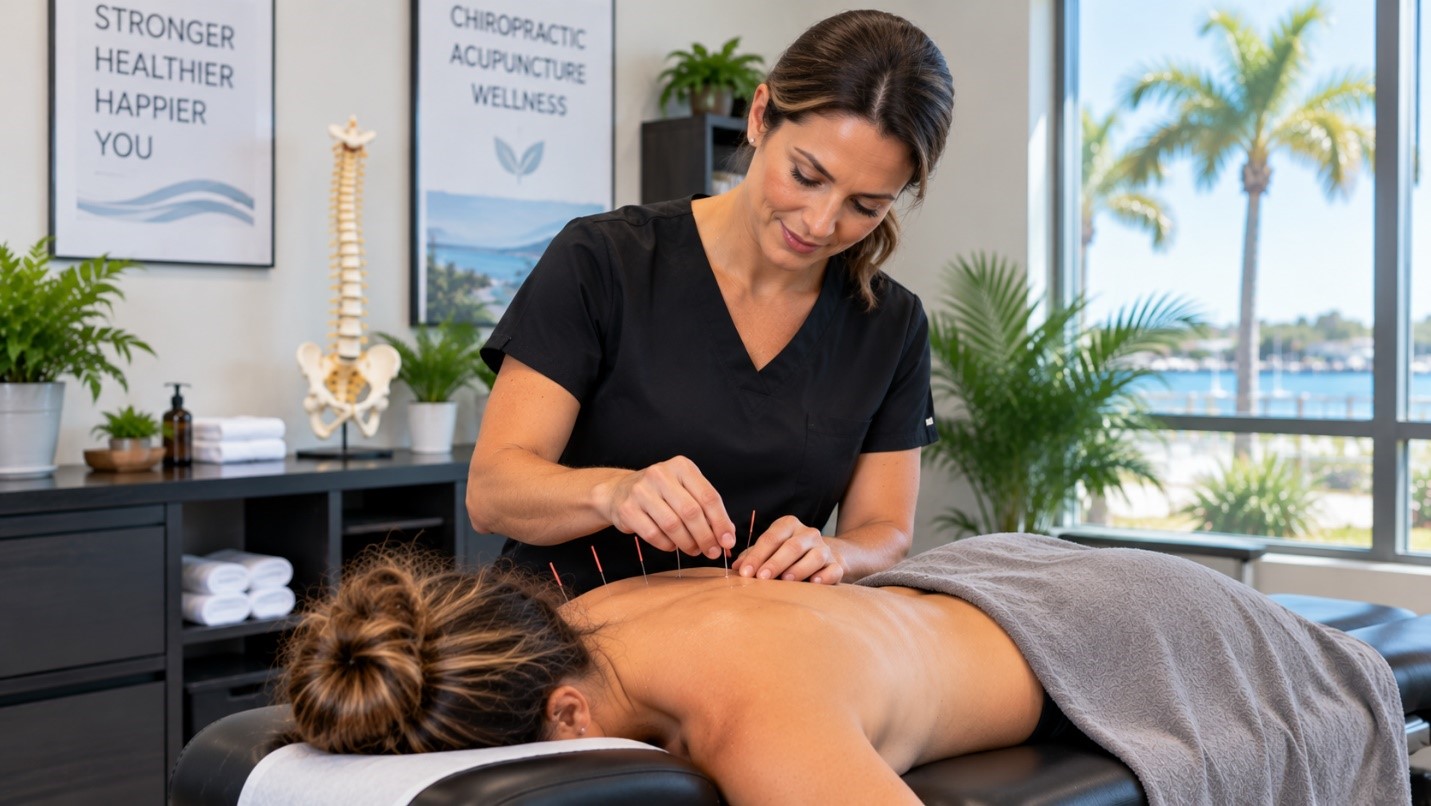
Acupuncture and chiropractic care address the body differently, which is why having both under one roof lets a single provider coordinate care instead of managing two separate appointments. Dr. Diane Hayes is a Fellow of the International Academy of Medical Acupuncture practicing in Dunedin, FL. Contact our office to ask whether combined care fits your needs.
Why Would a Chiropractic Clinic Also Offer Acupuncture?
Chiropractic adjustments and acupuncture approach the body from different angles: adjustments focus on joint alignment and spinal function, while acupuncture uses thin needles placed at specific points to influence nerve signaling, muscle tension, and the body’s own pain-regulating systems. Offering both under one roof means a single provider can consider your full presentation and decide which approach, or which combination, fits your specific condition, rather than you coordinating between two unrelated practices.
Meet the Doctor Behind Acupuncture at Hayes Family Chiropractic
Dr. Diane Hayes, DC, FIAMA, graduated magna cum laude from Palmer College of Chiropractic and is a Fellow of the International Academy of Medical Acupuncture, in addition to being a licensed acupuncturist. That combination of chiropractic and acupuncture training means Dr. Diane evaluates a patient’s condition through both lenses at once, rather than treating them as two disconnected specialties.
What Conditions Are Acupuncture Commonly Used For?
- Chronic muscle tension and pain that hasn’t fully resolved with adjustment alone
- Certain types of headache and migraine patterns
- Stress-related tension carried in the neck and shoulders
- Recovery support alongside an existing chiropractic care plan
How Does a Combined Visit Actually Work?
Rather than scheduling acupuncture and chiropractic care as two entirely separate appointments at two different practices, a patient at Hayes Family Chiropractic can have both considered as part of one evaluation. Dr. Diane will discuss which technique, or combination, is most appropriate for your specific condition during your consultation, rather than defaulting to acupuncture for every patient regardless of what your exam shows.
Is Acupuncture Safe?
Acupuncture performed by a licensed, trained provider using sterile, single-use needles is generally considered safe for most patients, with mild soreness or minor bruising at needle sites being the most commonly reported side effect. As with any treatment, a full health history is reviewed first to identify any reason acupuncture might not be appropriate for a specific patient, such as certain bleeding disorders or pregnancy considerations for particular points.
What Does an Acupuncture Session Feel Like?
Most patients describe acupuncture needle insertion as a brief, minor sensation rather than significant pain, since the needles used are extremely thin compared to those used for injections. Many patients report a sense of relaxation during a session, and needles are typically left in place for a set period before being removed.
Does Acupuncture Replace Chiropractic Adjustments?
No. Acupuncture and chiropractic adjustment address different aspects of a patient’s condition, and most patients at Hayes Family Chiropractic use the two as complementary parts of one plan rather than choosing one over the other entirely. Your specific combination depends on what your evaluation shows and how you respond over time.
How Many Acupuncture Sessions Are Typically Needed?
The right number of sessions depends on the condition being addressed and how a patient responds. Some patients notice a difference after their first few sessions, while chronic patterns may call for a longer course spaced over several weeks. Dr. Diane will discuss realistic expectations and a proposed schedule during your evaluation rather than committing you to a fixed number of visits up front.
What to Expect at Your First Combined-Care Visit
Your first visit follows the same consultation and examination process used for any new patient: a detailed health history, physical examination, and a clear report of findings before any treatment begins. From there, Dr. Diane will explain whether acupuncture, chiropractic adjustment, or a combination of both makes sense for your specific condition.
Why Combined Care Can Be More Convenient
Beyond the clinical benefits of one provider considering your full picture, combined care also means fewer separate appointments, fewer new-patient intake processes, and one team that already knows your history when a new symptom comes up. For busy families across Dunedin, Clearwater, Palm Harbor, Safety Harbor, Tarpon Springs, and Oldsmar, that convenience is part of why combined care appeals to so many patients.
How Is Acupuncture Thought to Work?
Acupuncture is understood to influence the nervous system, including how the body processes pain signals and regulates muscle tension and blood flow around the needle sites. Research into the mechanisms behind acupuncture is ongoing, and reputable practitioners are careful not to overstate what it can guarantee for any individual patient. What’s better established is that many patients report meaningful relief from muscle tension, certain headache patterns, and general stress when acupuncture is used consistently as part of a broader care plan.
What Training Does an Acupuncturist Actually Need?
Proper acupuncture training involves formal coursework in needle technique, point location, and safety protocols, along with supervised clinical practice before a provider is certified or licensed to treat patients independently. A Fellowship in the International Academy of Medical Acupuncture, which Dr. Diane Hayes holds, reflects additional training specifically in integrating acupuncture with a medical or chiropractic practice, rather than a brief weekend certification.
Combining Acupuncture With Other Techniques at the Clinic
Acupuncture can be combined with other techniques offered at Hayes Family Chiropractic, including chiropractic adjustment and, depending on the patient, cupping or laser therapy, when an evaluation suggests that combination fits the condition being treated. Rather than treating acupuncture as an isolated add-on service, Dr. Diane considers how it fits alongside whatever else is already part of your care plan.
Acupuncture for Stress and Whole-Body Wellness
Beyond specific pain conditions, some patients seek acupuncture as part of a broader approach to managing stress and supporting overall wellness, since muscle tension and stress are closely linked in many patients. While results vary from person to person, acupuncture used consistently alongside other healthy habits is a reasonable option to discuss if ongoing stress is part of what’s affecting your health.
What Should You Tell Your Provider Before an Acupuncture Session?
Before your first acupuncture session, share your complete health history, including any bleeding disorders, current medications or blood thinners, pregnancy, pacemakers or other implanted devices, and any areas of the body you’d prefer to avoid. This information helps Dr. Diane adjust placement and technique appropriately, or determine that a different approach makes more sense for your specific situation.
How Often Do Patients Typically Return for Acupuncture?
Frequency varies by condition and by how a patient responds. Some patients start with weekly sessions during an initial course of care and then space visits out as symptoms improve, while others use acupuncture periodically as part of ongoing maintenance alongside regular chiropractic adjustments. Your schedule is built around your actual response, not a fixed package sold to every new patient regardless of their condition.
Combined Care as a Long-Term Wellness Strategy
For many patients, the value of combined chiropractic and acupuncture care isn’t limited to resolving one specific complaint. Having one clinic and one provider who understands your full history, tracks how you respond to different techniques over time, and can adjust your care as new issues come up gives you a long-term wellness resource rather than a series of disconnected, one-off treatments.
What If You’ve Never Tried Acupuncture Before?
It’s common to feel hesitant about acupuncture if you’ve never experienced it, particularly around the idea of needles. Dr. Diane walks new patients through exactly what to expect before the first needle is placed, and most patients find the actual sensation far less concerning than they anticipated. Starting with a conversation, rather than jumping straight into a full session, is a reasonable way to ease into combined care if you’re uncertain.
A Practical Next Step
If you’re already a chiropractic patient curious about acupuncture, or you’re a new patient interested in combined care from the start, mentioning that interest during scheduling helps ensure your first visit is set up with enough time to discuss both options thoroughly.
Why Continuity of Care Matters Here
Because Dr. Diane oversees both your chiropractic and acupuncture care, any new symptom or change in how you’re feeling gets factored into one continuous picture of your health, rather than requiring you to separately update two unrelated providers who never actually communicate with each other about your case.
Scheduling Combined Chiropractic and Acupuncture Care in Dunedin, FL
If you’re curious whether acupuncture could complement your chiropractic care, contact Hayes Family Chiropractic to ask Dr. Diane directly, or learn more about our doctors before scheduling your first visit.
Chiropractic Cupping Therapy in Dunedin: What It Is and How It Complements Your Adjustment
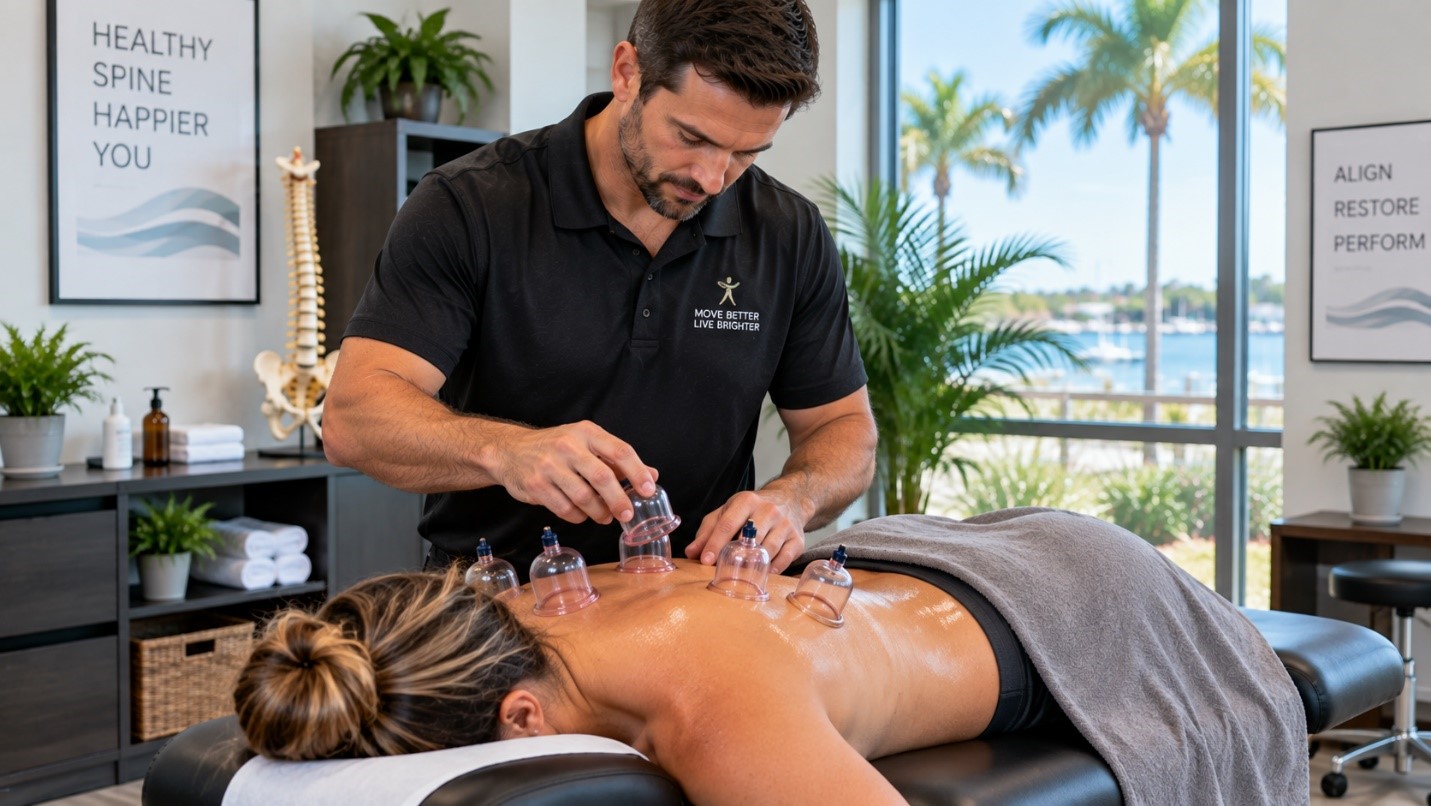
Cupping therapy uses suction cups placed on the skin to help release tight muscle and fascia, often used alongside a chiropractic adjustment rather than in place of one. Hayes Family Chiropractic offers cupping as part of a broader care plan in Dunedin, FL. Contact our office to ask whether cupping fits your treatment.
What Is Cupping Therapy?
Cupping therapy involves placing small cups on the skin and creating suction, either with a manual pump or a heat source, which draws the skin and superficial muscle tissue upward into the cup. The suction is intended to increase local blood flow, decompress tight fascia and muscle, and reduce restriction in the tissue, similar in intent to a deep tissue massage but working through negative pressure rather than direct compression.
How Cupping Fits Alongside a Chiropractic Adjustment
An adjustment addresses joint alignment and mobility, while cupping addresses the soft tissue, muscle, and fascia surrounding those joints. Tight, restricted muscle tissue can pull a joint back out of alignment shortly after an adjustment, so releasing that tissue with cupping beforehand or alongside your adjustment may help the correction hold better between visits. Hayes Family Chiropractic incorporates cupping as a complementary technique within a broader chiropractic visit, not as a standalone replacement for adjustment.
What Does a Cupping Session Actually Feel Like?
Most patients describe cupping as a firm pulling or tight sensation rather than pain, and cups are typically left in place for a short period or moved slowly across the treatment area. It’s common and expected for cupping to leave temporary circular marks on the skin, which result from increased blood flow to the surface and typically fade within several days to about a week, similar to how a deep massage can leave temporary redness.
What Conditions Is Cupping Commonly Used For?
- Chronic muscle tightness in the neck, shoulders, and upper back
- Restricted mobility that persists between adjustments
- Athletes managing muscle recovery and tightness from training
- Patients with tension patterns tied to desk work or repetitive movement
Is Cupping Safe for Everyone?
Cupping is generally well tolerated, but it isn’t automatically appropriate for every patient. Certain skin conditions, blood clotting disorders, active infections at the treatment site, and pregnancy in specific areas of the body are all reasons a chiropractor may modify or avoid cupping for a given patient. A full health history during your visit helps determine whether cupping is a good fit for you specifically, rather than applying it as a default add-on.
How Cupping Differs From a Standard Massage
A massage works through direct pressure and compression on the muscle, while cupping works through suction that lifts and decompresses the tissue instead. Some patients find cupping reaches deep, stubborn tightness that feels different from a standard massage, though the two approaches can also be used together within a broader wellness visit depending on what a patient’s muscles need on a given day.
Does Cupping Replace the Need for Chiropractic Adjustments?
No. Cupping addresses soft tissue restriction, while a chiropractic adjustment addresses joint alignment and motion, and the two work on different structures in the body. Patients looking for cupping alone without any interest in adjustments should still expect a full evaluation first, since a chiropractor needs to understand your overall condition before recommending which combination of techniques fits your goals.
How Often Is Cupping Typically Used?
Frequency depends on the individual case: some patients benefit from cupping at nearly every visit if chronic tightness is a recurring issue, while others use it periodically, such as after an intense workout or a stretch of poor posture at a desk. Your chiropractor will discuss a reasonable frequency based on how your tissue responds, rather than defaulting to the same schedule for every patient.
What to Expect Before Your First Cupping Session
Before adding cupping to your plan, expect a conversation about your health history, current medications, skin condition, and any areas of particular tightness or concern. This is the same consultation and examination process used for any new treatment added to your chiropractic care, ensuring cupping is recommended because it fits your specific case, not offered as a blanket upsell.
Combining Cupping With Other Services at Hayes Family Chiropractic
Cupping is one of several complementary techniques available alongside chiropractic adjustments, which may also include deep tissue laser therapy for inflammation and healing, depending on what your evaluation shows. Your chiropractor builds a combination that fits your specific condition rather than a single fixed package applied to every patient.
Where on the Body Is Cupping Typically Used?
Cupping is most commonly applied to larger, muscular areas such as the upper back, shoulders, and along the sides of the spine, where chronic tension tends to accumulate. It can also be used on the neck and lower back depending on a patient’s specific pattern of tightness, though your chiropractor will select placement based on where your exam shows restriction, rather than a fixed routine applied to every patient regardless of their symptoms.
Understanding the Marks Cupping Can Leave Behind
The circular discoloration cupping sometimes leaves behind surprises new patients, and it’s worth understanding before your first session rather than after. These marks reflect increased blood flow to tight or restricted tissue and are not bruises in the traditional sense of an impact injury, though they can look similar. Marks typically fade within a few days to about a week, and their intensity often decreases as the underlying muscle tension improves with repeated sessions.
Cupping for Athletes and Active Patients
Athletes and physically active patients often carry chronic tightness in specific muscle groups tied to their sport or training routine, and cupping is commonly used to help address that recurring tension as part of a broader recovery and performance plan. Combined with regular chiropractic adjustments, cupping can be one part of how an active patient manages the physical demands of consistent training without letting tightness accumulate unchecked between sessions.
Setting Realistic Expectations for Cupping
Cupping is a supportive technique, not a cure for an underlying structural or postural problem. Patients get the most benefit when cupping is combined with regular adjustments and, where relevant, changes to posture or activity that are contributing to the tightness in the first place. Your chiropractor will be direct about what cupping can reasonably be expected to help with, and what it can’t address on its own.
How Cupping Complements a Broader Wellness Routine
Beyond specific injury recovery, some patients incorporate cupping into a regular wellness routine alongside chiropractic visits, similar to how someone might schedule regular massage as part of overall self-care. Used this way, cupping is less about addressing one acute problem and more about maintaining looser, more mobile tissue over time, which can make each subsequent adjustment more effective and comfortable.
Questions Worth Asking Before Adding Cupping to Your Plan
- Is cupping appropriate for my specific condition, or would a different technique serve me better?
- How many sessions before I should expect to notice a difference in tightness or mobility?
- Are there any areas of my body where cupping should be avoided based on my health history?
- How will cupping be combined with my existing adjustment schedule?
Cupping as Part of a Long-Term Care Plan
Patients managing a chronic tightness pattern, rather than a single acute issue, often see cupping incorporated as a recurring part of their long-term chiropractic care rather than a one-time add-on. Reassessing periodically, alongside your regular adjustments, helps determine whether cupping continues to add value for your specific pattern of tension or whether your needs have shifted over time.
A Simple Way to Decide If Cupping Is Worth Trying
If you’ve noticed that tightness in your neck or upper back tends to return quickly after an adjustment, or you carry visible tension in the same muscle groups week after week, that pattern is a reasonable prompt to ask your chiropractor specifically about cupping at your next visit, rather than waiting for it to be offered.
Talking to Your Chiropractor About Cupping
There’s no need to research cupping extensively before your visit. A short conversation about where you feel chronic tightness, and what has or hasn’t helped in the past, gives your chiropractor enough to decide whether cupping is a reasonable technique to add to your specific plan going forward.
Trying Chiropractic Cupping Therapy in Dunedin, FL
If chronic muscle tightness has been limiting how well your adjustments hold between visits, cupping may be worth discussing at your next appointment. Contact Hayes Family Chiropractic in Dunedin to ask whether cupping fits your care plan, or learn more about our doctors before you book.
Chiropractic Care for Migraines in Dunedin, FL: How It’s Different From Treating a Regular Headache
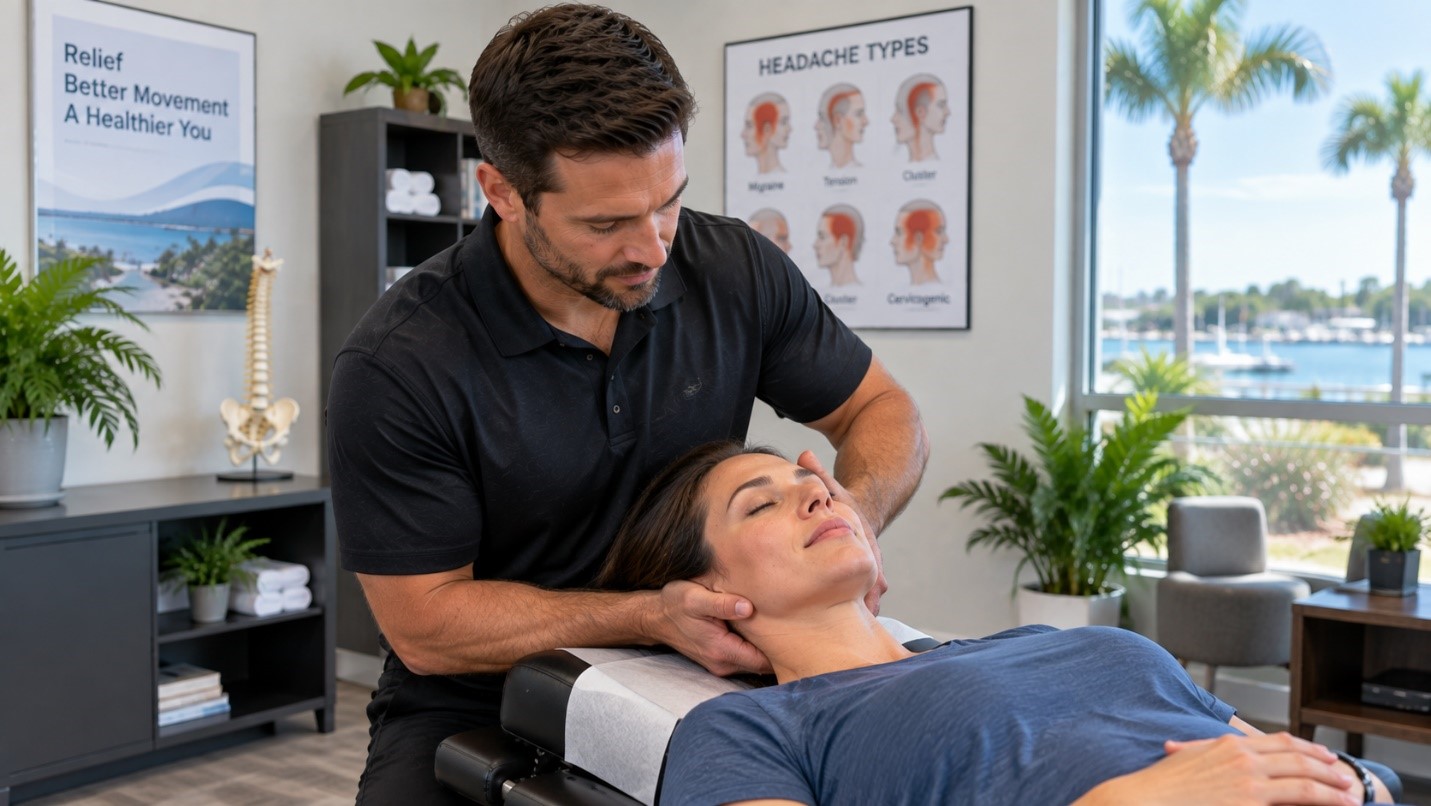
Migraines involve a distinct neurological process, not just muscle tension, which is why chiropractic care for migraines in Dunedin, FL looks different from treating a tension headache. Dr. Christopher Hayes, recognized as a headache specialist, evaluates each patient’s specific pattern before recommending care. Contact our office to discuss your symptoms.
Migraine or Regular Headache? Why the Distinction Matters
A tension headache typically feels like a dull, band-like pressure around the head and is often directly tied to muscle tension in the neck and upper back. A migraine is a distinct neurological event that can involve throbbing, one-sided pain, sensitivity to light and sound, nausea, and sometimes visual disturbances called aura. Because the underlying mechanisms differ, an approach that helps a tension headache may only partially address a migraine, which is why an accurate evaluation matters before any treatment plan is built.
How a Chiropractic Evaluation for Migraines Works
At Hayes Family Chiropractic, evaluating a patient with migraines starts with a detailed history: how often migraines occur, how long they last, what symptoms accompany them, and what has and hasn’t helped in the past. Dr. Christopher Hayes was recognized in 2006 as a headache specialist by a major insurance provider, and brings that focused experience to distinguishing migraine patterns from tension-type and cervicogenic headaches during a patient’s initial exam.
What Is a Cervicogenic Headache, and How Is It Different From a Migraine?
A cervicogenic headache originates from a problem in the neck itself, such as joint dysfunction or muscle tension in the cervical spine, and the pain is referred up into the head. Unlike a migraine, a cervicogenic headache tends to respond directly and predictably to correcting the neck dysfunction causing it. Distinguishing a cervicogenic headache from a true migraine is one of the more important steps in building an effective care plan, since the two can feel similar to the patient but call for different emphasis in treatment.
How Chiropractic Adjustments May Help With Migraine Frequency
Spinal adjustments, particularly to the cervical spine, are intended to reduce nerve irritation and muscle tension that can contribute to headache activity, including certain types of migraines. Chiropractic care is not a guaranteed fix for every migraine patient, since migraines have multiple potential triggers beyond spinal alignment, but many patients who receive regular adjustments report a reduction in how often migraines occur or how intense they feel. Your chiropractor will track your response over several visits to see whether adjustments are meaningfully helping your specific pattern.
How Laser Therapy Fits Into Migraine and Headache Care
For patients whose headaches are connected to neck tension or inflammation, deep tissue laser therapy is sometimes used alongside adjustments to help calm inflamed tissue around the cervical spine. This combination approach is more commonly discussed for cervicogenic and tension-type headaches, though your chiropractor will explain which techniques make sense for your specific migraine pattern rather than applying the same protocol to every patient.
Common Migraine Triggers Worth Tracking
- Poor posture or prolonged forward head position from desk work or phone use
- Sleep disruption or irregular sleep schedules
- Dehydration and skipped meals
- Bright light, strong odors, or certain foods for patients who are sensitive to them
- Stress and muscle tension carried in the neck and shoulders
When Migraine Symptoms Need Medical Attention First
Chiropractic care is intended to complement, not replace, medical evaluation. A sudden, severe headache unlike any you’ve had before, a headache with fever, stiff neck, confusion, slurred speech, weakness, or vision loss, or a headache following a head injury all warrant prompt medical evaluation before any chiropractic visit. For patients with a confirmed migraine diagnosis and no red-flag symptoms, chiropractic care can reasonably be considered as one part of a broader management plan alongside your medical provider’s guidance.
What a First Migraine-Focused Visit Looks Like
Your first visit includes a detailed consultation and examination, covering your migraine history, frequency, and any patterns you’ve noticed, along with a physical and postural assessment of your neck and upper back. From there, you’ll receive a clear explanation of what was found and a proposed plan, rather than an immediate adjustment before your specific pattern has been discussed.
Tracking Progress Over Time
Because migraines vary in frequency, tracking a simple headache diary, noting date, severity, duration, and possible triggers, gives your chiropractor concrete data to evaluate whether your care plan is making a measurable difference over several weeks, rather than relying on a general sense of “better” or “worse.”
Is Chiropractic Care Right for Every Migraine Patient?
Not every migraine patient responds the same way, and chiropractic care works best as part of a broader approach that may include medical management, lifestyle changes, and trigger tracking. Your chiropractor will be direct with you about whether your specific case is showing improvement after a reasonable trial period, rather than continuing an approach that isn’t helping.
The Role of Posture in Chronic Headache and Migraine Patterns
Forward head posture, common among patients who spend long hours at a desk or looking down at a phone, places sustained strain on the muscles and joints of the neck and upper back. Over time, that strain can contribute to both cervicogenic headaches and, for some patients, an increase in how often migraines occur. Addressing posture directly, alongside adjustments, is one of the more practical, patient-controlled pieces of a broader headache management plan.
How Many Visits Before You Know If Chiropractic Care Is Helping?
Most chiropractors recommend a trial period of several weeks, often four to six visits, before drawing conclusions about whether adjustments are meaningfully reducing migraine frequency or intensity. A single visit rarely tells you much either way, since headache and migraine patterns naturally fluctuate. Tracking your symptoms consistently during that trial period gives both you and your chiropractor real data to evaluate, rather than a subjective impression based on a good or bad week.
Migraine and Headache Care for Different Age Groups
Headache and migraine patterns look different across a lifespan. Children and teenagers with recurring headaches often benefit from an evaluation of posture, screen habits, and neck tension rather than assuming an adult migraine pattern applies. Older adults may have overlapping factors like arthritis in the cervical spine to consider alongside headache symptoms. Hayes Family Chiropractic adjusts its evaluation approach based on the patient’s age and overall health picture, not a single fixed protocol.
Working Alongside Your Medical Provider, Not Around Them
Chiropractic care for migraines works best as one coordinated part of your overall care, not a replacement for your primary care provider or neurologist if you have one. Sharing your migraine history and any current medications with your chiropractor, and keeping your medical provider informed about chiropractic care you’re receiving, helps everyone involved make better decisions about your treatment as a whole.
Lifestyle Changes That Often Accompany Chiropractic Migraine Care
Chiropractors treating migraine patients often discuss more than adjustments alone, including hydration habits, consistent sleep timing, regular movement throughout the workday to counteract prolonged sitting, and stress management strategies. These lifestyle factors don’t replace clinical care, but they frequently make the difference between a treatment plan that produces modest improvement and one that produces a meaningful, lasting reduction in migraine frequency.
What Makes Hayes Family Chiropractic’s Approach to Headaches Different
A general practice that treats headaches as one of many symptoms is different from a practice built around a doctor specifically recognized for headache expertise. Dr. Christopher Hayes’s 2006 recognition as a headache specialist reflects a level of focused experience distinguishing migraine, tension, and cervicogenic patterns that a newly practicing chiropractor may not yet have developed, which matters when your case doesn’t fit a textbook description perfectly.
When to Revisit Your Care Plan
If several weeks of consistent care haven’t produced any noticeable change in your migraine frequency or intensity, that’s worth a direct conversation rather than continuing the same plan indefinitely. Your chiropractor should be willing to reassess, adjust technique, or refer you back to your medical provider if chiropractic care isn’t proving to be the right fit for your specific migraine pattern.
A Reasonable Starting Point
If migraines or recurring headaches have been part of your life for a while, a focused evaluation is a low-risk way to find out whether chiropractic care could realistically help your specific pattern, alongside whatever else you’re already doing to manage symptoms.
Migraine and Headache Care Across Dunedin and Pinellas County
Hayes Family Chiropractic sees migraine and headache patients from Dunedin, Clearwater, Palm Harbor, Safety Harbor, Tarpon Springs, and Oldsmar. Contact our Dunedin office to schedule an evaluation, or read patient testimonials to hear how other patients describe their experience.